
1) What I Learned Testing Olive Garden Pasta Salad
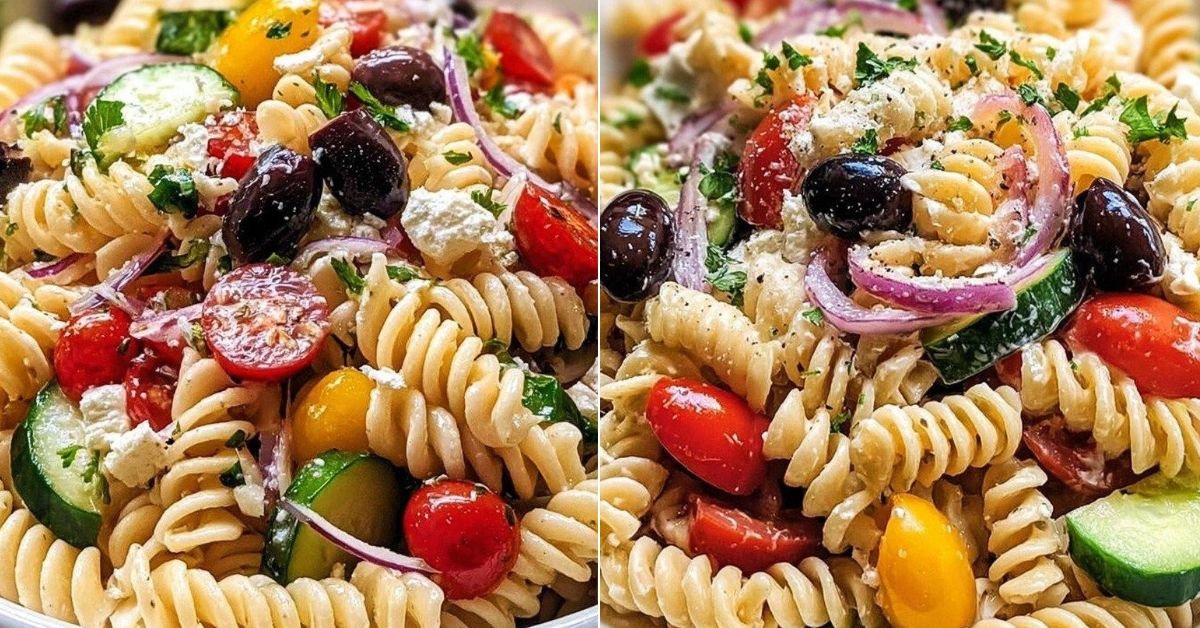
Pasta salad can look bright in the bowl and still taste dull, dry, or watery after chilling. I’m Lila, and my first olive garden pasta salad had the same problem: the dressing slipped to the bottom while the rotini tasted underseasoned. After testing the dressing balance, cooling method, and cheese timing, I discovered that cold rinsed pasta needs a creamy, tangy coating and enough rest time to absorb flavor without losing crunch. This easy olive garden pasta salad now feels like the calm side dish I reach for before summer dinners, family cookouts, and make-ahead lunches.
Table of Contents
- 1) What I Learned Testing Olive Garden Pasta Salad
- 2) Key Takeaways
- 3) Easy Olive Garden Pasta Salad Recipe
- 4) Why Most Olive Garden Pasta Salad Recipes Fail
- 5) Ingredients for Olive Garden Pasta Salad
- 6) How to Make Olive Garden Pasta Salad
- 7) Recipe Card: Olive Garden Pasta Salad
- 8) Tips for Making Olive Garden Pasta Salad
- 9) Common Mistakes & Fixes
- 10) How to Tell Olive Garden Pasta Salad Has the Right Texture
- 11) Professional Secrets Behind Better Olive Garden Pasta Salad
- 12) Best Dishes or Pairings to Serve With Olive Garden Pasta Salad
- 13) Making Olive Garden Pasta Salad Ahead of Time
- 14) Storing Leftover Olive Garden Pasta Salad
- 15) FAQ (Real Cooking Questions)
- 16) Save This Olive Garden Pasta Salad Recipe
- 17) Conclusion
- 18) Nutrition
2) Key Takeaways
- Cold rinsing the rotini matters because this is a chilled pasta salad, and separated pasta spirals hold the dressing better than sticky, starchy pasta.
- The dressing works best when the Italian dressing, mayonnaise, and red wine vinegar are whisked smooth before they touch the vegetables.
- Cheese should be stirred in after the pasta and vegetables are coated so the mozzarella stays visible and the parmesan seasons the salad evenly.
- The 30-minute chill is not just waiting time; it lets the dressing settle into the pasta while keeping the cucumber, tomatoes, olives, and bell pepper crisp.
3) Easy Olive Garden Pasta Salad Recipe
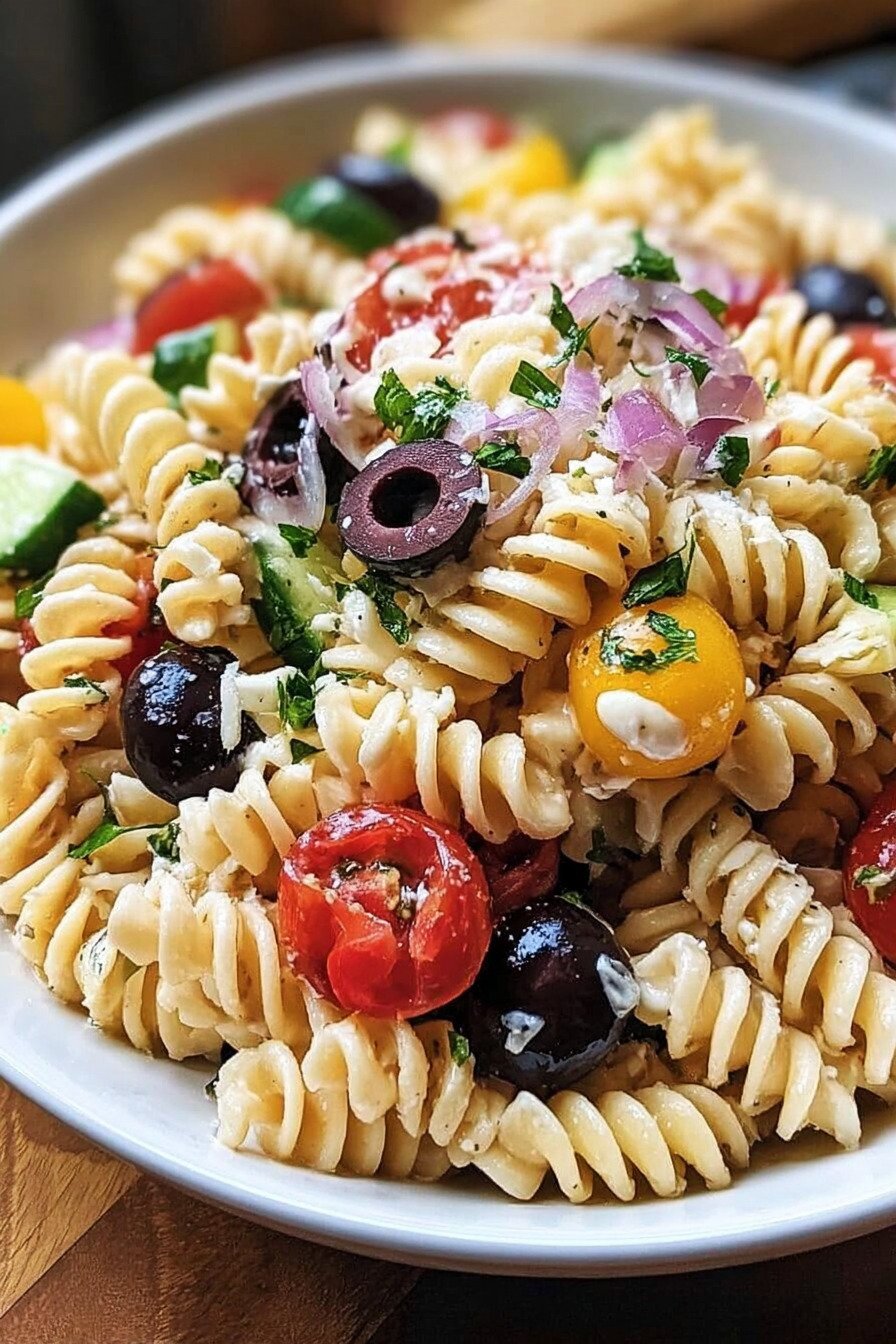
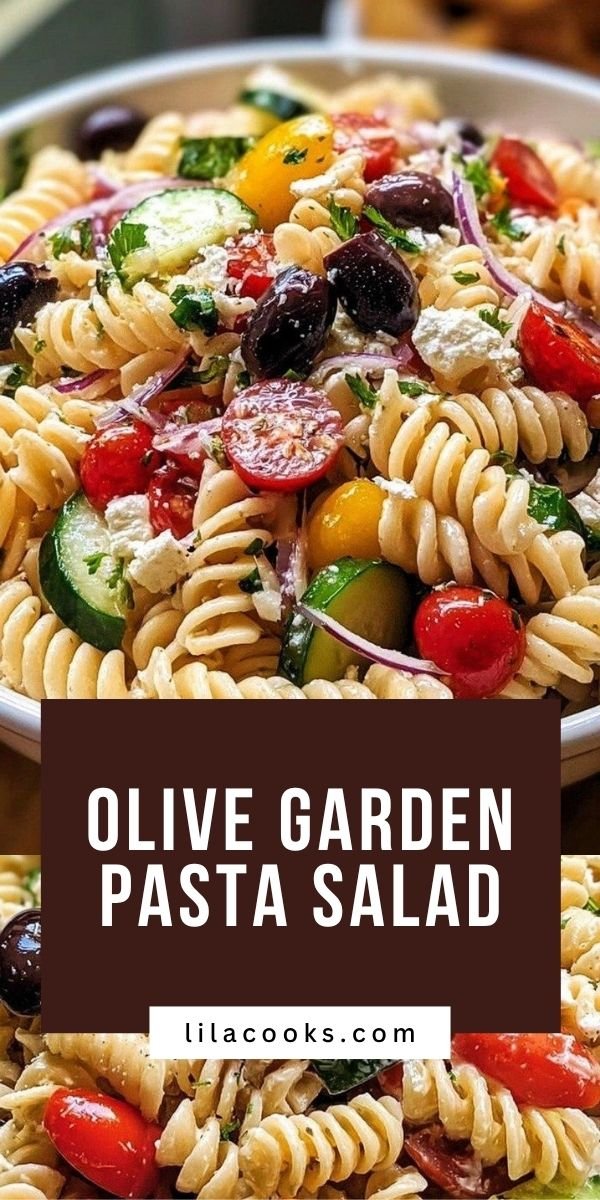
This olive garden pasta salad works because it treats pasta salad like a balance of texture, moisture, salt, acidity, and chill time instead of just pasta mixed with dressing. Rotini is a smart shape because the spirals catch the creamy Italian dressing, while the vegetables bring freshness and crunch. The olives and parmesan carry most of the salty flavor, so the final seasoning should happen at the end, not at the beginning.
The goal is a cold pasta salad that tastes bright and creamy without becoming heavy. The dressing should cling to the pasta, not pool at the bottom of the bowl. The vegetables should still feel crisp after chilling, and the cheeses should add body without turning the salad pasty. That is why the order matters: cook, rinse, combine, whisk, dress, add cheese, season, and chill.
4) Why Most Olive Garden Pasta Salad Recipes Fail
Most olive garden pasta salad recipes fail because the pasta is treated like hot pasta instead of chilled pasta. If rotini is left warm, it keeps steaming in the bowl, softens the vegetables, and can make the cheese clump instead of staying pleasantly scattered. Rinsing with cold water stops the cooking and cools the pasta quickly, which protects the salad’s texture.
Another common failure is watery dressing. Tomatoes, cucumber, and rinsed pasta all bring moisture, so the dressing needs enough body to stay attached. Mayonnaise helps the Italian dressing cling to the rotini, while red wine vinegar sharpens the flavor so the salad does not taste flat after chilling.
Over-salting is also easy here because black olives, green olives, parmesan, and Italian dressing already contain salt. The safest method is to mix everything first, then season with salt and pepper after tasting. A good olive garden pasta salad copycat should taste tangy, briny, creamy, and fresh, not aggressively salty.
The final problem is rushing the chill. If the salad is served immediately, the dressing tastes separate from the pasta. After at least 30 minutes in the refrigerator, the rotini absorbs flavor, the dressing firms slightly, and the vegetables keep their refreshing bite.
5) Ingredients for Olive Garden Pasta Salad
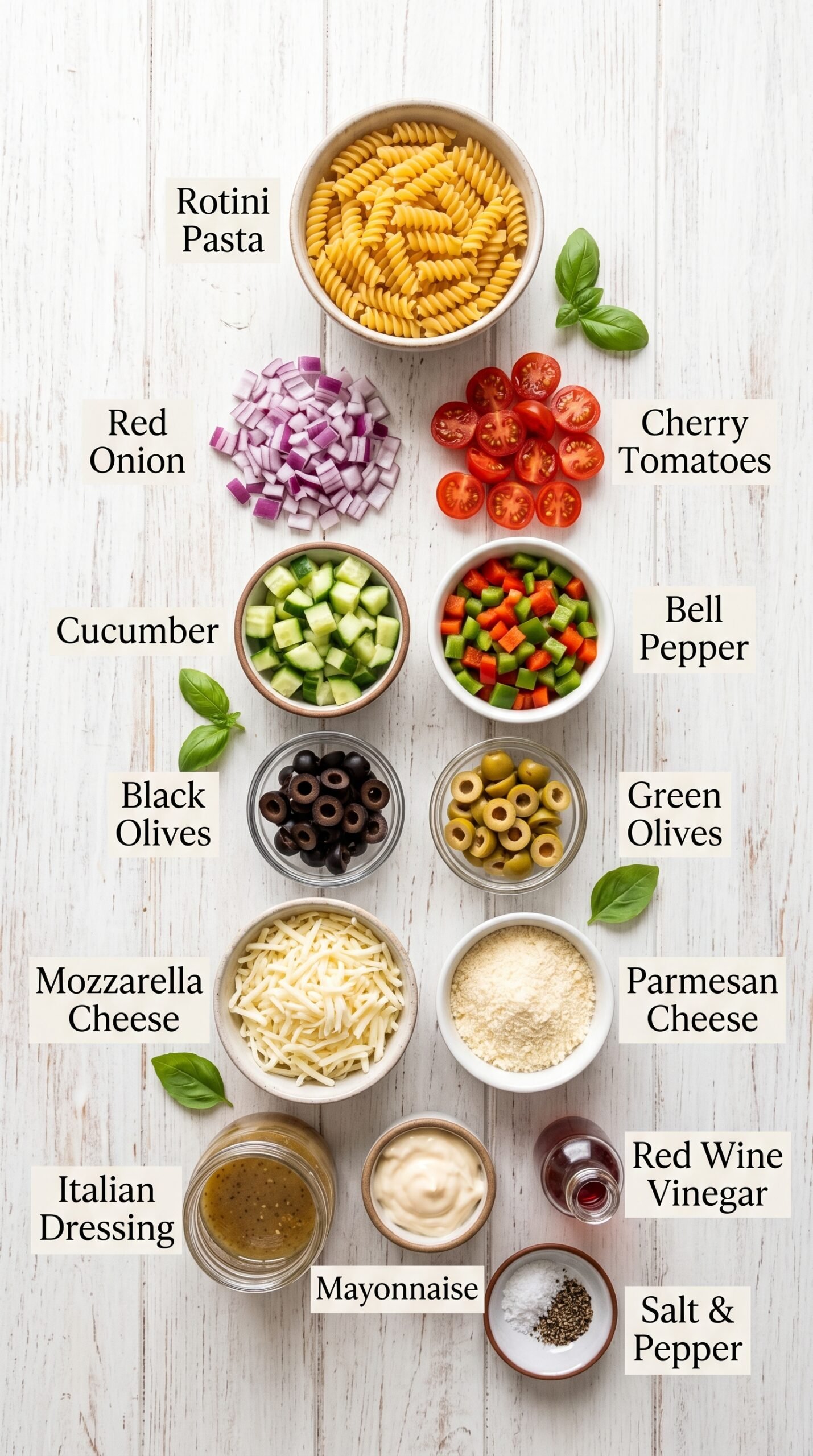
Rotini pasta: Rotini is used because the twisted shape grabs the dressing and small pieces of cheese. Cook it according to the package instructions, then rinse with cold water for this chilled salad. If replaced with a smoother pasta shape, the dressing may slide off more easily.
Red onion: Diced red onion adds sharpness and keeps the salad from tasting too creamy. Use it finely diced so the flavor spreads evenly. Large pieces can overpower the tomatoes, cucumber, and cheese.
Cherry tomatoes: Halved cherry tomatoes bring sweetness, juiciness, and color. Add them after the pasta has cooled so they stay firm. If chopped too small, they release more liquid into the bowl.
Cucumber: Cucumber gives the salad its fresh crunch. Dice it evenly so each bite has a cool contrast to the pasta and cheese. If the cucumber is very watery, pat it dry before mixing to help prevent a loose dressing.
Black olives: Black olives add a mellow briny flavor and a soft texture. They help create the classic cold pasta salad profile. If skipped, the salad tastes less savory and less balanced.
Green olives: Green olives bring a brighter salty bite than black olives. Use them sliced so the flavor does not hit in one large piece. They also reduce the need for extra salt at the end.
Bell pepper: Bell pepper adds crispness and color. Dice it small enough to blend into the pasta but not so small that it disappears. A sweet bell pepper keeps the salad fresh rather than bitter.
Shredded mozzarella cheese: Mozzarella softens the acidity of the dressing and adds a mild creamy bite. Stir it in near the end so it stays distinct. If added while the pasta is warm, it can clump or soften too much.
Grated parmesan cheese: Parmesan adds salty, nutty depth and helps the dressing taste fuller. Add it after dressing the pasta so it spreads evenly. Because parmesan is salty, taste before adding more salt.
Italian dressing: Italian dressing is the tangy base that seasons the pasta and vegetables. It brings herbs, acidity, and oil. Whisking it with mayonnaise before adding it to the salad creates a smoother coating.
Mayonnaise: Mayonnaise gives the dressing body and helps it cling to cold rotini. It should be whisked until smooth so there are no streaks. If reduced too much, the salad may taste thinner and less creamy.
Red wine vinegar: Red wine vinegar sharpens the dressing and keeps the creamy elements from tasting heavy. Use it in the dressing mixture before tossing. Too much can make the salad harsh, so the measured amount matters.
Salt and pepper: Salt and pepper should be adjusted at the end after the olives, parmesan, and Italian dressing are mixed in. This prevents over-seasoning and lets you balance the salad after the chill if needed.
- Rotini vs smoother pasta: Rotini catches dressing in its ridges, while smoother pasta can make the salad feel less coated.
- Cold pasta vs warm pasta: Cold pasta protects the cheese and vegetables; warm pasta can soften them and loosen the dressing.
- Mayonnaise dressing vs plain Italian dressing: Mayonnaise gives the dressing cling, while plain Italian dressing can sink to the bottom faster.
- Final seasoning vs early seasoning: Seasoning at the end prevents the olives and parmesan from making the salad too salty.
6) How to Make Olive Garden Pasta Salad
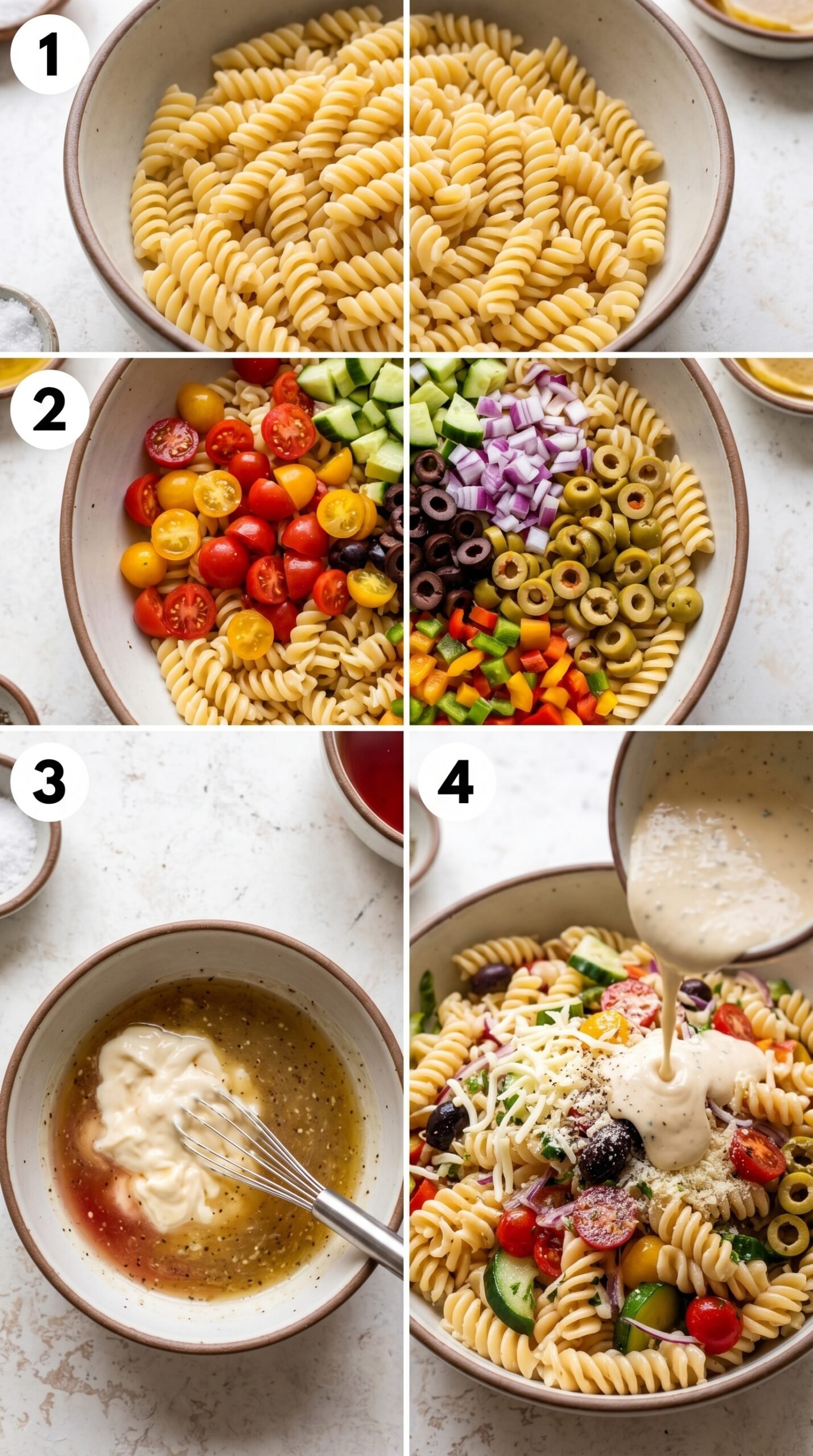
Step 1: Cook the rotini pasta according to the package instructions, then drain it well and rinse it with cold water. The pasta should feel cool to the touch before it goes into the bowl. This stops carryover cooking and helps prevent a sticky, over-soft pasta salad.
Step 2: In a large bowl, combine the cooked pasta with diced red onion, halved cherry tomatoes, diced cucumber, sliced black olives, sliced green olives, and diced bell pepper. Toss gently so the vegetables spread through the pasta without crushing the tomatoes.
Step 3: In a separate small bowl, whisk the Italian dressing, mayonnaise, and red wine vinegar until smooth. The dressing should look creamy and unified, not streaky. This step prevents pockets of mayonnaise and helps the dressing coat evenly.
Step 4: Pour the dressing mixture over the pasta and vegetables, then toss from the bottom of the bowl until everything is evenly coated. Look for a light creamy sheen on the rotini rather than a puddle of dressing under the salad.
Step 5: Stir in the shredded mozzarella and grated parmesan cheese, then season with salt and pepper to taste. Chill the salad for at least 30 minutes before serving so the flavor settles and the texture stays crisp, creamy, and refreshing.
7) Recipe Card: Olive Garden Pasta Salad
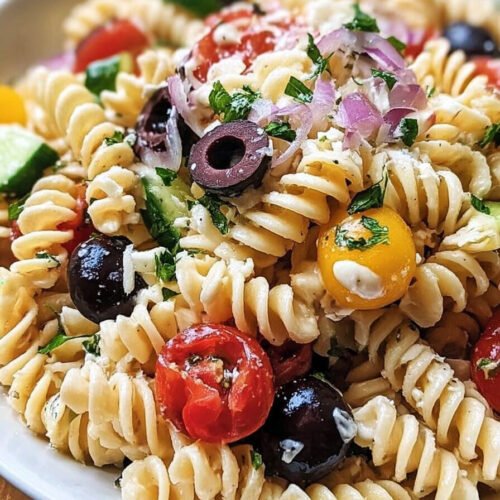
Olive Garden Pasta Salad With Creamy Italian Dressing
Ingredients
- 1 lb rotini pasta, cooked until just tender so the spirals hold the dressing well
- 1/2 cup red onion, diced small for sharpness without overpowering the salad
- 1 cup cherry tomatoes, halved so their juices blend lightly into the dressing
- 1 cucumber, diced and kept crisp for fresh crunch
- 1/2 cup black olives, sliced for briny depth
- 1/2 cup green olives, sliced for a brighter salty bite
- 1/2 cup bell pepper, diced for color and crisp texture
- 1/2 cup shredded mozzarella cheese, stirred in after dressing so it stays distinct
- 1/2 cup grated parmesan cheese, added for savory flavor and light body
- 1/2 cup Italian dressing, used as the main tangy dressing base
- 1/4 cup mayonnaise, whisked in to make the dressing creamy and clingy
- 1 tablespoon red wine vinegar, added to sharpen the flavor after chilling
- Salt and pepper to taste, adjusted after the cheese and olives are mixed in
Instructions
- Cook the rotini pasta according to the package instructions until tender but not mushy, then drain it well and rinse under cold water to stop the cooking and remove extra surface starch.
- In a large bowl, combine the cooled pasta, diced red onion, halved cherry tomatoes, diced cucumber, sliced black olives, sliced green olives, and diced bell pepper, tossing gently so the vegetables are evenly distributed.
- In a separate small bowl, whisk together the Italian dressing, mayonnaise, and red wine vinegar until the dressing looks smooth, creamy, and lightly thickened with no visible streaks of mayonnaise.
- Pour the dressing mixture over the pasta and vegetables, then toss from the bottom of the bowl until every piece of rotini is coated without crushing the tomatoes or cucumber.
- Stir in the shredded mozzarella cheese and grated parmesan cheese, then taste before adding salt and pepper because the olives, parmesan, and dressing already bring saltiness.
- Chill the pasta salad in the refrigerator for at least 30 minutes before serving so the flavors settle, the dressing clings to the pasta, and the vegetables stay crisp.
8) Tips for Making Olive Garden Pasta Salad
For a better olive garden pasta salad, drain the pasta thoroughly after rinsing. Water trapped in the rotini can thin the dressing and make the salad taste less seasoned. I like to let the pasta sit in the colander for a minute, then shake it gently before adding it to the bowl.
Keep the vegetable cuts consistent. Large cucumber chunks and tiny onion pieces do not eat the same way, and uneven cuts can make one bite bland and the next too sharp. A good cold pasta salad should have pasta, crunch, briny olives, cheese, and dressing in most bites.
Use the chill time as part of the method. After 30 minutes, the dressing thickens slightly and the vinegar softens into the pasta. If the salad tastes muted after chilling, a tiny splash of red wine vinegar can wake it up better than adding more salt.
If you want this to work as one of your summer pasta salad recipes, keep it cold until serving and avoid letting it sit in direct heat. The dressing has a creamy base, so refrigeration protects both flavor and food quality.
9) Common Mistakes & Fixes
Problem: The salad tastes watery. Cause: The pasta was not drained well, or the vegetables released too much moisture. Fix: Drain and shake the rinsed rotini well, dice the cucumber cleanly, and toss with the dressing only after the pasta is fully cooled.
Problem: The pasta tastes bland even though the dressing tastes strong. Cause: The salad did not chill long enough for the rotini to absorb flavor. Fix: Refrigerate for at least 30 minutes, then taste again before adjusting salt, pepper, or vinegar.
Problem: The salad is too salty. Cause: Salt was added before accounting for olives, parmesan, and Italian dressing. Fix: Season at the end, and if it is already too salty, add a little more plain cooked pasta or cucumber to soften the intensity.
Problem: The dressing sits at the bottom of the bowl. Cause: The dressing was not emulsified well enough, or the pasta was too wet. Fix: Whisk the Italian dressing, mayonnaise, and red wine vinegar until smooth before tossing, then fold the salad from the bottom up.
10) How to Tell Olive Garden Pasta Salad Has the Right Texture
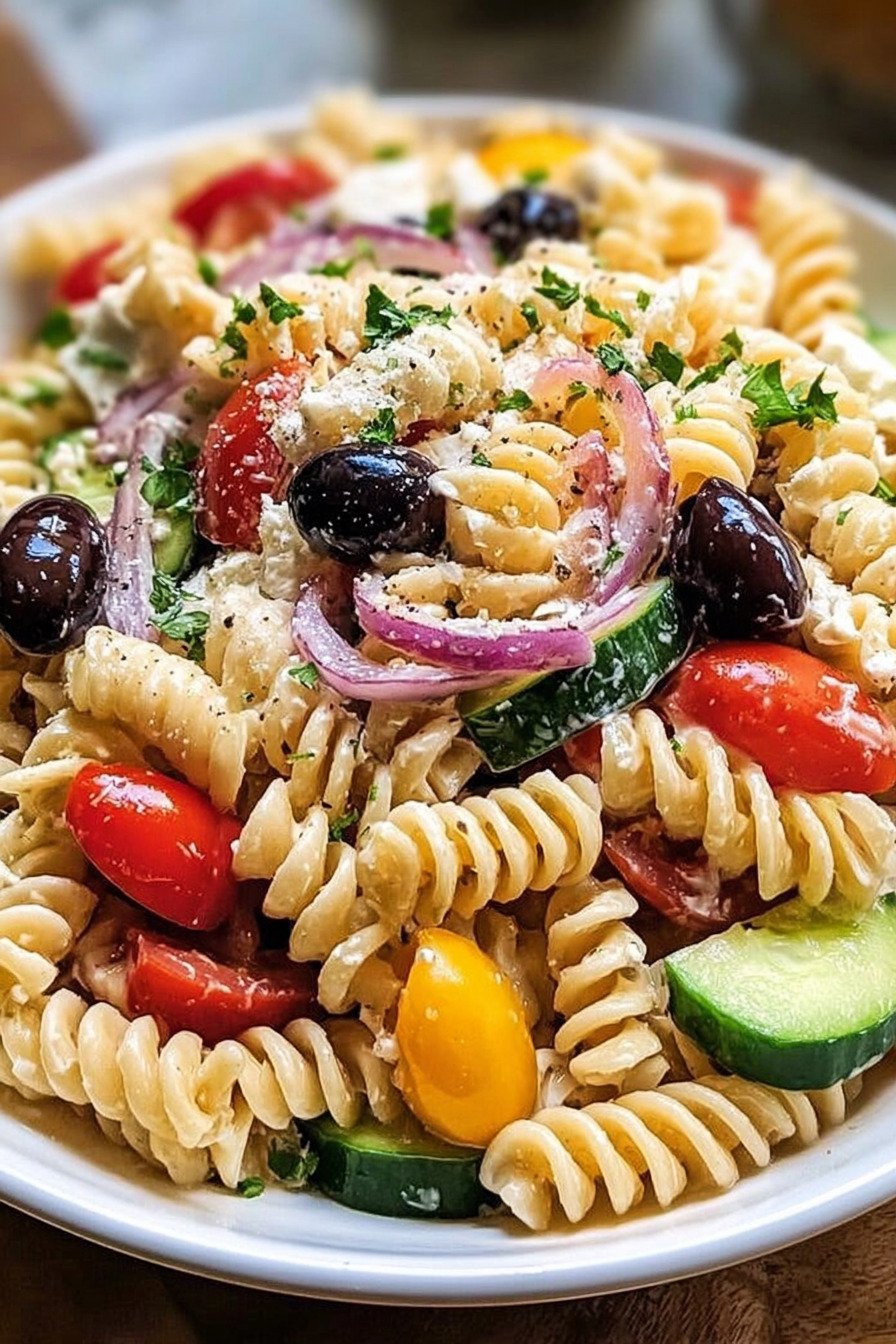
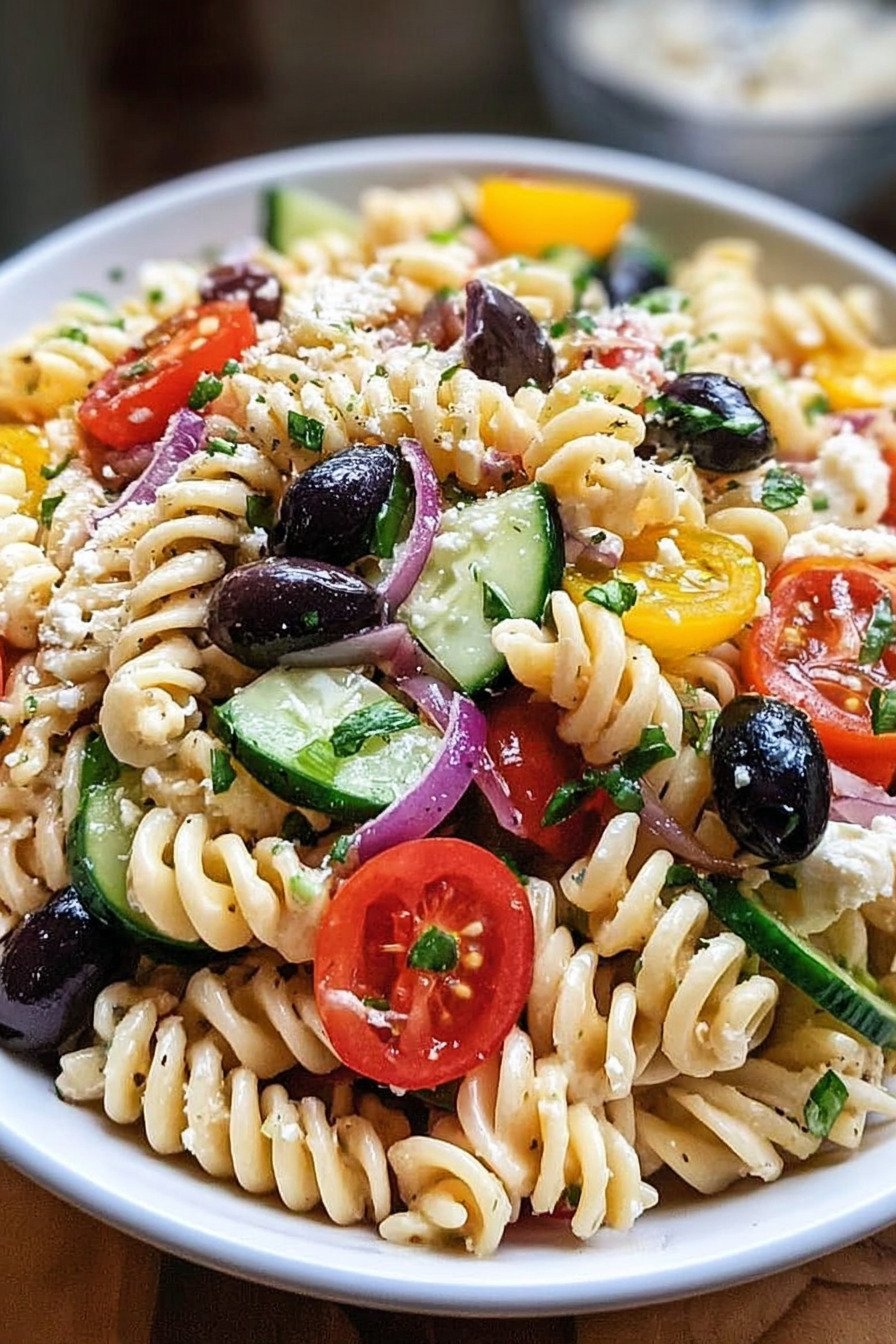
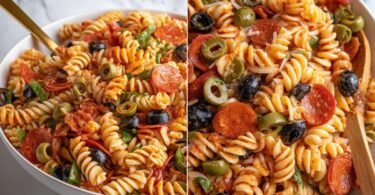
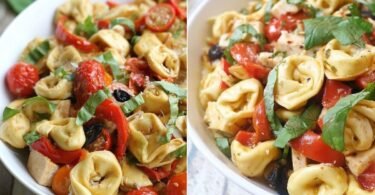
Olive garden pasta salad has the right texture when the rotini is tender but still holds its spiral shape, the dressing lightly coats each piece, and the vegetables still feel crisp. Visually, the salad should look glossy and creamy without watery pooling at the bottom of the bowl. The mozzarella should remain in soft shreds, and the parmesan should be evenly distributed instead of clumped.
The flavor should taste tangy, savory, lightly creamy, and fresh. You should notice the briny olives, sweet cherry tomatoes, cool cucumber, and gentle richness from the cheeses. The aroma should be bright from the Italian dressing and vinegar, not heavy or flat.
Failure signs are easy to spot: mushy pasta, watery dressing, limp cucumber, overly salty bites, or cheese that has melted into clumps. If the salad pulls dull after chilling, refresh it with a small splash of vinegar and a gentle toss rather than covering the problem with extra mayonnaise.
11) Professional Secrets Behind Better Olive Garden Pasta Salad
The biggest secret is dressing texture. A cold salad needs a dressing that can cling after refrigeration. Mayonnaise gives body, Italian dressing gives herb flavor and tang, and red wine vinegar sharpens the finish. Whisking them separately creates a smoother coating than adding each one directly to the pasta bowl.
The second secret is seasoning in layers without over-salting. The olives and parmesan are not just add-ins; they are seasoning ingredients. That is why the final salt should be added only after the cheese and olives are mixed in. This keeps the salad balanced and prevents the “too salty after chilling” problem.
The third secret is protecting crunch. Cucumber, bell pepper, and tomatoes make this garden pasta salad recipe feel fresh, but they should be folded gently. Aggressive mixing bruises tomatoes and draws moisture from the vegetables, which can make even the best pasta salad taste tired.
12) Best Dishes or Pairings to Serve With Olive Garden Pasta Salad
Olive garden pasta salad works well beside grilled chicken, turkey sandwiches, baked fish, burgers, roasted vegetables, or simple soup because it brings coolness, acidity, and creamy texture to the plate. For a summer meal, serve it with corn on the cob, fresh fruit, and a lighter main dish so the salad can stay refreshing instead of heavy.
For lunch, it can be served with crisp lettuce, sliced avocado, or a simple protein on the side. For a potluck, use a wide serving bowl so the vegetables and cheese stay visible and the dressing does not settle in one deep layer.
13) Making Olive Garden Pasta Salad Ahead of Time
This olive garden pasta salad is a strong make-ahead side because chilling improves the flavor. Make it at least 30 minutes before serving, or several hours ahead if needed. For the freshest texture, keep it covered in the refrigerator and give it a gentle toss before serving.
If making it far in advance, the pasta may absorb some of the dressing. That is normal for cold pasta salad recipes. Refresh the texture with a small spoonful of Italian dressing or a light splash of vinegar before serving, then taste again before adding salt.
14) Storing Leftover Olive Garden Pasta Salad
Store leftover olive garden pasta salad in an airtight container in the refrigerator. It is best within 2 to 3 days because the vegetables are freshest during that window. Stir gently before serving because the dressing can settle as the pasta rests.
Freezing is not recommended for this salad. The cucumber and tomatoes lose their crisp texture, and the creamy dressing can separate after thawing. If the leftovers taste a little flat the next day, refresh them with a small splash of red wine vinegar and a light toss.
15) FAQ (Real Cooking Questions)
Can I make olive garden pasta salad the night before? Yes, but the texture is best when the salad is refreshed before serving. Make it the night before, keep it covered and chilled, then stir gently and taste for vinegar, salt, and pepper before it goes to the table.
Should I rinse pasta for pasta salad? Yes, for this recipe. Rinsing cools the rotini quickly and removes extra surface starch, which helps the pasta stay separate instead of sticky. This is especially useful for chilled salads with creamy dressing.
Why did my pasta salad get dry in the refrigerator? Pasta absorbs dressing as it chills. That is normal. Refresh the salad with a small amount of Italian dressing or a tiny splash of red wine vinegar, then toss gently until the rotini looks lightly coated again.
Can I use another pasta shape? Yes, but choose a short shape with ridges or curves. Rotini works especially well because it catches the dressing, olives, cheese, and small vegetable pieces. Very smooth pasta may taste less coated.
How do I keep this easy olive garden pasta salad from tasting too salty? Wait to season until after adding the olives, parmesan, mozzarella, and dressing. Those ingredients already add salt and savory flavor. Taste at the end, then adjust slowly.
16) Save This Olive Garden Pasta Salad Recipe
If this Olive Garden Pasta Salad helped you solve watery, bland, or heavy pasta salad, save it for summer cookouts, make-ahead lunches, and family dinners. The key reminder is: cool the pasta fully, whisk the dressing smooth, and chill before serving.
17) Conclusion
The difference between a forgettable pasta salad and a reliable olive garden pasta salad is not complicated; it is technique. Cool the rotini, drain it well, balance creamy dressing with vinegar, season after the salty ingredients are added, and let the salad chill long enough for the flavors to settle. Once you understand those checkpoints, the recipe becomes easier to adjust, easier to make ahead, and much more dependable on the table.
18) Nutrition
Serving Size 1 portion Calories 345 Sugar 4 g Sodium 610 mg Fat 16 g Saturated Fat 4 g Carbohydrates 41 g Fiber 3 g Protein 10 g Cholesterol 18 mg
Leave a Comment