
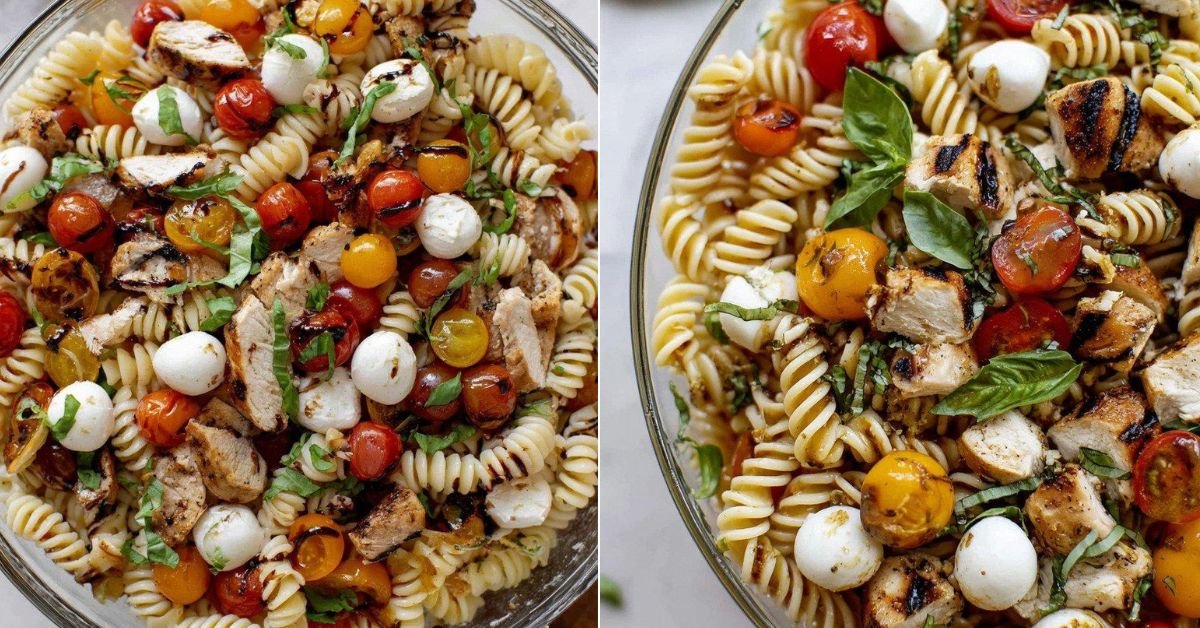
1) What I Learned Testing Chicken Caprese Pasta Salad
Soggy pasta, dry chicken, and dull basil can ruin a pasta salad fast. I’m Lila, and my first chicken caprese pasta salad tasted good for ten minutes, then the dressing sank, the chicken tightened, and the basil lost its fresh bite. After testing the marinade timing, grilling heat, pasta cooling, and when to add basil, I discovered the small detail that changes everything: reserve clean balsamic dressing before marinating the chicken, then toss gently at the end. This caprese pasta salad with chicken now feels like the calm, colorful summer dinner I want on the table.
Table of Contents
- 1) What I Learned Testing Chicken Caprese Pasta Salad
- 2) Key Takeaways
- 3) Easy Chicken Caprese Pasta Salad Recipe
- 4) Why Most Chicken Caprese Pasta Salad Recipes Fail
- 5) Ingredients for Chicken Caprese Pasta Salad
- 6) How to Make Chicken Caprese Pasta Salad
- 7) Recipe Card: Chicken Caprese Pasta Salad
- 8) Tips for Making Chicken Caprese Pasta Salad
- 9) Common Mistakes & Fixes
- 10) How to Tell Chicken Caprese Pasta Salad Has the Right Texture
- 11) Professional Secrets Behind Better Chicken Caprese Pasta Salad
- 12) Best Dishes or Pairings to Serve With Chicken Caprese Pasta Salad
- 13) Making Chicken Caprese Pasta Salad Ahead of Time
- 14) Storing Leftover Chicken Caprese Pasta Salad
- 15) FAQ (Real Cooking Questions)
- 16) Save This Chicken Caprese Pasta Salad Recipe
- 17) Conclusion
- 18) Nutrition
2) Key Takeaways
- Reserve most of the balsamic mixture before it touches raw chicken so the final dressing stays clean, bright, and safe for tossing.
- Grill the chicken hot and fast, then rest it before cutting so the pieces stay juicy instead of dry.
- Use pasta shapes with ridges or spirals because they hold the dressing, tomato juices, and small basil pieces better.
- Add fresh basil close to serving time to protect its color, aroma, and clean Caprese flavor.
3) Easy Chicken Caprese Pasta Salad Recipe
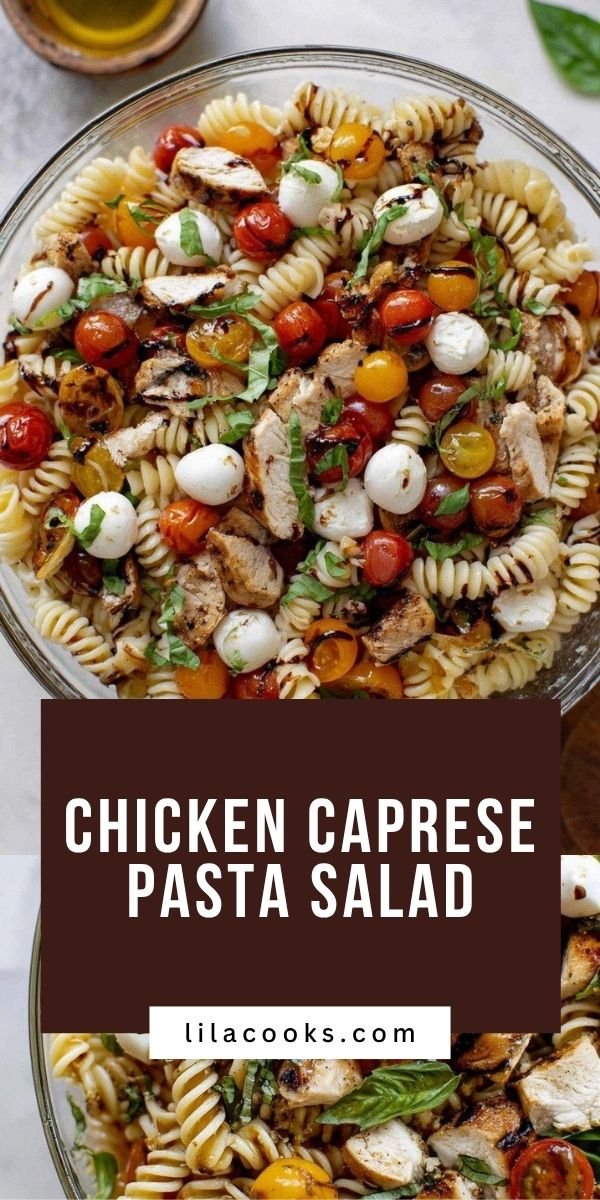
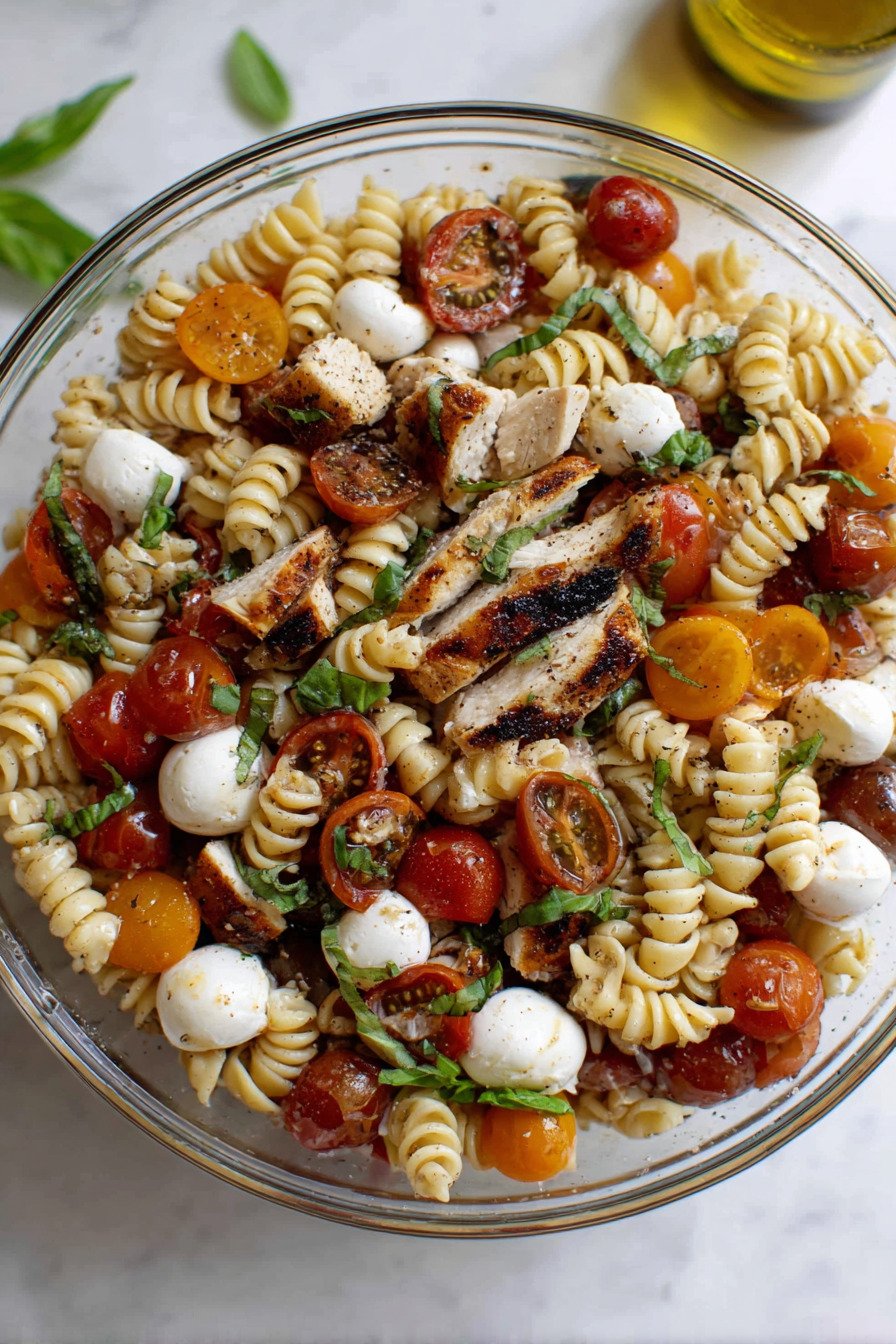
This chicken caprese pasta salad works because it treats each part with the right timing. The chicken gets a short marinade for flavor, the pasta is cooked and cooled so it does not steam the mozzarella, and the fresh basil is saved until the end. The dressing does double duty, but safely: a small measured portion seasons the chicken, while the reserved dressing coats the finished salad.
The goal is not a heavy pasta dish. The goal is juicy grilled chicken, tender pasta, sweet tomatoes, creamy mozzarella, and basil that still smells fresh when the bowl reaches the table. That balance is what makes grilled chicken caprese pasta feel satisfying without losing the brightness of a salad.
4) Why Most Chicken Caprese Pasta Salad Recipes Fail
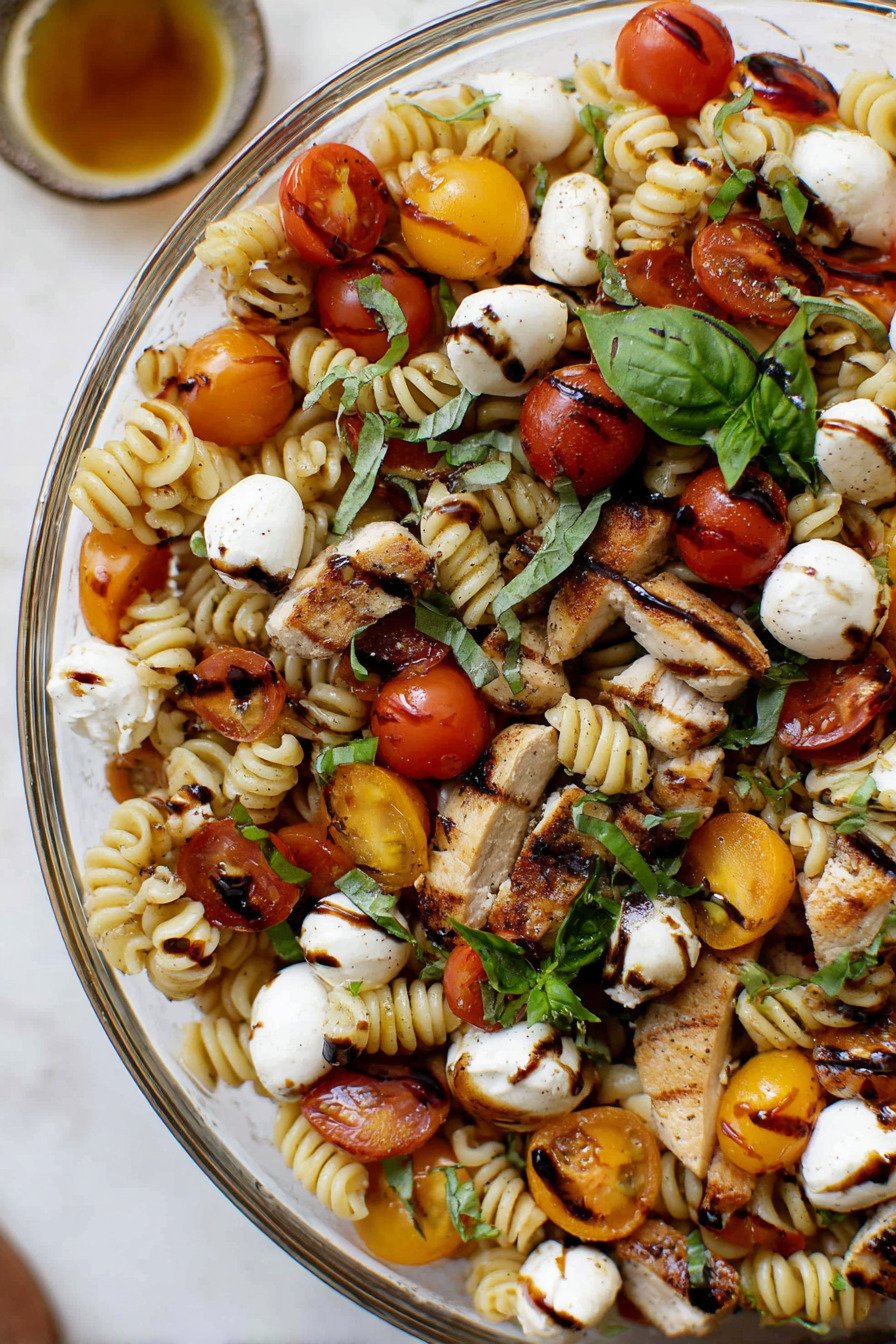
Most chicken caprese pasta salad recipes fail for one of five reasons: the chicken is overcooked, the pasta is too wet, the dressing is added without enough seasoning, the basil is mixed in too early, or the mozzarella is crushed by aggressive tossing. Each problem changes the texture of the bowl.
Dry chicken usually comes from skipping the rest after grilling. When hot chicken is cut immediately, the juices run onto the cutting board instead of staying in the meat. Watery pasta salad often comes from pasta that was drained but not cooled or allowed to shed surface moisture. Flat flavor happens when the pasta is not seasoned enough and the dressing has to do all the work. Wilted basil is a timing problem, not an ingredient problem. Add it last, and the salad tastes fresher.
The method here prevents those problems by building flavor in layers: marinated chicken, well-drained pasta, halved tomatoes, creamy mozzarella, fresh basil, and reserved balsamic dressing added at the finish.
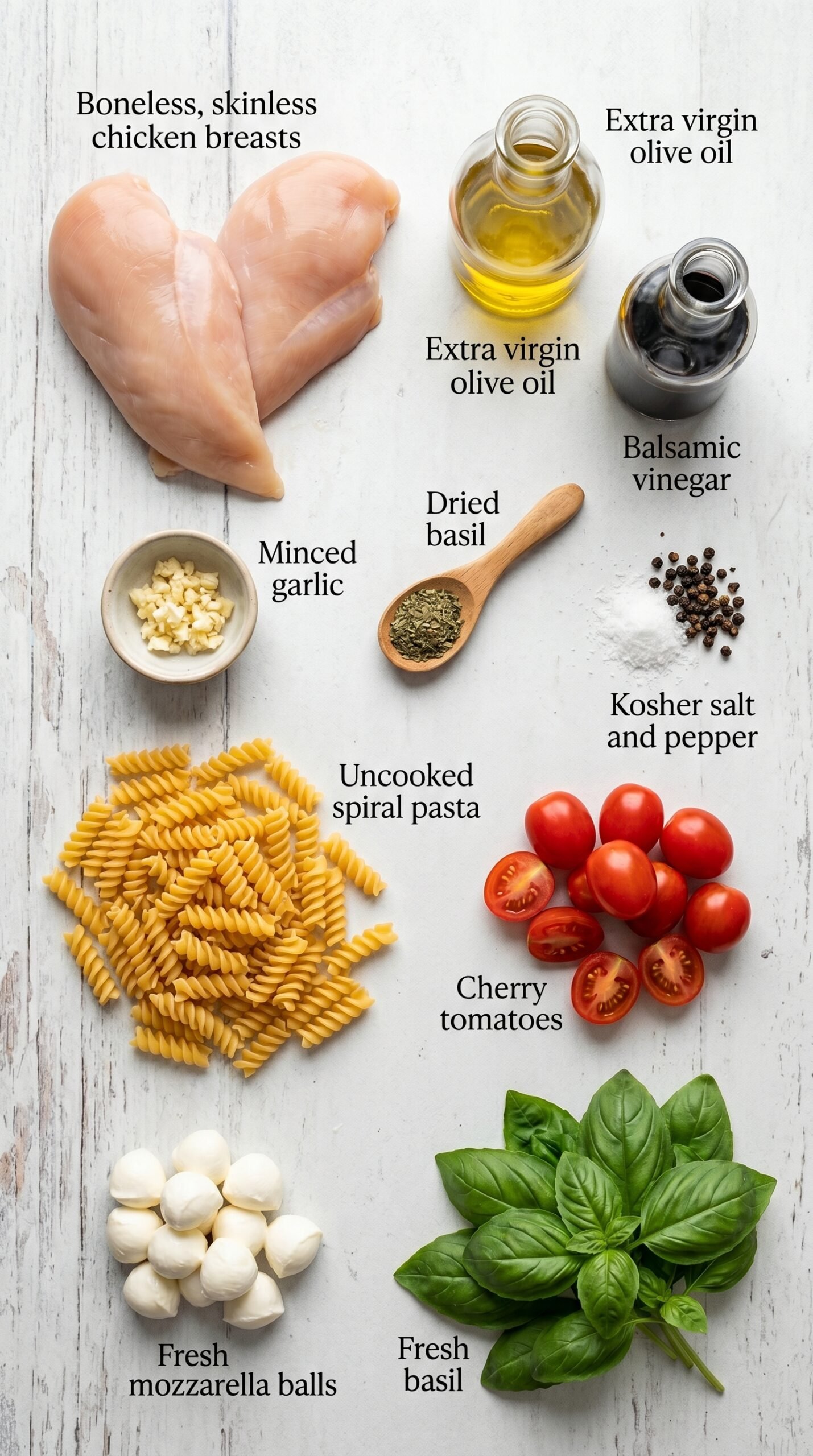
5) Ingredients for Chicken Caprese Pasta Salad
Boneless, skinless chicken breasts: Chicken gives the salad enough protein to feel like a complete meal. Use pieces with similar thickness so they grill evenly. If the breasts are uneven, the thinner ends can dry out before the center reaches 165 degrees F.
Extra virgin olive oil: Olive oil carries the garlic, basil, balsamic vinegar, salt, and pepper through both the marinade and dressing. A harsh or bitter oil will be noticeable because this is a fresh salad, so use one that tastes smooth.
Balsamic vinegar: Balsamic vinegar brings acidity and light sweetness. It keeps the pasta salad caprese from tasting heavy, especially against the mozzarella and chicken.
Garlic: Minced garlic gives the dressing depth. Use it in the marinade mixture so the chicken and pasta share the same flavor base. If the garlic is chopped too large, it can taste sharp in cold bites.
Dried basil: Dried basil seasons the marinade without bruising or darkening. It is more stable than fresh basil during marinating and grilling.
Kosher salt and pepper: Salt wakes up the chicken, pasta, tomatoes, and dressing. Pepper adds a gentle bite. Under-seasoning is one of the fastest ways to make pasta salad taste flat.
Spiral pasta: Spiral pasta catches dressing in its curves. Penne also works, but smooth pasta shapes can let the balsamic dressing slide off too quickly.
Grape or cherry tomatoes: Halved tomatoes release just enough juice to mingle with the dressing. Whole tomatoes do not season the salad as evenly.
Fresh mozzarella: Mozzarella gives creamy contrast. Ciliegine works especially well because the small pieces distribute through the bowl without needing much cutting.
Fresh basil: Fresh basil brings the signature Caprese aroma. Add it near serving time so the leaves stay green, fragrant, and clean-tasting.
- Spiral pasta vs penne: Spirals hold more dressing in their ridges, while penne gives a firmer bite and cleaner look in a layered grilled chicken caprese pasta salad.
- Fresh basil vs dried basil: Dried basil belongs in the marinade, while fresh basil belongs at the end for aroma and color.
- Fresh mozzarella vs shredded mozzarella: Fresh mozzarella gives soft, creamy bites; shredded mozzarella can clump and make the salad feel heavier.
- Reserved dressing vs used marinade: Reserved dressing is clean and safe for the finished salad, while marinade that touched raw chicken must not be used uncooked.
6) How to Make Chicken Caprese Pasta Salad
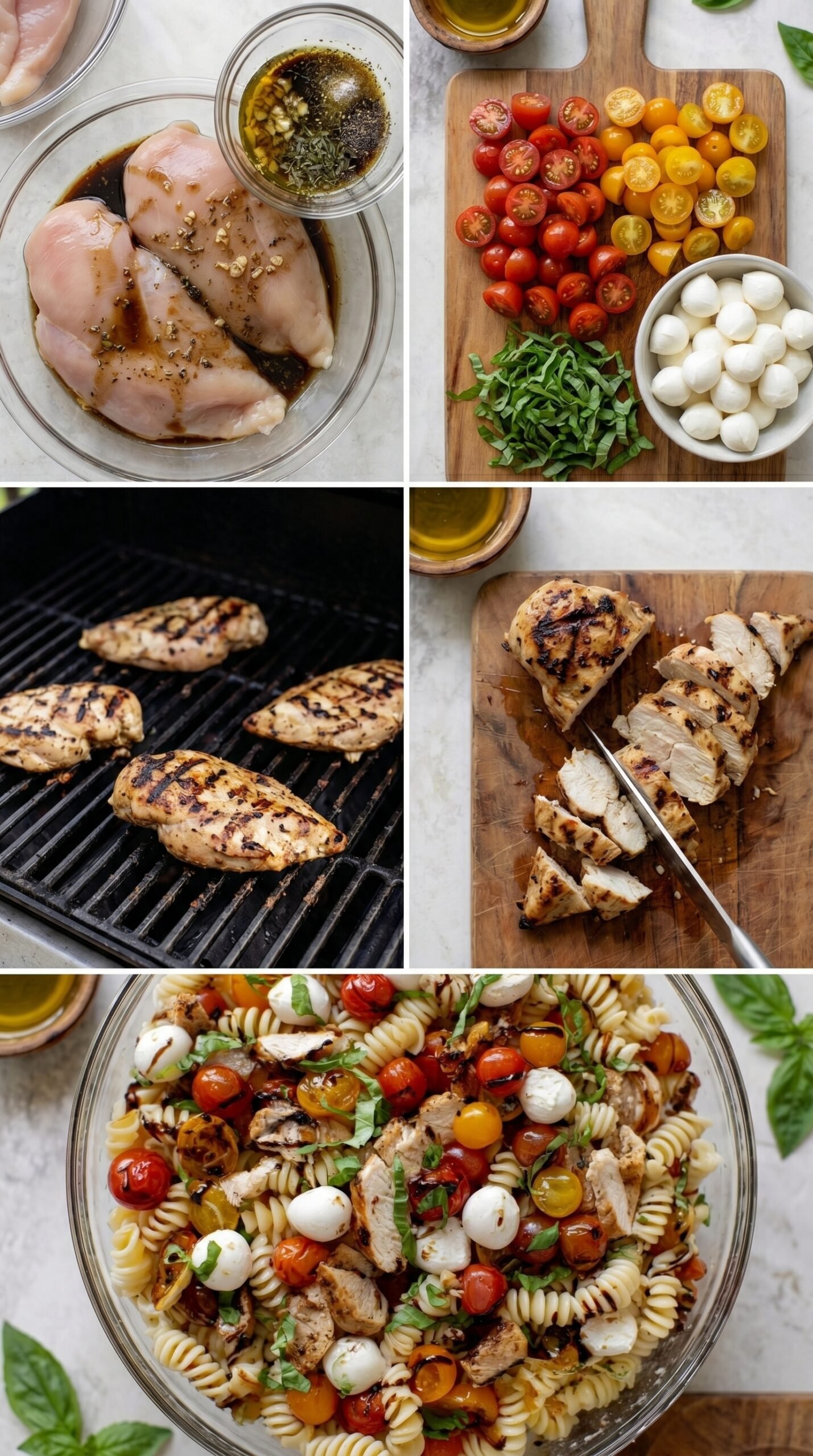
Step 1: Whisk the olive oil, balsamic vinegar, garlic, dried basil, salt, and pepper until the mixture looks glossy. Measure out a small portion for the chicken, then refrigerate the rest as the dressing. This keeps the final salad bright and food-safe.
Step 2: Marinate the chicken for at least 30 minutes or overnight. Longer marinating adds flavor, but the chicken still needs proper grilling and resting to stay juicy.
Step 3: Grill the chicken over high heat for about 5 to 6 minutes per side, depending on thickness, until it reaches 165 degrees F. Look for clear grill marks, firm edges, and no raw center.
Step 4: Rest the chicken for 5 to 10 minutes before cutting. This pause matters because it keeps the juices inside the chicken instead of leaking into the salad.
Step 5: Cook and drain the pasta, then layer or toss it with chicken, tomatoes, mozzarella, basil, and the reserved dressing. Toss gently so the pasta gets coated without crushing the tomatoes or mozzarella.
7) Recipe Card: Chicken Caprese Pasta Salad
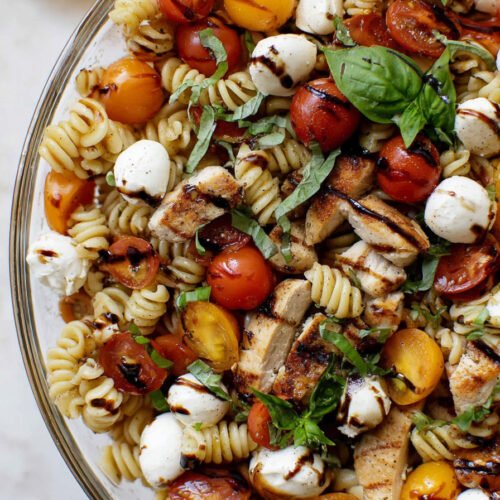
Chicken Caprese Pasta Salad with Grilled Chicken, Mozzarella, and Basil
Ingredients
- 1 pound boneless, skinless chicken breasts, trimmed evenly so they grill at the same rate
- 3/4 cup extra virgin olive oil, used as the rich base for the marinade and pasta salad dressing
- 1/3 cup balsamic vinegar, for acidity, sweetness, and classic Caprese-style balance
- 4 garlic cloves, minced finely so the flavor spreads through the dressing
- 1 teaspoon dried basil, to season the chicken before the fresh basil is added later
- kosher salt and pepper, added generously enough to season both the chicken and dressing
- 1 pound spiral pasta, cooked, or your favorite cut like penne, cooled slightly so it holds the dressing without turning soft
- 12 to 16 ounces grape or cherry tomatoes, cut in half for juicy bursts in every bite
- 8 ounces fresh mozzarella, such as ciliegine, balls cut in half if desired for easier mixing
- 1 large handful fresh basil, about ⅔ cup basil leaves, chopped or chiffonade right before serving for the freshest aroma
Instructions
- Prep the chicken first, either the same day or 1 to 2 days ahead. Place the chicken in a baking dish or resealable bag. Whisk together the olive oil, balsamic vinegar, minced garlic, dried basil, and a generous pinch of kosher salt and pepper until the dressing looks glossy and blended. Measure out about 1/4 cup of this mixture and pour it over the chicken. Cover and refrigerate the remaining dressing in a sealed container for the pasta salad.
- Marinate the chicken for at least 30 minutes or overnight for deeper flavor. When ready to cook, preheat the grill to high heat. Let the excess marinade drip off the chicken, then grill for about 5 to 6 minutes per side, depending on thickness, until the outside has good grill marks and the center reaches 165 degrees F. Rest the chicken for 5 to 10 minutes so the juices settle, then cut it into bite-size chunks.
- While the chicken cooks, cook the pasta until tender but not mushy, then drain it well. If making the pasta ahead, cool it and store it covered in the refrigerator. Halve the tomatoes and chop or chiffonade the fresh basil close to assembly time so it stays bright and fragrant.
- Assemble the pasta salad by layering pasta, chunked grilled chicken, tomatoes, fresh mozzarella, and basil, then repeating the layers. For a simpler serving style, add everything to a large bowl and toss gently, keeping the mozzarella pieces intact.
- Drizzle the reserved balsamic dressing over the layered or tossed pasta salad. Toss gently just before serving so the pasta is coated without crushing the tomatoes or mozzarella. Serve immediately, or refrigerate until ready to serve. If assembling ahead, wait to add the fresh basil until right before serving so it does not darken or wilt.
8) Tips for Making Chicken Caprese Pasta Salad
Let the pasta cool before adding mozzarella. Hot pasta can soften fresh mozzarella too much and make the salad feel heavy instead of fresh. The pasta does not need to be icy cold, but it should not be steaming.
Cut the tomatoes in half so their juices can season the pasta. This small step makes pasta salad mozzarella taste more balanced because the tomato acidity reaches the cheese and chicken instead of staying trapped inside whole tomatoes.
Taste after tossing, not before. Pasta absorbs dressing as it sits, so the seasoning can change after a few minutes. If the salad tastes muted, add a small pinch of salt and toss again before serving.
For a cleaner presentation, layer the ingredients in a wide bowl. For the most evenly dressed caprese inspired pasta salad, toss everything gently in a larger bowl and transfer it to the serving dish afterward.
9) Common Mistakes & Fixes
Problem: The chicken tastes dry. Cause: It was grilled too long or cut before resting. Fix: Pull the chicken when it reaches 165 degrees F and rest it for 5 to 10 minutes before cutting.
Problem: The pasta salad tastes watery. Cause: The pasta was not drained well, or tomatoes released too much liquid after sitting. Fix: Drain the pasta thoroughly and toss the salad close to serving when possible.
Problem: The basil looks dark. Cause: Fresh basil was added too early or stored too long in the dressed salad. Fix: Chop or chiffonade basil shortly before serving and fold it in at the end.
Problem: The flavor tastes flat. Cause: The pasta and chicken did not get enough salt. Fix: Season the marinade well and taste the finished salad after the dressing has coated the pasta.
Problem: The mozzarella breaks apart. Cause: The salad was tossed too aggressively. Fix: Use a wide bowl and fold gently with a large spoon or spatula.
10) How to Tell Chicken Caprese Pasta Salad Has the Right Texture
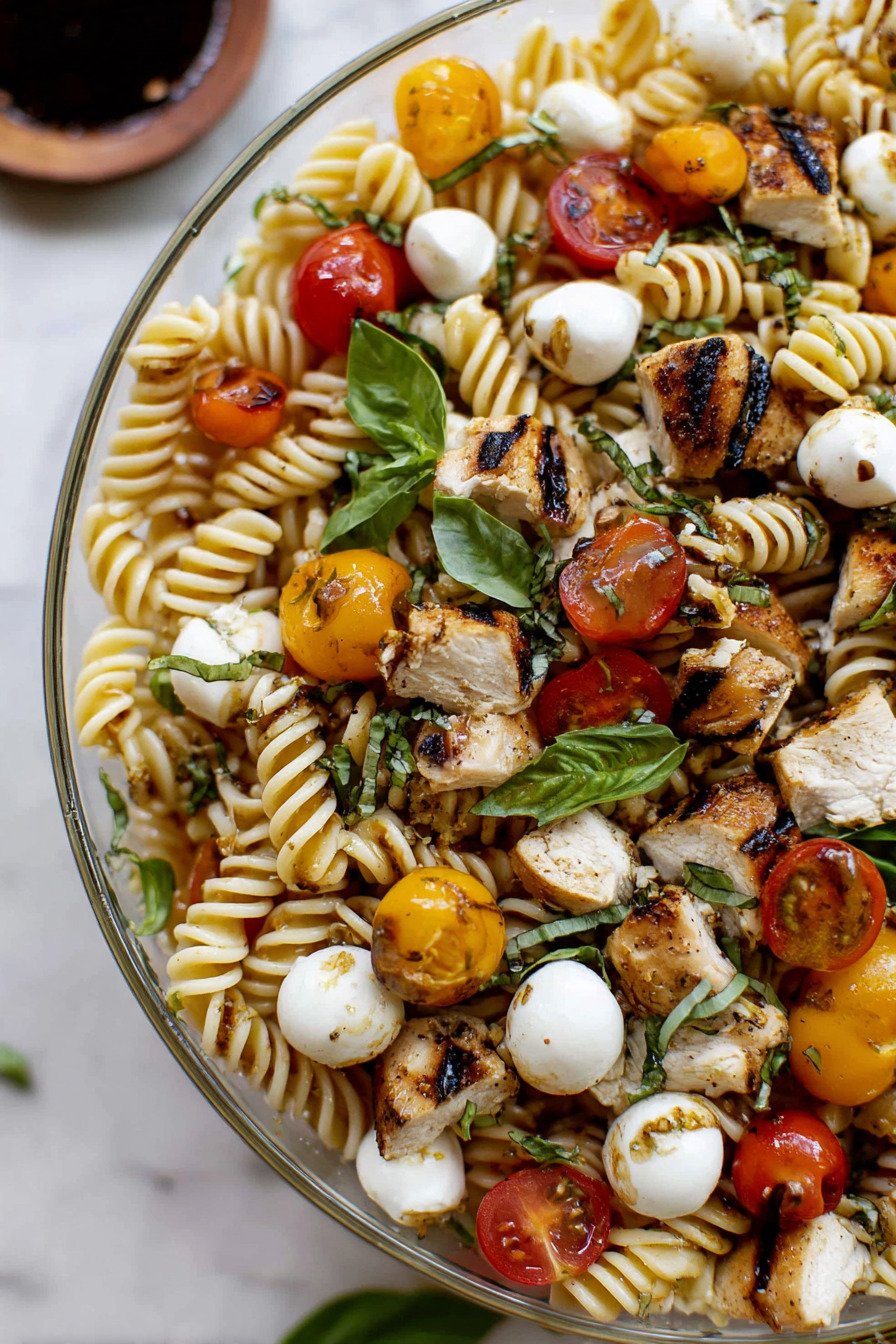
The pasta should be tender but not mushy, with enough surface texture to hold the balsamic dressing. The chicken should be juicy, not stringy, and the mozzarella should stay soft and creamy without melting into the pasta. The tomatoes should look glossy and fresh, not collapsed.
The aroma should be fresh basil first, then garlic and balsamic. A good chicken caprese pasta salad should not have watery pooling at the bottom of the bowl. If the salad looks dry, it may need a gentle toss with a spoonful of reserved dressing. If it looks heavy or oily, it may have been overdressed or tossed while the pasta was too warm.
11) Professional Secrets Behind Better Chicken Caprese Pasta Salad
The best cold pasta salads are seasoned before they are chilled and refreshed before they are served. Pasta firms up in the refrigerator, and cold temperatures dull salt, acidity, and herbs. That is why the final toss matters so much. It wakes up the dressing and redistributes flavor.
Another professional habit is cutting ingredients to similar bite sizes. Chicken chunks, tomato halves, mozzarella pieces, and pasta should feel balanced on the fork. When one ingredient is too large, the salad tastes separate instead of composed.
The final secret is restraint with basil. Fresh basil is delicate. Add enough for aroma and color, but do not bruise it by overmixing. Fold it in gently, and the whole bowl tastes fresher.
12) Best Dishes or Pairings to Serve With Chicken Caprese Pasta Salad
Chicken caprese pasta salad can stand alone as a light main dish, especially for warm-weather lunches, cookouts, or simple dinners. It also works beside grilled vegetables, garlic bread, roasted zucchini, corn on the cob, or a crisp green salad.
For a fuller dinner, serve it with a simple soup, marinated cucumbers, or a platter of fresh fruit. Since the salad already has chicken, pasta, cheese, tomatoes, and basil, the best pairings are usually clean, crisp, or lightly roasted rather than creamy or heavy.
13) Making Chicken Caprese Pasta Salad Ahead of Time
This recipe is very make-ahead friendly if you separate the delicate parts. The chicken can be marinated, grilled, and chilled a day in advance. The pasta can also be cooked ahead, drained well, and stored covered in the refrigerator.
For the freshest result, store the dressing separately and add the basil right before serving. If you want to assemble the pasta, chicken, tomatoes, and mozzarella ahead, wait to add fresh basil until the final toss. This protects the color and keeps the salad from tasting tired.
14) Storing Leftover Chicken Caprese Pasta Salad
Store leftover chicken caprese pasta salad in an airtight container in the refrigerator for up to 3 days. The pasta will continue to absorb dressing, so leftovers may taste less glossy than the first serving. A gentle toss before eating helps redistribute the dressing.
Freezing is not recommended because fresh mozzarella, tomatoes, basil, and cooked pasta lose their texture after thawing. For leftovers, serve the salad chilled or let it sit at room temperature for a few minutes before eating so the olive oil loosens and the flavors become brighter.
15) FAQ (Real Cooking Questions)
Can I make chicken caprese pasta salad the night before? Yes, but keep the basil separate until serving. You can assemble the pasta, chicken, tomatoes, mozzarella, and dressing ahead, then fold in fresh basil at the end for better color and aroma.
Can I use store-bought grilled chicken? Yes, as long as it is juicy and not overly salty. The salad will lose some marinade flavor, so toss the chicken with a spoonful of reserved dressing before adding it to the pasta.
What pasta shape works best? Spiral pasta is excellent because it catches dressing in the ridges. Penne works too, but very smooth pasta shapes may not hold the balsamic dressing as well.
Can I serve this warm? It is best slightly chilled or at room temperature. If the pasta is too hot, it can soften the mozzarella and wilt the basil.
How do I keep the salad from getting soggy? Drain the pasta well, halve the tomatoes instead of crushing them, add basil late, and avoid overdressing too early. Toss again right before serving for the freshest texture.
16) Save This Chicken Caprese Pasta Salad Recipe
If this chicken caprese pasta salad helped you solve dry chicken, dull dressing, or wilted basil, save it for summer dinners, cookouts, and make-ahead lunches. The key reminder is: reserve clean dressing first, rest the grilled chicken, and add basil at the end.
17) Conclusion
A great chicken caprese pasta salad is not about adding more ingredients. It is about timing the simple ones well. When the chicken is marinated and rested, the pasta is drained properly, the dressing is reserved safely, and the basil is added fresh, the whole bowl changes from ordinary pasta salad to a bright, balanced meal. Once you understand those checkpoints, you can make this salad with confidence instead of guessing.
18) Nutrition
Serving Size 1 portion Calories 610 Sugar 5 g Sodium 430 mg Fat 32 g Saturated Fat 8 g Carbohydrates 49 g Fiber 3 g Protein 31 g Cholesterol 78 mg
Leave a Comment