

1) The Balance Trick Behind The Best Healthy Caesar Dressing
Caesar dressing can taste too sharp, too salty, or strangely thin when the creamy base and acidity are not balanced. I’m Lila, and my first lighter version had plenty of lemon but not enough body, so it slid off the greens instead of coating them. After testing yogurt thickness, Dijon, parmesan, and a tiny optional touch of honey, I discovered that a healthy caesar salad needs dressing that tastes creamy first, then tangy and savory. This healthy caesar dressing feels like the kind of small kitchen win that makes lunch calmer, fresher, and easier to repeat.
Table of Contents
- 1) The Balance Trick Behind The Best Healthy Caesar Dressing
- 2) Key Takeaways
- 3) Easy The Best Healthy Caesar Dressing Recipe
- 4) Why Most The Best Healthy Caesar Dressing Recipes Fail
- 5) Ingredients for The Best Healthy Caesar Dressing
- 6) How to Make The Best Healthy Caesar Dressing
- 7) Recipe Card: The Best Healthy Caesar Dressing
- 8) Tips for Making The Best Healthy Caesar Dressing
- 9) Common Mistakes & Fixes
- 10) How to Tell The Best Healthy Caesar Dressing Has the Right Consistency
- 11) Professional Secrets Behind Better The Best Healthy Caesar Dressing
- 12) Best Dishes or Pairings to Serve With The Best Healthy Caesar Dressing
- 13) Making The Best Healthy Caesar Dressing Ahead of Time
- 14) Storing Leftover The Best Healthy Caesar Dressing
- 15) FAQ (Real Cooking Questions)
- 16) Save This The Best Healthy Caesar Dressing Recipe
- 17) Conclusion
- 18) Nutrition
2) Key Takeaways
- A good healthy caesar salad dressing needs enough body to cling to lettuce without turning heavy or pasty.
- Nonfat Greek yogurt gives the dressing creaminess, but lemon juice, Dijon mustard, and parmesan must be balanced so the flavor does not taste sour.
- Blending matters because dry seasonings, mustard, and parmesan need to spread evenly through the yogurt base.
- Store the dressing separately from greens so the salad stays crisp and the dressing keeps its creamy texture.
3) Easy The Best Healthy Caesar Dressing Recipe
This dressing is simple, but the success is in the ratio. Greek yogurt brings thickness, olive oil smooths the texture, lemon juice brightens the flavor, parmesan gives salty depth, and Dijon pulls the dressing together. The goal is not to make a watery “light” dressing. The goal is a healthier caesar dressing that still feels creamy, savory, and satisfying on crisp romaine.
What makes this method reliable is blending everything at once until the dressing looks smooth and cohesive. That short blending step prevents pockets of garlic powder, sharp mustard, or grainy parmesan from dominating one bite. When the dressing is right, it should coat the back of a spoon and leave a clean, tangy finish.

4) Why Most The Best Healthy Caesar Dressing Recipes Fail
Most lighter Caesar dressings fail because they remove richness without rebuilding texture. Greek yogurt can solve that, but only when it is balanced with olive oil and blended well. Without enough smoothing fat, the dressing can taste chalky or overly tangy instead of creamy.
Another common issue is harsh acidity. Lemon juice is important, but if the parmesan and Dijon are not fully blended into the yogurt, the dressing may taste sour before it tastes savory. A very small amount of optional honey can soften that sharp edge without making the dressing sweet.
Seasoning also matters. Garlic powder and onion powder need time and moisture to bloom in the dressing. If the dressing is served immediately without tasting after blending, the flavor can feel flat at first and stronger later. Letting it rest briefly in the refrigerator helps the seasonings settle into the creamy base.
The final failure is poor storage. Dressing left on lettuce too long makes the greens limp. For the freshest healthy caesar salad, keep the dressing in a sealed container and toss it with greens only right before serving.
5) Ingredients for The Best Healthy Caesar Dressing
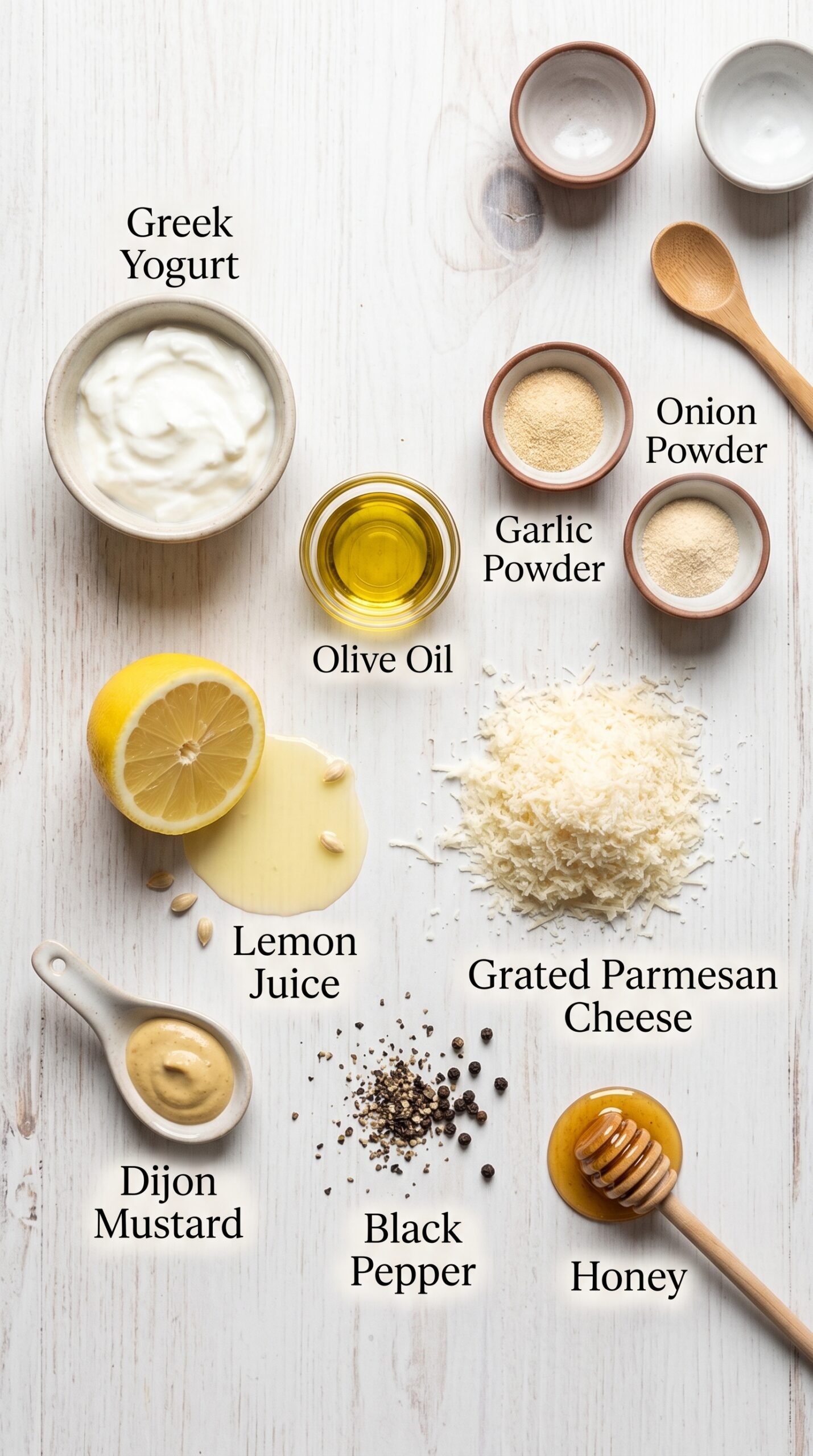
Nonfat Greek yogurt: This is the creamy base. Use it when you want thickness without a mayonnaise-heavy texture. If replaced with a thinner yogurt, the dressing may slide off the lettuce instead of coating it.
Olive oil: Olive oil softens the yogurt’s tang and gives the dressing a smoother mouthfeel. Add it before blending so it disperses evenly. Skipping it can make the dressing taste lean or slightly chalky.
Garlic powder: Garlic powder gives steady Caesar-style flavor without raw garlic bite. It works especially well in a quick blended dressing because it spreads evenly and does not leave sharp pieces behind.
Onion powder: Onion powder adds savory roundness. It helps the dressing taste fuller, especially because this homemade caesar dressing healthy version uses a yogurt base instead of heavier ingredients.
Lemon juice: Lemon juice brightens the dressing and balances the parmesan. Add it with the other ingredients so the acidity is blended through the yogurt instead of sitting on top as a sharp note.
Grated parmesan cheese: Parmesan provides saltiness, umami, and classic Caesar flavor. Use finely grated parmesan so the dressing blends smoother. Coarse shreds can make the texture uneven.
Dijon mustard: Dijon brings tang and helps the dressing taste more cohesive. Too much can turn bitter or sharp, so the measured amount is enough to support the Caesar flavor without taking over.
Black pepper: Black pepper gives the dressing a warm finish. It is especially noticeable in a simple dressing, so use fresh-tasting pepper if possible.
Honey, optional: Honey is only for balance. Use it when the lemon and yogurt taste too sharp. Leave it out if the dressing already tastes creamy, tangy, and savory.
- Greek yogurt vs regular yogurt: Greek yogurt gives a thicker, spoon-coating texture, while regular yogurt can make the dressing loose.
- Fresh lemon vs bottled lemon: Fresh lemon gives cleaner acidity. Bottled lemon can taste flatter or sharper in a no-cook dressing.
- Grated parmesan vs shredded parmesan: Grated parmesan blends more smoothly, while shredded parmesan can leave a rougher texture.
- Blender vs whisk: A blender or small food processor gives the smoothest healthy caesar dressing because the seasonings and cheese disperse evenly.
6) How to Make The Best Healthy Caesar Dressing
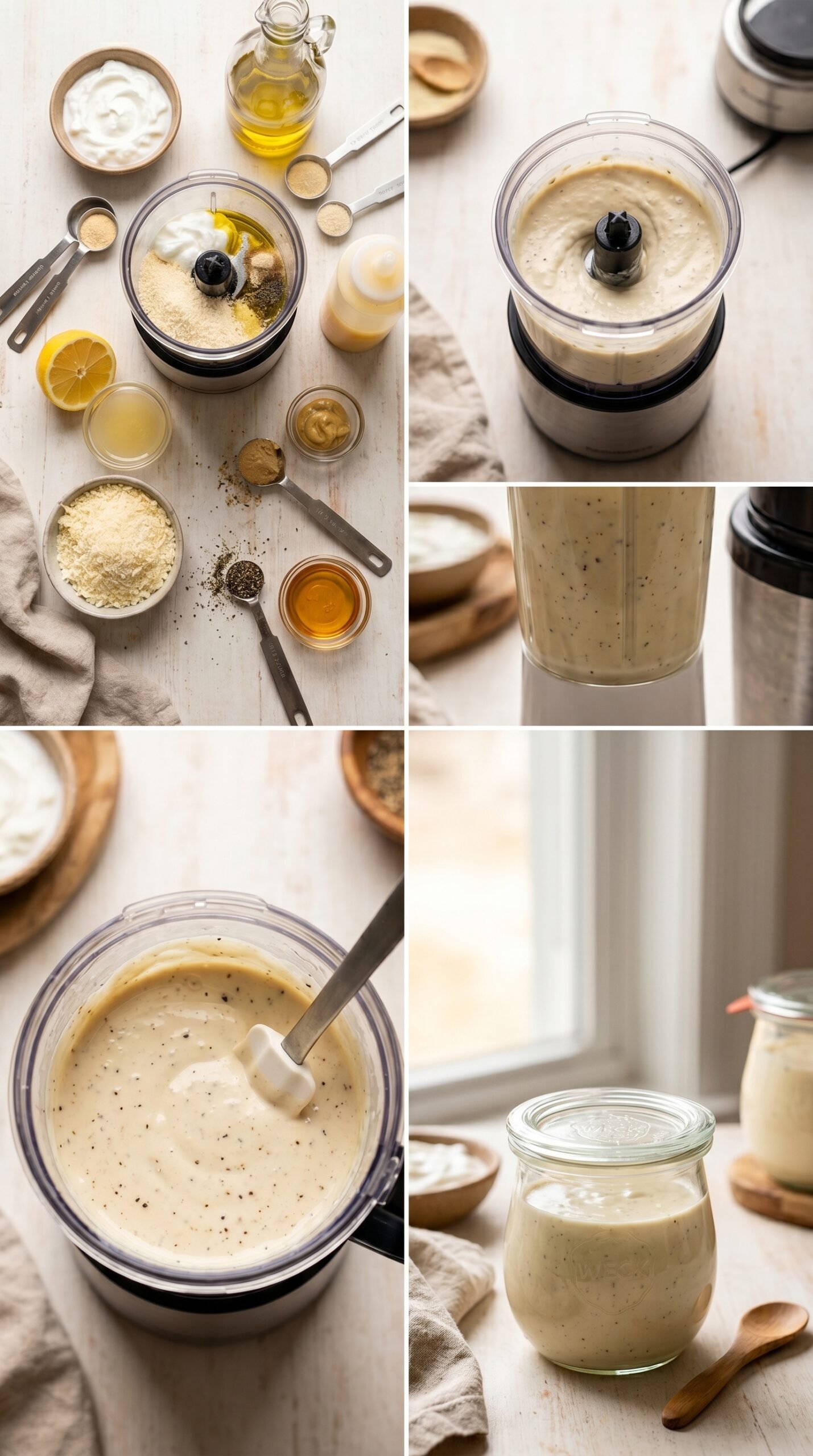
Step 1: Add the Greek yogurt, olive oil, garlic powder, onion powder, lemon juice, parmesan, Dijon mustard, black pepper, and optional honey to a small blender or food processor. Putting everything in together helps the seasoning distribute evenly.
Step 2: Blend until the dressing looks creamy, pale, and smooth. Stop and scrape the sides if you see dry seasoning stuck near the blade or thick yogurt clinging to the container.
Step 3: Taste only after blending. The parmesan, lemon, and mustard need to fully combine before you can judge the balance. If it tastes too sharp, add the optional honey and blend briefly again.
Step 4: Check the consistency. It should coat a spoon but still be loose enough to drizzle over lettuce. If it feels too thick after chilling, stir it well before serving.
Step 5: Refrigerate the dressing in a sealed container and use it within 4 days. Toss it with salad just before eating so the greens stay crisp instead of soggy.
7) Recipe Card: The Best Healthy Caesar Dressing

The Best Healthy Caesar Dressing for Healthy Caesar Salad
Ingredients
- ¼ cup nonfat greek yogurt, used as the creamy base that keeps the dressing thick and lighter than mayo-based versions
- 1.5 tablespoon olive oil, added for smoothness and a richer mouthfeel without making the dressing greasy
- 3/4 teaspoon garlic powder, for steady garlic flavor that blends evenly into the dressing
- 3/4 teaspoon onion powder, to round out the savory flavor without adding sharp raw onion texture
- 1 tablespoons lemon juice – juice of half lemon, for bright acidity that balances the yogurt and parmesan
- 1/3 cup grated parmesan cheese, for salty depth, umami, and classic Caesar flavor
- 1.5 teaspoon dijon mustard, to help the dressing taste sharper and more cohesive
- 1/2 teaspoon black pepper, for mild heat and a classic Caesar-style finish
- ½ teaspoon honey optional, used only if the dressing tastes too sharp and needs gentle balance
Instructions
- Add the nonfat greek yogurt, olive oil, garlic powder, onion powder, lemon juice, grated parmesan, Dijon mustard, black pepper, and optional honey to a small food processor or blender. Blend until the dressing looks smooth, creamy, and evenly speckled with parmesan, scraping the sides once if needed so no dry seasoning pockets remain.
- Taste and adjust only after blending because the parmesan and mustard need a moment to spread through the yogurt base. Store the dressing in an airtight container in the refrigerator for up to 4 days, stirring before serving if it thickens or separates slightly.
8) Tips for Making The Best Healthy Caesar Dressing
Use a small blender or mini food processor if you have one. A large blender can work, but a small batch may sit below the blade and blend unevenly. Scraping the sides once makes a noticeable difference because garlic powder, onion powder, and parmesan can cling to the container.
Do not thin the dressing too early. Greek yogurt loosens slightly after blending with lemon juice and salt from the parmesan. If you add extra liquid before the dressing rests, it can become too runny by the time you toss the salad.
For the best healthy caesar salad, dry the lettuce well before adding dressing. Water on the leaves weakens the dressing, dulls the flavor, and makes even a creamy dressing taste thin. Crisp, dry romaine gives the dressing something to cling to.
If you want a caesar salad dressing healthy enough for frequent lunches, keep the dressing separate from the salad components. Toss only what you plan to eat, then store the remaining dressing on its own.

9) Common Mistakes & Fixes
Problem: The dressing tastes too sour. Cause: The yogurt and lemon are stronger than the parmesan and olive oil. Fix: Blend in the optional honey, then let the dressing rest for a few minutes before tasting again.
Problem: The texture is grainy. Cause: The parmesan may be too coarse or the dressing was not blended long enough. Fix: Blend until smoother and use finely grated parmesan next time.
Problem: The dressing is too thick. Cause: Greek yogurt firms up when chilled. Fix: Stir well before serving. If needed, loosen only the portion you are using with a few drops of lemon juice or water.
Problem: The salad gets soggy. Cause: Dressing was added too early or the greens were wet. Fix: Dry the lettuce thoroughly and toss with dressing right before serving.
Problem: The flavor tastes flat. Cause: The dressing may not have rested long enough for the garlic powder, onion powder, and pepper to bloom. Fix: Chill it briefly, stir, and taste again before adjusting.
10) How to Tell The Best Healthy Caesar Dressing Has the Right Consistency
The right consistency should be creamy, smooth, and spoon-coating without looking stiff. When you drag a spoon through it, the dressing should move slowly but still settle back into itself. It should not look watery around the edges, overly glossy with separated oil, or clumpy with visible dry seasoning.
The flavor should taste tangy first, then savory from the parmesan and Dijon, with garlic and pepper coming through at the end. The aroma should be clean and lightly garlicky, not harsh or sour. On lettuce, the dressing should cling in a thin creamy layer instead of pooling at the bottom of the bowl.
11) Professional Secrets Behind Better The Best Healthy Caesar Dressing
The biggest secret is balance before adjustment. Many cooks add more lemon, salt, or mustard too quickly, but a blended yogurt dressing changes after the parmesan and seasonings hydrate. Let it sit briefly, stir, then taste. That pause helps prevent overcorrecting.
Another useful trick is to match the dressing thickness to the salad. For chopped romaine, a thicker healthy caesar salad dressing works well because it coats all the cut edges. For delicate greens or wraps, stir the dressing until slightly looser so it spreads without crushing the ingredients.
Finally, think of parmesan as both flavor and seasoning. It adds salt, umami, and body. If the dressing tastes bland, it may not need more lemon or mustard; it may simply need a better distribution of parmesan through a longer blend.
12) Best Dishes or Pairings to Serve With The Best Healthy Caesar Dressing
This dressing is built for crisp romaine, but it also works with grilled chicken salad, turkey wraps, roasted chickpea bowls, veggie snack plates, and grain bowls with quinoa or farro. The creamy tang balances smoky, roasted, and crunchy ingredients especially well.
For a full meal, pair a healthy caesar salad with grilled chicken, salmon, shrimp, or roasted vegetables. For a lighter lunch, toss the dressing with romaine, parmesan, cucumbers, and crunchy whole-grain croutons. It also works as a caesar dressing substitute for sandwiches when you want creamy flavor without using a heavier spread.

13) Making The Best Healthy Caesar Dressing Ahead of Time
This dressing is a good make-ahead option because the seasonings have time to soften into the yogurt. Make it a few hours before serving, then keep it covered in the refrigerator. Stir before using because yogurt-based dressings can thicken slightly as they sit.
For meal prep, store the dressing separately from lettuce, croutons, and toppings. The salad will taste fresher if you wait to toss everything until just before eating. If the dressing becomes thicker overnight, loosen only the amount you need so the rest stays stable for later meals.
14) Storing Leftover The Best Healthy Caesar Dressing
Store leftover dressing in an airtight container in the refrigerator for up to 4 days. A small jar works well because you can stir or shake it before serving. Do not leave it at room temperature for long periods because the yogurt and parmesan need refrigeration.
Freezing is not recommended for this dressing. Greek yogurt can separate after thawing, and the texture may turn grainy. If you have leftovers near the end of the storage window, use them as a dip for vegetables, a wrap spread, or a quick dressing for a lunch bowl.
15) FAQ (Real Cooking Questions)
Can I make this healthy caesar dressing without a food processor? Yes, but the texture will be smoother with a blender or food processor. If whisking by hand, use finely grated parmesan and whisk until no dry seasoning pockets remain.
Why does my dressing taste too tangy? Greek yogurt and lemon both bring acidity. Blend the dressing fully first, then use the optional honey only if the flavor still tastes too sharp.
Can I use this as a caesar dressing substitute? Yes. It works well in salads, wraps, grain bowls, and as a vegetable dip when you want creamy Caesar flavor with a lighter base.
How do I keep my healthy caesar salad from getting soggy? Dry the greens well and add the dressing right before serving. Wet lettuce and early tossing are the two biggest causes of soggy salad.
Can I make homemade caesar dressing healthy and still creamy? Yes. The key is using thick Greek yogurt for body, olive oil for smoothness, and parmesan for savory depth instead of relying on a heavy base.
16) Save This The Best Healthy Caesar Dressing Recipe
If this The Best Healthy Caesar Dressing helped you solve thin, sharp, or watery Caesar dressing, save it for meal prep salads and quick lunches. The key reminder is: blend until creamy, taste after the seasonings settle, and toss with greens only when ready to eat.

17) Conclusion
A lighter Caesar dressing does not have to taste thin or unfinished. When the yogurt, lemon, Dijon, parmesan, olive oil, and seasonings are blended into the right balance, the result is creamy, tangy, savory, and useful beyond one salad bowl. Once you understand the texture cues and the mistakes to avoid, making a healthy caesar salad at home feels much more dependable.

18) Nutrition
Serving Size 1 portion Calories 58 Sugar 1 g Sodium 145 mg Fat 4 g Saturated Fat 1 g Carbohydrates 2 g Fiber 0 g Protein 4 g Cholesterol 5 mg






Leave a Comment