
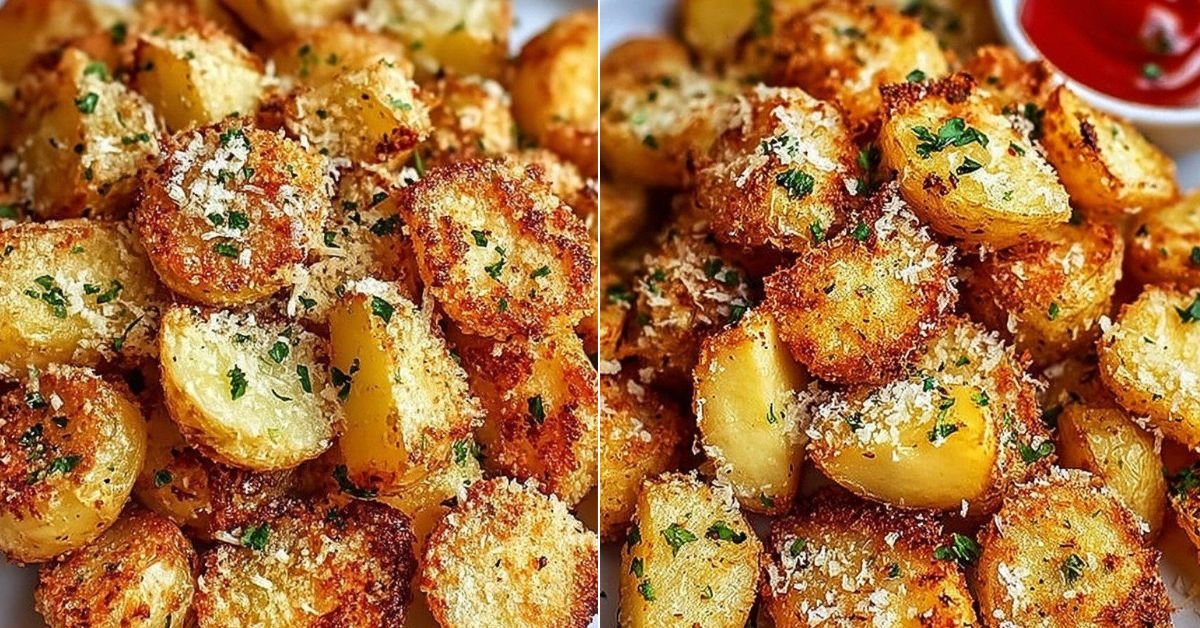
1) The Crispy Edge Trick Behind Viral Crispy Garlic Parmesan Crusted Potatoes
Soft roasted potatoes are usually not a potato problem; they are a moisture and timing problem. I’m Lila, and my first batch of crispy garlic parmesan potatoes tasted good but turned patchy because I added the cheese coating too early and crowded the pan. After testing the first roast, hotter second bake, and how warm potatoes hold garlic butter and Parmesan, I discovered the crust needs dry space, heat, and the right moment to cling. That small adjustment turned this crispy potato side dish into the kind of calm, save-worthy comfort recipe I want beside a Sunday dinner.
Table of Contents
- 1) The Crispy Edge Trick Behind Viral Crispy Garlic Parmesan Crusted Potatoes
- 2) Key Takeaways
- 3) Easy Viral Crispy Garlic Parmesan Crusted Potatoes Recipe
- 4) Why Most Viral Crispy Garlic Parmesan Crusted Potatoes Recipes Fail
- 5) Ingredients for Viral Crispy Garlic Parmesan Crusted Potatoes
- 6) How to Make Viral Crispy Garlic Parmesan Crusted Potatoes
- 7) Recipe Card: Viral Crispy Garlic Parmesan Crusted Potatoes
- 8) Tips for Making Viral Crispy Garlic Parmesan Crusted Potatoes
- 9) Common Mistakes & Fixes
- 10) How to Tell Viral Crispy Garlic Parmesan Crusted Potatoes Are Perfect
- 11) Professional Secrets Behind Better Viral Crispy Garlic Parmesan Crusted Potatoes
- 12) Best Dishes or Pairings to Serve With Viral Crispy Garlic Parmesan Crusted Potatoes
- 13) Making Viral Crispy Garlic Parmesan Crusted Potatoes Ahead of Time
- 14) Storing Leftover Viral Crispy Garlic Parmesan Crusted Potatoes
- 15) FAQ (Real Cooking Questions)
- 16) Save This Viral Crispy Garlic Parmesan Crusted Potatoes Recipe
- 17) Conclusion
- 18) Nutrition
2) Key Takeaways
- Roast the potatoes once before adding the garlic Parmesan coating so the centers soften before the crust starts browning.
- Use a large baking sheet and leave space between pieces; crowded potatoes steam instead of crisp.
- Add the butter, garlic, and Parmesan mixture while the potatoes are warm so the coating clings instead of sliding off.
- Finish at higher heat and watch the final minutes closely because Parmesan browns quickly once it starts to crust.
3) Easy Viral Crispy Garlic Parmesan Crusted Potatoes Recipe
This method works because it separates tenderness from crispness. The first roast at 400°F gives the potato chunks enough time to cook through and develop lightly browned surfaces. Then the garlic, butter, olive oil, Parmesan, Italian seasoning, salt, and pepper go on after the potatoes are already hot and tender. That timing matters because Parmesan can brown before raw potato centers are done. By increasing the oven to 425°F for the second bake, the outside turns golden and crackly while the inside stays creamy.
The goal is not just browned potatoes. The goal is crispy parmesan potatoes with distinct edges, a savory garlic aroma, and a cheese crust that feels attached to the potato instead of scattered across the pan. This is one of those easy potato recipes where the technique is simple, but the order of steps makes the difference between soft roasted potatoes and a true crispy potato side dish.
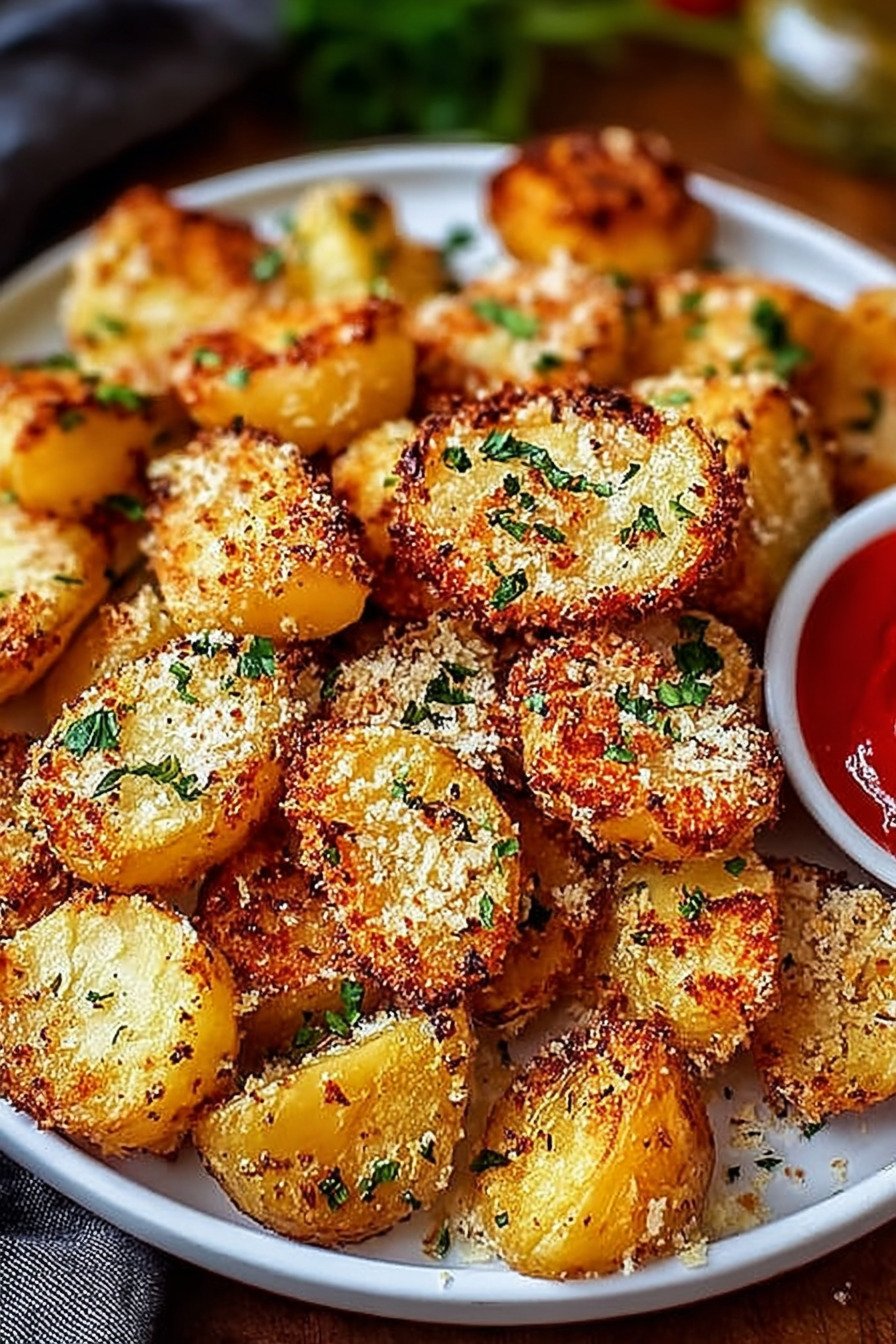
4) Why Most Viral Crispy Garlic Parmesan Crusted Potatoes Recipes Fail
The first failure is excess moisture. Potatoes that are wet after washing, or packed too tightly on the pan, release steam. Steam softens the surface and prevents browning, so the potatoes may become tender but never develop crisp edges. Dry potatoes and a single layer help the oven heat reach the cut sides directly.
The second failure is adding Parmesan too early. Cheese browns faster than potatoes cook, especially at high heat. If the garlic Parmesan mixture goes on before the potatoes are fork-tender, the crust can darken while the inside stays firm. This two-stage method prevents that by softening the potatoes first, then building the crust.
The third failure is harsh or burned garlic. Minced garlic gives great flavor, but small pieces can scorch if the oven is too hot for too long. Mixing garlic with butter, oil, and Parmesan after the first roast gives it enough time to become fragrant without turning bitter.
The fourth failure is flat seasoning. Potatoes need salt early enough to taste seasoned, but Parmesan also brings saltiness. That is why the recipe uses measured salt in the coating and leaves room to adjust after baking if needed.
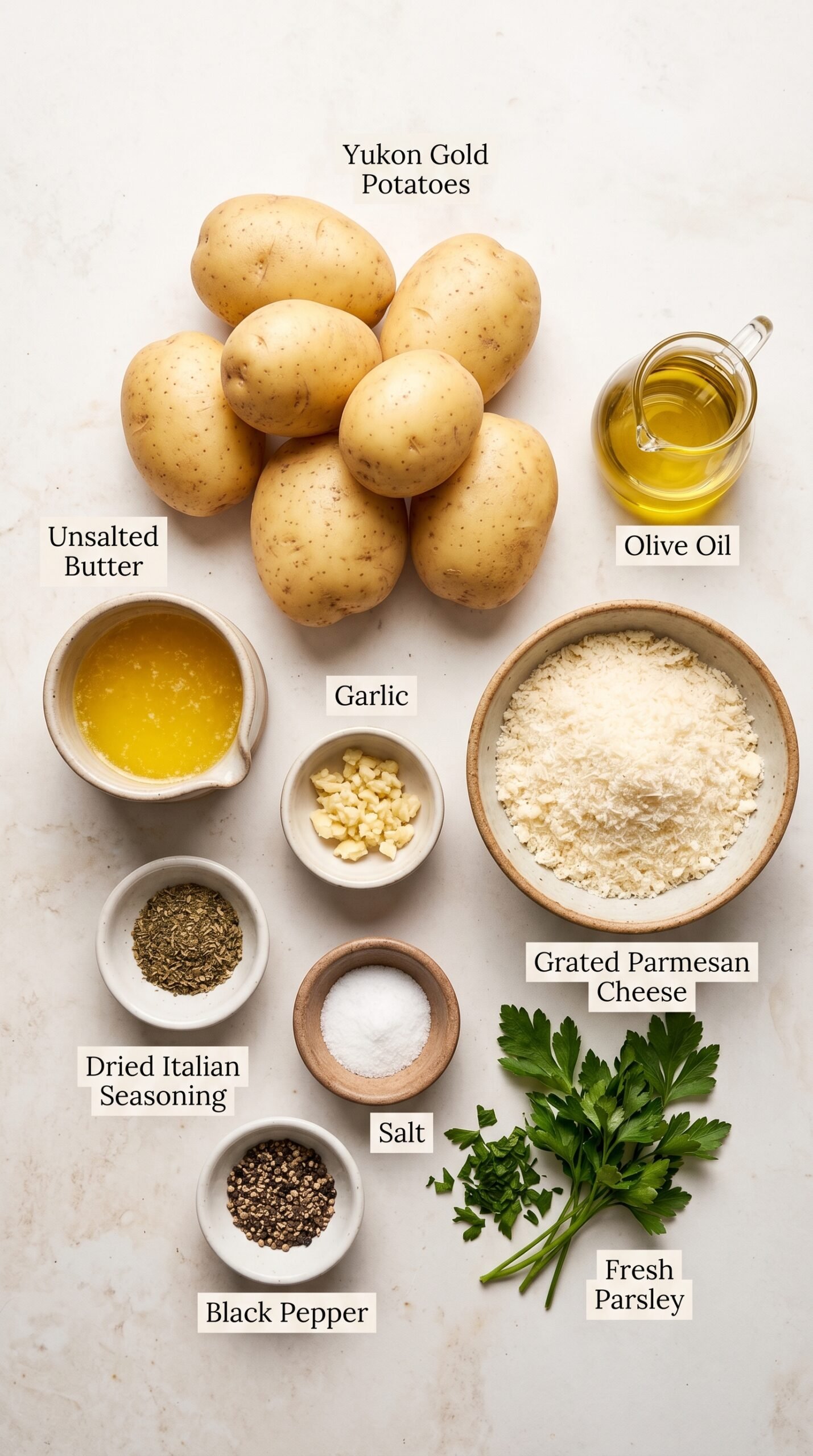
5) Ingredients for Viral Crispy Garlic Parmesan Crusted Potatoes
Yukon Gold potatoes: Yukon Gold potatoes give creamy interiors and hold their shape well during roasting. Use them when you want tender centers with browned edges. If you replace them with red potatoes, the result stays firm and waxy; if you use russets, the edges may crisp more but the pieces can break more easily.
Olive oil: Olive oil coats the potatoes for the first roast and helps heat move evenly across the cut surfaces. Use part of it before roasting and the rest in the garlic Parmesan mixture. Too little oil can make the potatoes dry; too much can make the crust feel greasy.
Unsalted butter: Melted butter helps the Parmesan and garlic cling to the warm potatoes. Unsalted butter gives better control because Parmesan already adds salt. If salted butter is used, reduce the added salt slightly and taste carefully at the end.
Garlic: Minced garlic gives these garlic parmesan potatoes their strongest savory aroma. Add it to the coating rather than the first roast so it does not burn before the potatoes are tender. Finely minced garlic spreads more evenly than large chunks.
Parmesan cheese: Grated Parmesan creates the crust. Finely grated cheese melts and browns more evenly than large shreds, which can clump or separate. For the best parmesan crusted potatoes, use a dry, finely grated texture that can coat the potato surfaces.
Italian seasoning: Dried Italian seasoning adds oregano-thyme style depth without adding moisture. It works best in the butter mixture because the fat helps carry the herb aroma across the potatoes.
Salt: Salt sharpens the potato flavor and balances the richness of butter and cheese. Add the measured amount to the coating, then adjust only after baking if the Parmesan was mild.
Black pepper: Black pepper adds warmth and keeps the cheese crust from tasting flat. Freshly cracked pepper gives a stronger aroma, but use a moderate amount so it does not overpower the garlic.
Fresh parsley: Parsley is optional, but it adds freshness after baking. Add it at the end, not before roasting, because tender herbs darken quickly in high heat.
- Yukon Gold vs red potatoes: Yukon Gold potatoes taste creamier, while red potatoes stay a little firmer and waxier.
- Warm coating vs cold coating: A warm butter mixture spreads smoothly and clings better to hot potatoes; a cold mixture can thicken and coat unevenly.
- Finely grated Parmesan vs shredded Parmesan: Finely grated Parmesan forms a more even crust, while shreds can melt in patches.
- Single layer vs crowded pan: A single layer encourages browning; crowding traps steam and softens the edges.
6) How to Make Viral Crispy Garlic Parmesan Crusted Potatoes
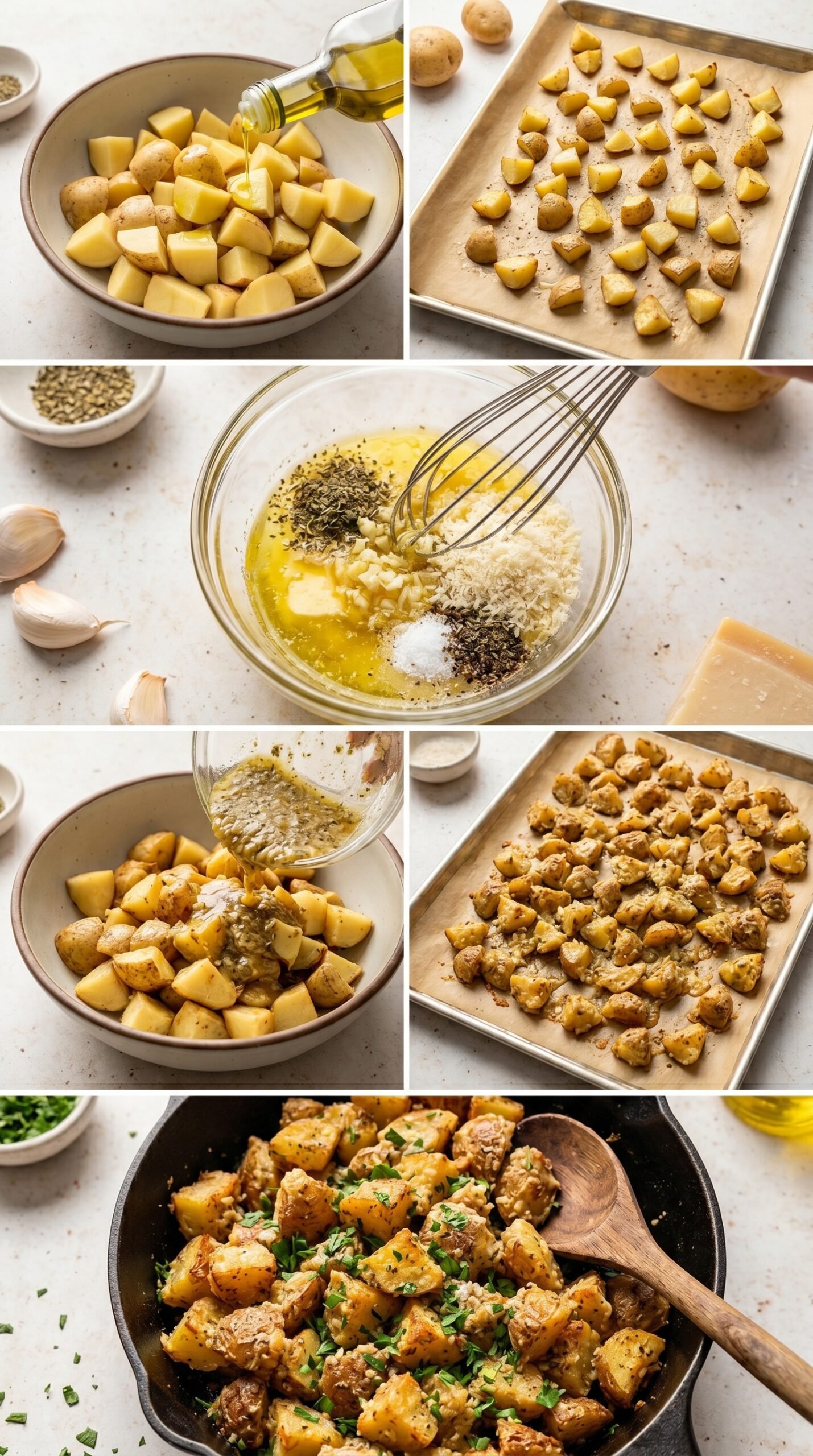
Step 1: Preheat the oven to 400°F and cut the scrubbed potatoes into even 1-inch chunks. Even sizing matters because small pieces can overbrown before larger ones become tender.
Step 2: Toss the potato chunks with 2 tablespoons of olive oil until every surface has a light sheen. Spread them in a single layer on a large baking sheet, leaving space so the potatoes roast instead of steam.
Step 3: Roast for 20 to 25 minutes, shaking the pan halfway through. The potatoes should be fork-tender and starting to show light browning before the cheese coating is added.
Step 4: While the potatoes roast, whisk the melted butter, remaining olive oil, minced garlic, grated Parmesan, Italian seasoning, salt, and black pepper. The mixture should look thick and evenly combined, not dry or separated.
Step 5: Remove the tender potatoes, increase the oven to 425°F, and gently toss the warm potatoes with the garlic Parmesan mixture. Return them to the sheet pan in a single layer and bake until the crust is golden, the edges are deeply browned, and the garlic smells mellow and savory.
7) Recipe Card: Viral Crispy Garlic Parmesan Crusted Potatoes
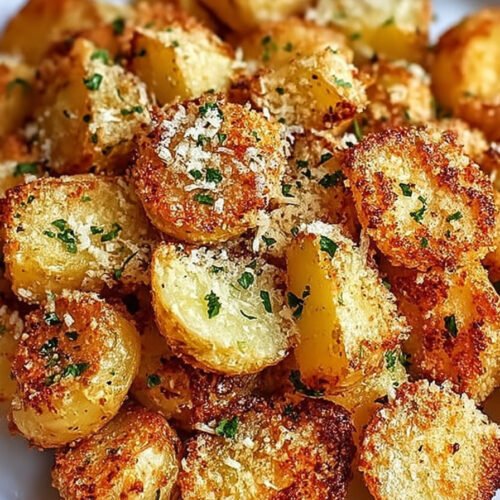
Viral Crispy Garlic Parmesan Crusted Potatoes
Ingredients
- 2 pounds Yukon Gold potatoes (or other waxy potatoes like red potatoes), scrubbed clean; waxy potatoes hold their shape and give creamy centers with crisp edges.
- 3 tablespoons olive oil, divided; this helps the potatoes roast evenly before the cheese coating is added.
- 2 tablespoons unsalted butter, melted; use it warm so it blends smoothly with the Parmesan and garlic.
- 4 cloves garlic, minced; mince finely so the garlic flavors the coating without leaving large pieces that burn quickly.
- 1/2 cup grated Parmesan cheese; finely grated Parmesan creates the strongest crust and browns more evenly than large shreds.
- 1 teaspoon dried Italian seasoning (or a mix of dried oregano and thyme), for a savory herb layer that balances the garlic and cheese.
- 1/2 teaspoon salt, or to taste; adjust at the end because Parmesan adds saltiness.
- 1/4 teaspoon black pepper, or to taste; freshly ground pepper gives the best aroma.
- Fresh parsley, chopped, for garnish (optional); add after baking for freshness and color.
Instructions
- Preheat the oven to 400°F (200°C). Starting at this temperature softens the potatoes first so the inside becomes tender before the final high-heat crisping stage.
- Cut the potatoes into roughly 1-inch chunks, keeping the pieces similar in size so they roast at the same speed. Wedges or cubes both work, but uneven pieces can leave some potatoes dry while others stay firm.
- Place the potato chunks in a large bowl and drizzle with 2 tablespoons of the olive oil. Toss until every cut side has a light sheen, which helps the surfaces roast instead of drying out.
- Spread the potatoes in a single layer on a large baking sheet. Leave space between the pieces because crowding traps steam and prevents the crisp edges needed for crispy garlic parmesan potatoes.
- Roast for 20 to 25 minutes, shaking the pan halfway through, until the potatoes are fork-tender and beginning to brown in spots. This first roast builds a soft center before the Parmesan crust is added.
- While the potatoes roast, whisk together the melted butter, remaining 1 tablespoon olive oil, minced garlic, grated Parmesan cheese, Italian seasoning, salt, and pepper in a small bowl. The mixture should look thick, savory, and evenly combined.
- Carefully remove the baking sheet from the oven once the potatoes are tender. Use caution because the pan and oil will be very hot.
- Increase the oven temperature to 425°F (220°C). The higher heat helps the Parmesan brown and the potato edges turn crackly without overcooking the centers.
- Transfer the warm potatoes back to the large bowl. Pour the garlic Parmesan mixture over them and toss gently until each piece is coated; the warmth helps the butter and cheese cling to the surface.
- Return the coated potatoes to the baking sheet and spread them into a single layer again. Keep the cheese-coated sides exposed where possible for better browning and a stronger crust.
- Bake for another 15 to 20 minutes, until the crust is golden brown, the edges are deeply browned, and the garlic smells roasted rather than sharp. Watch closely near the end because Parmesan can move from browned to overdone quickly.
- Remove from the oven, garnish with chopped parsley if using, and serve immediately while the crust is crisp and the centers are creamy.
8) Tips for Making Viral Crispy Garlic Parmesan Crusted Potatoes
Dry the potatoes well after scrubbing. Surface moisture is one of the fastest ways to lose crispness because the oven must evaporate water before browning can begin. If the potatoes feel damp, pat them with a clean towel before adding oil.
Use a pan large enough for air and heat to move between pieces. If the potatoes are touching too much, split them between two baking sheets. This one step often changes the result from pale and soft to browned and crisp.
Do not rush the first roast. The potatoes need to be fork-tender before the Parmesan coating goes on. If the centers are still firm, the second bake may brown the outside while leaving the inside undercooked.
Toss gently after adding the coating. The potatoes are already tender at this stage, so aggressive stirring can break them apart and create mashed edges instead of clean, crisp surfaces.
Watch the final bake closely. Parmesan browns quickly, especially near the edges of the pan. Pull the potatoes when the crust is golden and the garlic smells roasted, not sharp or bitter.
9) Common Mistakes & Fixes
Problem: The potatoes are soft instead of crispy. Cause: The pan was crowded or the potatoes were too wet. Fix: Dry the potatoes well, use a larger pan, and keep every piece in a single layer with space around it.
Problem: The Parmesan crust burns before the potatoes are tender. Cause: The cheese mixture was added too early. Fix: Roast the potatoes first until fork-tender, then add the garlic Parmesan coating for the hotter finishing bake.
Problem: The garlic tastes bitter. Cause: Garlic pieces were too large or baked too long at high heat. Fix: Mince the garlic finely and watch the final 5 minutes carefully; the aroma should be mellow and savory.
Problem: The coating slides off the potatoes. Cause: The potatoes cooled too much before tossing or the coating was uneven. Fix: Toss the potatoes while they are warm so the butter and Parmesan cling to the surface.
Problem: The flavor tastes flat. Cause: The potatoes were under-seasoned or the cheese was mild. Fix: Use the salt in the coating, then taste after baking and finish with a small pinch of salt and black pepper if needed.
10) How to Tell Viral Crispy Garlic Parmesan Crusted Potatoes Are Perfect
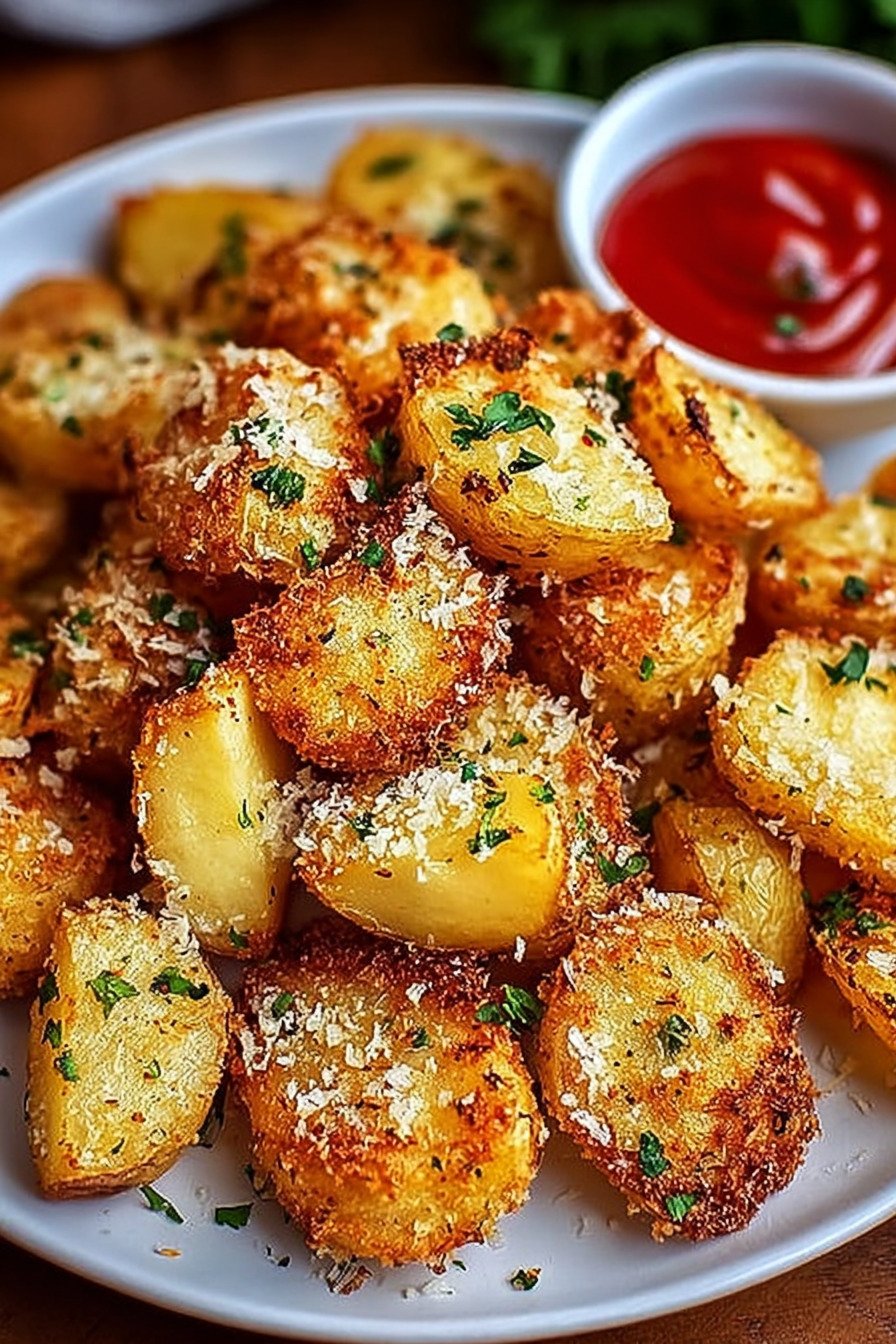
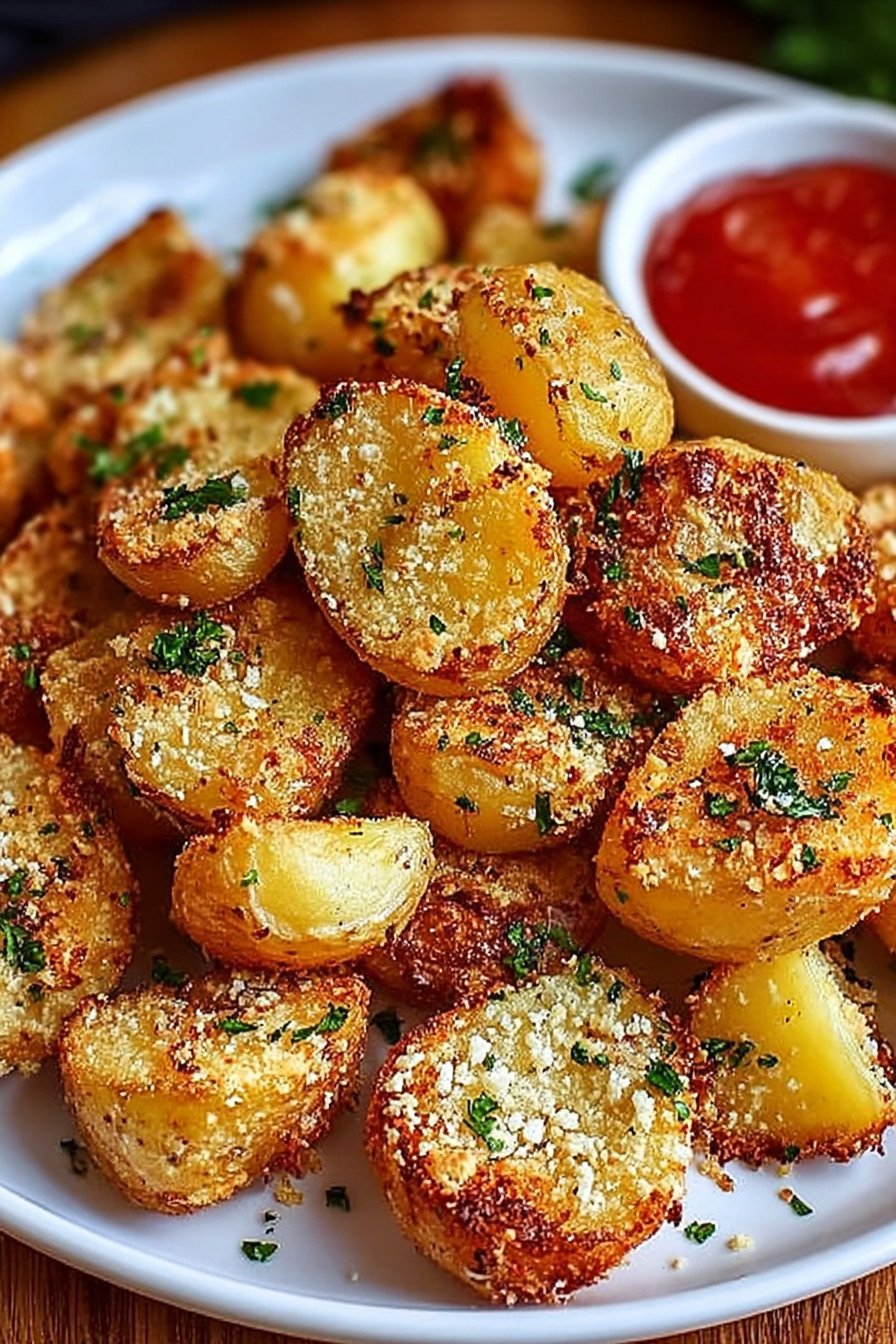
Perfect crispy garlic parmesan potatoes should look golden on the outside with deeper brown edges and small crisp Parmesan bits clinging to the surface. The cut sides should not look wet or pale, and there should not be a puddle of oil or butter on the pan.
The texture should be creamy in the center and crackly around the edges. When you press a piece gently with a fork, it should yield inside without collapsing into a greasy mash. If the crust feels leathery or the cheese looks very dark, the potatoes baked too long after coating.
The aroma should be savory, buttery, and garlicky, with the Parmesan smelling toasted rather than burned. The flavor should be balanced: salty enough to wake up the potato, peppery enough to add warmth, and garlicky without tasting harsh.
11) Professional Secrets Behind Better Viral Crispy Garlic Parmesan Crusted Potatoes
The most useful professional habit here is staged cooking. Restaurants often build texture in layers instead of asking one cooking step to do everything. The first roast softens the potato and begins browning. The second roast finishes the crust. That is why the method works better than coating raw potatoes with cheese from the start.
Another important detail is surface area. More exposed cut sides mean more places for browning and more places for the Parmesan mixture to grab. Cutting the potatoes into even chunks gives every piece a fair chance to crisp at the same time.
The final secret is knowing when to stop. These potatoes are at their best right when the edges turn crackly and the garlic smells sweet-savory. Leaving them in the oven for “just a few more minutes” can turn the Parmesan bitter, especially around the edges of the pan.
12) Best Dishes or Pairings to Serve With Viral Crispy Garlic Parmesan Crusted Potatoes
These potatoes work well with roasted chicken, grilled steak, baked fish, turkey burgers, meatloaf, or a simple omelet because the crisp Parmesan crust adds texture next to softer main dishes. For a lighter plate, serve them with a green salad, steamed vegetables, or roasted asparagus to balance the richness of the butter and cheese.
For a comfort-style dinner, pair them with garlic chicken, slow-cooked beef, or a creamy soup. For a casual meal, they also work as a crisp potato side with sandwiches or sliders. If serving them for a holiday meal, add the parsley right before serving so the dish looks fresh instead of heavy.
13) Making Viral Crispy Garlic Parmesan Crusted Potatoes Ahead of Time
The best make-ahead strategy is to prep the potatoes, not fully bake them too early. You can scrub and cut the potatoes a few hours ahead, then keep them covered in cold water so they do not discolor. Before roasting, drain them well and dry them thoroughly; wet potatoes will not crisp properly.
You can also whisk the garlic Parmesan mixture shortly before cooking. If the butter firms up, warm it gently until it is loose enough to coat the potatoes. For the best texture, complete both baking stages close to serving time because the crust is crispiest straight from the oven.
14) Storing Leftover Viral Crispy Garlic Parmesan Crusted Potatoes
Store leftovers in an airtight container in the refrigerator for up to 3 days. The crust will soften as the potatoes chill because moisture moves from the center to the surface. That is normal, but it means the reheating method matters.
For the best leftover texture, reheat the potatoes on a baking sheet at 400°F until hot and the edges crisp again. Avoid microwaving if crispness matters because steam softens the Parmesan crust. Leftovers can be chopped into breakfast hash, tucked into a grain bowl, or served with eggs and vegetables.
15) FAQ (Real Cooking Questions)
Can I use russet potatoes instead of Yukon Gold? Yes, but the texture will change. Russets can crisp well because they are starchier, but they may break apart more easily when tossed with the coating. Toss gently and avoid overhandling them after the first roast.
Why did my crispy garlic parmesan potatoes stick to the pan? Sticking usually happens when the pan is too dry, the cheese melts directly onto a hot spot, or the potatoes are moved too soon. Make sure the potatoes are lightly coated with oil and use a sturdy baking sheet.
Can I make these garlic parmesan potatoes without butter? You can use extra olive oil, but the crust will taste less rich and may not cling the same way. Butter helps the Parmesan coat the potatoes and adds a deeper browned flavor.
What Parmesan works best for this parmesan potato recipe? Finely grated Parmesan works best because it coats the potatoes evenly and browns into a thin crust. Large shreds can melt unevenly and create patches instead of an even coating.
How do I keep parmesan crusted potatoes crispy for serving? Serve them soon after baking and avoid covering the pan tightly. A tight cover traps steam, which softens the crust. If they need to wait briefly, keep them uncovered in a warm oven for a short time.
16) Save This Viral Crispy Garlic Parmesan Crusted Potatoes Recipe
If this Viral Crispy Garlic Parmesan Crusted Potatoes recipe helped you solve the soft roasted potato problem, save it for Sunday dinners, holiday sides, or any meal that needs a crisp potato side. The key reminder is: roast first for tenderness, then coat and bake hotter for the Parmesan crust.
17) Conclusion
Once you understand the timing, crispy garlic parmesan potatoes become much more predictable. The first roast builds a tender center, the warm coating clings to the potato surface, and the hotter finish turns Parmesan into a crisp, savory crust. Instead of guessing why potatoes come out soft, you now have clear checkpoints: dry surfaces, pan space, fork-tender centers, and a golden finish. That is the difference between a simple roasted potato and a side dish with real texture, aroma, and confidence behind it.
18) Nutrition
Serving Size 1 portion Calories 382 Sugar 2 g Sodium 390 mg Fat 18 g Saturated Fat 6 g Carbohydrates 47 g Fiber 5 g Protein 9 g Cholesterol 20 mg


Leave a Comment