

1) What Makes This High Protein Greek Pasta Salad Worth Saving
Pasta salad should not taste watery, dull, or like plain noodles hiding under dressing. I’m Lila, and my first batches had crunch but not enough flavor after chilling, so I tested the pasta texture, vegetable cuts, and vinaigrette balance until the salad finally held up. The discovery was simple: cool the pasta fully, season the dressing boldly, and let everything rest before serving. This high protein pasta salad became my calm, reliable answer for lunches, potlucks, and busy days when I want a high protein greek pasta salad that still tastes fresh.
Table of Contents
- 1) What Makes This High Protein Greek Pasta Salad Worth Saving
- 2) Key Takeaways
- 3) Easy High Protein Greek Pasta Salad Recipe
- 4) Why Most High Protein Greek Pasta Salad Recipes Fail
- 5) Ingredients for High Protein Greek Pasta Salad
- 6) How to Make High Protein Greek Pasta Salad
- 7) Recipe Card: High Protein Greek Pasta Salad
- 8) Tips for Making High Protein Greek Pasta Salad
- 9) Common Mistakes & Fixes
- 10) How to Tell High Protein Greek Pasta Salad Has the Right Texture
- 11) Professional Secrets Behind Better High Protein Greek Pasta Salad
- 12) Best Dishes or Pairings to Serve With High Protein Greek Pasta Salad
- 13) Making High Protein Greek Pasta Salad Ahead of Time
- 14) Storing Leftover High Protein Greek Pasta Salad
- 15) FAQ (Real Cooking Questions)
- 16) Save This High Protein Greek Pasta Salad Recipe
- 17) Conclusion
- 18) Nutrition
2) Key Takeaways
- Cold pasta matters: Rinsing the pasta under cold water stops the cooking and keeps the salad from turning soft once the vinaigrette goes in.
- The dressing should taste bold: Olive oil, red wine vinegar, lemon juice, oregano, garlic powder, salt, and pepper need enough acidity because pasta naturally softens sharp flavors.
- Even vegetable cuts protect texture: Similar-sized cucumbers, peppers, onion, and tomatoes give every bite crunch without one ingredient taking over.
- Resting time is not optional: A 15 to 20 minute rest lets the pasta absorb flavor while keeping the vegetables fresh and crisp.
3) Easy High Protein Greek Pasta Salad Recipe
This high protein pasta salad works because it respects what pasta salad needs most: structure, acidity, and freshness. Protein pasta gives the salad more staying power than regular pasta, but it still needs to be cooked just to al dente so it does not collapse after chilling. The vegetables bring crunch and juiciness, the feta adds salty richness, and the fresh dill gives the whole bowl a cleaner finish.
The dressing is intentionally bright. Red wine vinegar and lemon juice cut through the olive oil and feta, while oregano and garlic powder give the vinaigrette that familiar Greek-inspired flavor without making it harsh. The key is tossing the dressing with completely cooled pasta, not warm pasta. Warm pasta drinks in vinaigrette too quickly and can turn heavy; cooled pasta absorbs flavor more gradually.
For pasta salad recipes lunch, this method is especially helpful because the salad holds its texture after chilling. It tastes fresh the same day and often tastes even more balanced the next day once the vinegar, lemon, herbs, and feta have had time to settle into the pasta.

4) Why Most High Protein Greek Pasta Salad Recipes Fail
Most high protein greek pasta salad recipes fail because the pasta is either overcooked or dressed while still warm. Protein pasta has a firm bite when cooked properly, but once it goes past al dente, it can soften quickly under an acidic dressing. The fix is to boil it only until tender with a slight bite, then rinse it cold until the heat is fully gone.
Another common issue is watery salad. Tomatoes, cucumber, and peppers naturally release moisture, especially after sitting. Large, uneven pieces make that problem worse because the dressing cannot coat everything evenly. Cutting the vegetables into consistent pieces helps each bite stay balanced and keeps the vinaigrette from pooling at the bottom of the bowl.
Flat flavor is usually a seasoning problem, not an ingredient problem. Cold pasta mutes salt and acidity, so a dressing that tastes just right in the jar may taste too soft once mixed into the salad. The vinaigrette should taste slightly brighter than you think it needs to before it hits the pasta. A final taste before serving is the step most cooks skip.
The last failure point is adding the feta and dill too aggressively. If the salad is tossed too hard, the feta breaks down and coats everything like a paste instead of staying in creamy little bites. Gentle tossing keeps the salad colorful, textured, and fresh-looking.
5) Ingredients for High Protein Greek Pasta Salad
Pasta: Protein pasta gives this salad more substance and helps it work as one of those simple to go lunch ideas that actually keeps you satisfied. Cook it when the water is at a rolling boil, and avoid overcooking because soft pasta becomes mushy after chilling.
Cucumber: Cucumber adds cool crunch and freshness. Peel it before slicing if you want a softer bite, and cut it into 1/2-inch half-moons so it stays noticeable without dominating the bowl. If the cucumber is watery, pat it lightly before mixing.
Tomatoes: Tomatoes bring juicy sweetness and color. Halve them if they are small or quarter them if they are large. Cutting them too tiny can release too much juice into the dressing, which makes the salad taste thinner.
Red and yellow bell peppers: Bell peppers add crispness, sweetness, and a bright visual contrast. Dice them into similar-sized pieces so the salad feels intentional and not chunky in some bites and empty in others.
Red onion: Red onion gives sharpness and keeps the salad from tasting too soft. Thin slices are best because they spread flavor without overwhelming the feta and dill. If your onion is strong, soak the slices briefly in cold water and drain well.
Feta: Feta adds salt, creaminess, and tang. Add it after the first toss so it keeps some texture. If you substitute a softer cheese, the salad may taste creamier but will lose that classic salty bite.
Fresh dill: Dill gives the salad a fresh, slightly grassy finish that works beautifully with cucumber, lemon, and feta. Add it near the end so the flavor stays bright instead of disappearing into the dressing.
Olive oil: Olive oil carries the oregano, garlic powder, lemon, and vinegar through the salad. Use it in the dressing before tossing so the pasta gets evenly coated instead of tasting oily in patches.
Red wine vinegar: Red wine vinegar gives the dressing its clean tang. It keeps the salad from feeling heavy and helps the vegetables taste sharper after chilling.
Lemon juice: Fresh lemon juice adds brightness that bottled lemon often cannot match. Use it in the dressing to lift the feta and vegetables, especially if the salad will sit for several hours.
Oregano, garlic powder, salt, and pepper: These season the vinaigrette evenly. Garlic powder is useful here because it blends smoothly into the dressing, while oregano gives the salad a savory Greek-inspired backbone.
- Protein pasta vs regular pasta: Protein pasta makes the salad more filling and supports the high protein pasta salad angle, while regular pasta gives a softer, more traditional bite.
- Fresh lemon vs bottled lemon: Fresh lemon tastes brighter and cleaner; bottled lemon can taste flat or slightly bitter in a cold vinaigrette.
- Gentle tossing vs heavy mixing: Gentle tossing keeps the feta in soft pieces and protects the vegetables from bruising or releasing extra moisture.
- Rested salad vs freshly mixed salad: A short rest gives the pasta time to absorb flavor, while serving immediately can make the dressing taste separate from the noodles.

6) How to Make High Protein Greek Pasta Salad
Step 1: Start by preparing the vegetables while the pasta water comes to a boil. Slice the cucumber into 1/2-inch half-moons, dice the bell peppers into even pieces, thinly slice the red onion, and halve or quarter the tomatoes. This keeps the workflow calm and protects the vegetables from sitting too long in dressing.
Step 2: Boil the pasta in salted water until al dente, usually around 9 to 10 minutes depending on the package. The pasta should feel tender but still have a slight bite. Drain it thoroughly, then rinse under cold running water until fully cooled. If any heat remains, it can soften the vegetables and pull too much dressing into the pasta too quickly.
Step 3: Whisk the olive oil, red wine vinegar, and fresh lemon juice together until the dressing starts to look blended. Add oregano, garlic powder, salt, and pepper, then whisk again. Taste it before tossing; it should taste bright, tangy, and well-seasoned because the pasta will mellow it.
Step 4: Combine the cooled pasta with the prepared vegetables in a large bowl. Pour the dressing over the top and toss gently until everything is coated. Add the feta and fresh dill last, then toss just enough to distribute them without crushing the cheese.
Step 5: Let the salad rest for at least 15 to 20 minutes, or chill it for up to 4 hours before serving. Stir from the bottom of the bowl and taste again. If the flavor feels muted, adjust with a little salt, pepper, or vinegar before serving cold.

7) Recipe Card: High Protein Greek Pasta Salad
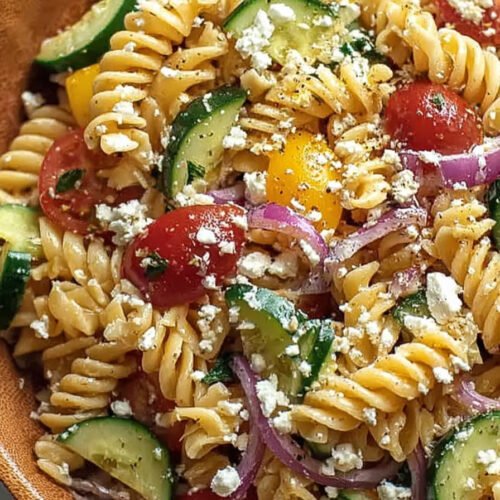
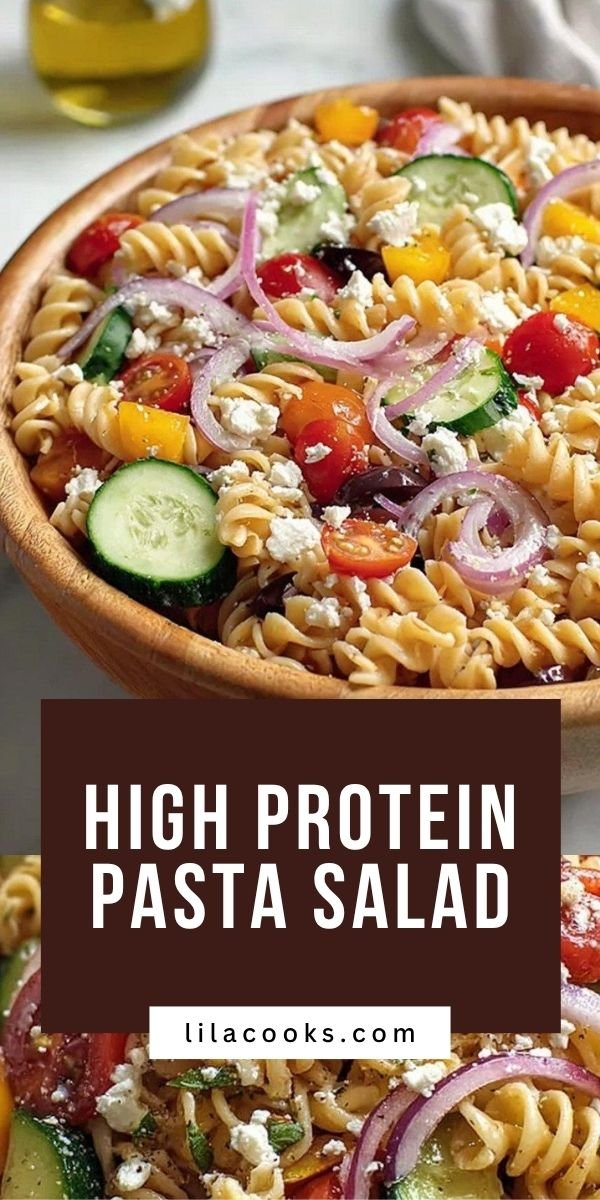
High Protein Greek Pasta Salad for Fresh, Filling Lunches
Ingredients
For the pasta salad::
- 16 oz pasta, preferably Barilla Protein+ for a firm, high-protein texture that holds up after chilling
- 1 cucumber, peeled and sliced into 1/2-inch half-moons for cool crunch
- 1 pint tomatoes, halved or quartered if large so they mix evenly through the salad
- 1 red bell pepper, seeded and diced into 1/2-inch pieces for sweetness and color
- 1 yellow bell pepper, seeded and diced into 1/2-inch pieces to match the texture of the red pepper
- 1 red onion, quartered and thinly sliced so the flavor stays sharp but not overpowering
- 5 oz feta, preferably crumbles, for salty creaminess throughout the salad
- 2 tbsp fresh dill, chopped, for a fresh herbal finish
For the dressing::
- 2/3 cup olive oil, used as the rich base of the vinaigrette
- 1/2 cup red wine vinegar, for bright tang and classic Greek-style flavor
- 1 lemon, freshly squeezed for the brightest acidity
- 1 tbsp oregano, for savory Mediterranean aroma
- 1/2 tsp garlic powder, to season the dressing evenly without harsh raw garlic pieces
- 1/4 tsp salt, plus more to taste after chilling if needed
- 1/4 tsp pepper, freshly cracked if possible for better aroma
Instructions
- While the pasta water comes to a boil, prepare the vegetables so they are ready when the pasta is cooled. Peel and slice the cucumber into 1/2-inch half-moons, dice the red and yellow bell peppers into 1/2-inch pieces, quarter and thinly slice the red onion, and halve the tomatoes or quarter them if they are large. Chop the fresh dill and keep the feta nearby. This keeps the vegetables crisp and prevents the pasta from sitting too long before mixing.
- Bring a large pot of well-salted water to a rolling boil. Add the Barilla Protein+ pasta and cook according to the package directions until al dente, usually about 9 to 10 minutes. Drain thoroughly, then rinse under cold running water until the pasta is completely cooled. Rinsing stops the cooking and removes excess surface starch, which helps prevent a sticky or mushy pasta salad.
- In a small bowl or jar, whisk together the olive oil, red wine vinegar, and freshly squeezed lemon juice until the mixture begins to look slightly unified. Add the oregano, garlic powder, salt, and pepper, then whisk again until well combined. Taste the dressing before adding it to the salad; it should be tangy and a little punchy because the pasta will soften the acidity.
- In a large bowl, combine the cooled pasta with the cucumber, tomatoes, red bell pepper, yellow bell pepper, and red onion. Pour the vinaigrette over the pasta and vegetables, then toss gently until everything is evenly coated. Add the feta crumbles and fresh dill, then toss just once or twice more so the feta stays in soft pieces. Let the salad rest for at least 15 to 20 minutes, or refrigerate for up to 4 hours, so the pasta absorbs the dressing without losing its bite.
- Transfer the Greek pasta salad to the refrigerator and chill until ready to serve. Before serving, stir gently from the bottom of the bowl and taste again for seasoning. Adjust with a small pinch of salt, extra pepper, or a splash of vinegar if the flavors taste muted after chilling. Serve cold for the freshest texture and best dressing balance.
8) Tips for Making High Protein Greek Pasta Salad
The biggest texture tip is to treat the pasta like it will keep cooking even after draining. Rinsing it under cold water is not just for convenience; it stops the cooking process and removes extra starch that can make a cold salad sticky. Shake the colander well after rinsing so water does not dilute the vinaigrette.
Cut the vegetables with the final bite in mind. Cucumber half-moons, diced peppers, thin onion slices, and halved tomatoes give the salad texture without making it hard to eat. This matters for healthy food for potluck because people should be able to scoop a balanced portion without chasing oversized pieces around the bowl.
Make the dressing slightly more assertive than a green salad dressing. Pasta is dense and mild, so it needs acidity and salt to taste lively after chilling. If the salad tastes sleepy later, do not panic. A small splash of red wine vinegar or lemon juice usually brings it back.
Add feta and dill at the end. Feta can smear if it is overmixed, and fresh dill is most fragrant when it is not beaten into the dressing. A light final toss keeps the salad looking fresh and gives little pops of salty, herby flavor.

9) Common Mistakes & Fixes
Problem: The pasta salad turns mushy. Cause: The pasta was cooked past al dente or not cooled quickly enough. Fix: Cook only until the pasta has a slight bite, then rinse under cold water until no warmth remains.
Problem: The salad tastes watery. Cause: Wet pasta, juicy vegetables, or oversized tomato pieces diluted the dressing. Fix: Drain the pasta well, cut tomatoes appropriately, and stir before serving so the vinaigrette redistributes.
Problem: The flavor tastes flat after chilling. Cause: Cold pasta dulls salt and acidity. Fix: Taste again right before serving and adjust with a little vinegar, lemon juice, salt, or pepper.
Problem: The feta disappears into the salad. Cause: It was added too early or tossed too aggressively. Fix: Add feta after the vegetables and dressing are already combined, then toss gently.
Problem: The onion overpowers every bite. Cause: Thick onion slices release too much sharpness. Fix: Slice the onion thinly or soak it in cold water for a few minutes before draining and adding it.
10) How to Tell High Protein Greek Pasta Salad Has the Right Texture
High protein greek pasta salad should look glossy but not oily, colorful but not watery, and evenly coated without dressing pooling heavily at the bottom. The pasta should hold its shape and feel tender with a clean bite, not soft or swollen. The cucumber and peppers should still crunch, the tomatoes should taste juicy without flooding the bowl, and the feta should remain in small creamy pieces.
The aroma should be fresh and bright: lemon, dill, oregano, and a little sharpness from the vinegar. If the salad smells oily before it smells tangy, it probably needs a touch more vinegar or lemon. If the flavor tastes salty but dull, add acidity rather than more salt. If the pasta pulls apart or feels heavy, it was likely overcooked or dressed too warm.
11) Professional Secrets Behind Better High Protein Greek Pasta Salad
The first professional habit is seasoning in layers. Salted pasta water gives the noodles a baseline flavor before the dressing ever touches them. Then the vinaigrette seasons the outside, and the feta finishes the salad with salty contrast. When all the salt comes only from the cheese, the pasta itself can taste bland.
The second secret is controlling water. Cold salads fail when hidden moisture thins the dressing. Drain the pasta well, avoid chopping tomatoes too small, and do not let rinsed pasta sit in water. The vinaigrette should cling lightly to the noodles and vegetables, not slide off into a puddle.
The third secret is resting time. A short rest lets the pasta absorb enough dressing to taste seasoned, but not so much that it loses texture. This is why the salad is useful for healthy carb recipes and sides with protein: it has enough structure to sit, travel, and still taste intentional.
12) Best Dishes or Pairings to Serve With High Protein Greek Pasta Salad
This high protein pasta salad works well as a cold lunch, a potluck side, or a fresh counterpoint to grilled mains. Serve it with grilled chicken, lemony fish, turkey burgers, veggie skewers, or roasted chickpeas if you want a balanced plate. The acidity in the dressing helps cut through richer dishes, while the feta and pasta make the salad filling enough to stand beside lighter proteins.
For a picnic or meal-prep lunch, pair it with fruit, pita wedges, hummus, or a simple green salad. For dinner, it works nicely next to roasted vegetables or a tray of grilled meats because the cold, tangy pasta brings contrast. It is also a practical choice when you need healthy food for potluck that can be served chilled and stirred back to life before eating.
13) Making High Protein Greek Pasta Salad Ahead of Time
This salad is make-ahead friendly because the pasta benefits from a little resting time. For the freshest result, make it 2 to 4 hours before serving and keep it chilled. The pasta will absorb some dressing, the onion will mellow slightly, and the dill will perfume the bowl without losing all its freshness.
If making it a full day ahead, hold back a small splash of dressing or keep extra lemon juice and vinegar nearby for refreshing. Stir the salad before serving and taste for salt, pepper, and acidity. If the vegetables have released moisture, a bright final adjustment will make the salad taste freshly made again.
14) Storing Leftover High Protein Greek Pasta Salad
Store leftover high protein greek pasta salad in an airtight container in the refrigerator. It is best within 3 days, though the texture is usually freshest during the first 24 to 48 hours. Stir before serving because the vinaigrette naturally settles at the bottom.
Freezing is not recommended. Cucumbers, tomatoes, feta, and cooked pasta all change texture after freezing and thawing, leaving the salad watery and uneven. For leftovers, refresh with a little lemon juice, vinegar, or black pepper. If you want to stretch it into another meal, serve it over greens or alongside grilled protein instead of adding more dressing immediately.
15) FAQ (Real Cooking Questions)
Can I use regular pasta instead of protein pasta? Yes, but the salad will be less filling and may have a softer bite. Choose a short pasta shape that holds dressing well, and cook it al dente so it stays firm after chilling.
Why rinse pasta for pasta salad? Rinsing cools the pasta quickly and removes extra surface starch. For a cold salad, that helps prevent sticky noodles and keeps the acidic dressing from turning the pasta mushy.
Can I make this high protein pasta salad the night before? Yes. It can be made the night before, but taste it before serving. Cold pasta often needs a small splash of vinegar or lemon juice to brighten the flavor again.
How do I keep the vegetables crisp? Cut them evenly, keep the salad chilled, and avoid overdressing too early if it will sit for more than a day. Stir gently so the tomatoes and feta do not break down.
Is this good for lunch meal prep? Yes. This is one of the more practical pasta salad recipes lunch options because the protein pasta, feta, and vegetables make it filling while the vinaigrette keeps it fresh. Pack it cold and stir before eating.
16) Save This High Protein Greek Pasta Salad Recipe
If this High Protein Greek Pasta Salad helped you solve the usual bland, soggy pasta salad problem, save it for meal prep lunches, potlucks, or warm-weather dinners. The key reminder is: cool the pasta fully, dress it boldly, and taste again after chilling.
17) Conclusion
A good high protein pasta salad is not about tossing noodles and vegetables into a bowl and hoping the dressing does the work. It is about controlling texture, seasoning with enough brightness, and giving the salad time to settle. Once you understand why the pasta must be cooled, why the dressing needs real acidity, and why the final taste check matters, the whole recipe becomes more reliable.
This version gives you crisp vegetables, tangy feta, fresh dill, and pasta that stays tender without turning mushy. It is practical enough for lunch, sturdy enough for potlucks, and flavorful enough to feel like more than a basic side. That is the quiet win: a chilled pasta salad that still tastes alive when you open the container later.

18) Nutrition
Serving Size 1 portion Calories 385 Sugar 5 g Sodium 420 mg Fat 22 g Saturated Fat 5 g Carbohydrates 35 g Fiber 4 g Protein 14 g Cholesterol 16 mg

Leave a Comment