

1) What I Learned Testing Crispy Oven Baked Chicken Tenders
Dry chicken with a crumb coating that slides off is the fastest way to ruin dinner confidence. I’m Lila, and I tested these oven baked chicken tenders after one too many trays came out pale, soft, and unevenly coated. The discovery was not complicated: dry the chicken, keep the flour layer thin, press the crumbs firmly, and flip once so both sides brown. That small adjustment gave me homemade breaded chicken with the crunch I wanted and the calm feeling of knowing family dinner would actually work.
Table of Contents
- 1) What I Learned Testing Crispy Oven Baked Chicken Tenders
- 2) Key Takeaways
- 3) Easy Crispy Oven Baked Chicken Tenders Recipe
- 4) Why Most Crispy Oven Baked Chicken Tenders Recipes Fail
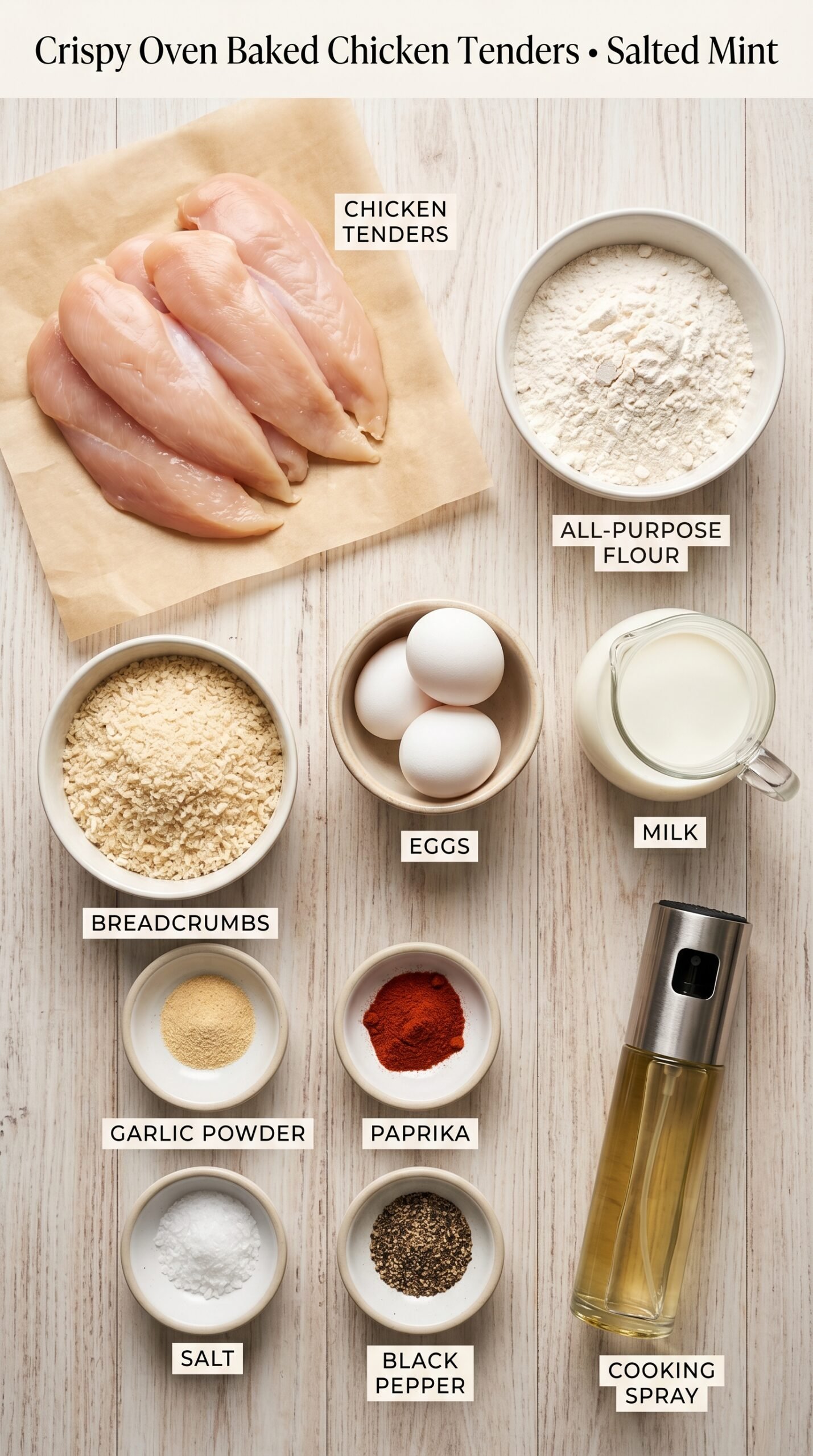
- 5) Ingredients for Crispy Oven Baked Chicken Tenders
- 6) How to Make Crispy Oven Baked Chicken Tenders
- 7) Recipe Card: Crispy Oven Baked Chicken Tenders
- 8) Tips for Making Crispy Oven Baked Chicken Tenders
- 9) Common Mistakes & Fixes
- 10) How to Tell Crispy Oven Baked Chicken Tenders Are Done
- 11) Professional Secrets Behind Better Crispy Oven Baked Chicken Tenders
- 12) Best Dishes or Pairings to Serve With Crispy Oven Baked Chicken Tenders
- 13) Making Crispy Oven Baked Chicken Tenders Ahead of Time
- 14) Storing Leftover Crispy Oven Baked Chicken Tenders
- 15) FAQ (Real Cooking Questions)
- 16) Save This Crispy Oven Baked Chicken Tenders Recipe
- 17) Conclusion
- 18) Nutrition
2) Key Takeaways
- Thin flour coating matters: Too much flour creates a dusty layer that keeps the egg wash from gripping properly.
- Firm breadcrumb pressure creates better crunch: Lightly sprinkling crumbs over the chicken is not enough; pressing helps the coating stay attached.
- Spacing prevents steam-softened breading: Crowded tenders trap moisture, which makes the coating softer instead of crisp.
- Internal temperature is the real finish line: Golden crumbs are helpful, but chicken should reach 165°F in the thickest part for safe, juicy results.
3) Easy Crispy Oven Baked Chicken Tenders Recipe
Crispy oven baked chicken tenders work because each coating layer has a job. The flour dries the surface and gives the egg something to hold onto. The egg and milk mixture acts like glue. The seasoned breadcrumbs create the textured crust that browns in the oven. When those layers are applied lightly but firmly, the tenders bake into juicy pieces of chicken with a golden coating instead of a heavy shell.
The goal is not to imitate deep-fried chicken exactly. Oven heat works differently because it surrounds the food instead of submerging it in hot fat. That means the breading needs help from airflow, spacing, and a light coating of cooking spray. The spray encourages browning, while the halfway turn exposes both sides to direct heat. This is what makes the recipe practical for weeknight cooking without sacrificing the crunch that makes chicken tenders worth making.
For anyone searching for simple breaded chicken recipes that do not require a fryer, this method is reliable because it uses pantry basics and clear visual cues. The coating should look even before baking, the tops should be lightly misted, and the finished tenders should be crisp at the edges with a moist center. Once you understand those checkpoints, the recipe becomes much easier to repeat.
4) Why Most Crispy Oven Baked Chicken Tenders Recipes Fail
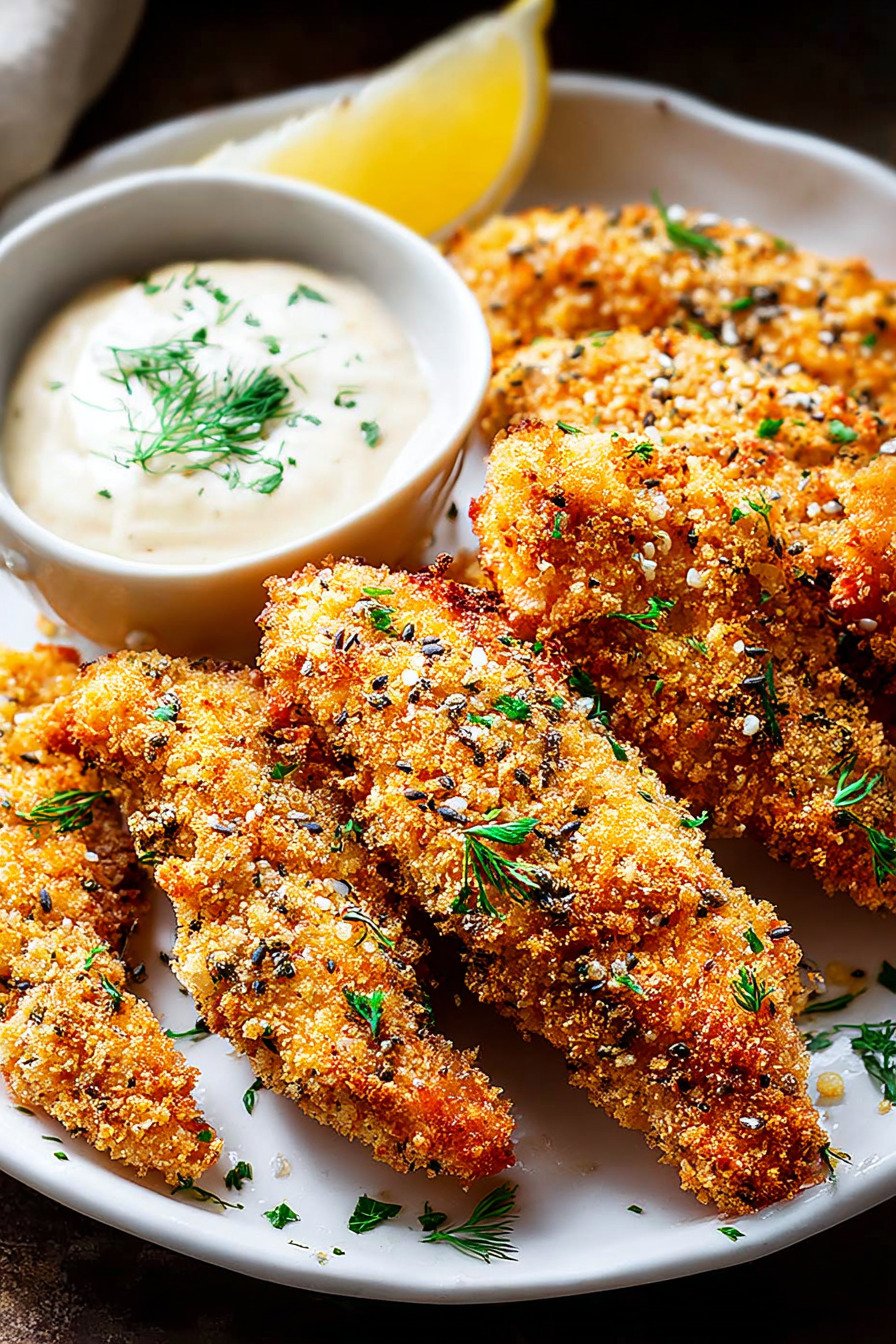
Most oven baked chicken tenders fail because the coating is treated like decoration instead of structure. If the chicken is wet when it hits the flour, the flour turns gummy. If the flour layer is too thick, it blocks the egg wash from bonding. If the breadcrumbs are only loosely scattered on top, they fall away during baking or soften as steam escapes from the chicken.
Another common problem is crowding the baking sheet. Chicken releases moisture as it cooks, and when the pieces sit too close together, that moisture has nowhere to go. Instead of crisping, the breadcrumbs absorb steam. The fix is simple: leave space between each piece and avoid using a pan that is too small.
Dry chicken is usually caused by overbaking or using unevenly sized pieces. Chicken tenders cook quickly, so the difference between juicy and tough can be only a few minutes. A thermometer removes the guesswork. Pull the tenders when the thickest piece reaches 165°F, then serve them promptly while the crust is at its crispest.
Flat flavor happens when seasoning stays only on the surface or gets diluted by unseasoned crumbs. Mixing garlic powder, paprika, salt, and pepper directly into the breadcrumbs gives every bite a savory base. The paprika also helps the coating look warmer and more golden, which matters because oven-baked breading can look pale without enough seasoning and browning support.
5) Ingredients for Crispy Oven Baked Chicken Tenders
Chicken tenders: Chicken tenders cook quickly and evenly when they are similar in size. Pat them dry before breading because surface moisture weakens the coating. If using baked chicken breast tenderloins, check thickness carefully so thinner pieces do not dry out before thicker ones finish.
All-purpose flour: Flour creates the first dry layer and helps the egg wash cling. Use it lightly; a heavy flour coating can taste powdery and make the crust separate after baking.
Eggs: Eggs bind the flour and breadcrumbs together. They should be whisked well so the coating does not go on in streaks.
Milk: Milk loosens the egg mixture just enough to coat the chicken smoothly. Without it, the egg wash can be thick and uneven, especially around the edges of each tender.
Breadcrumbs: Panko gives a lighter, crunchier crust, while regular breadcrumbs create a finer coating. Both work, but panko is the better choice when you want the crispest texture.
Garlic powder: Garlic powder seasons the crumb coating evenly without adding moisture. Fresh garlic can burn on the outside of the breading, so the dry form works better here.
Paprika: Paprika adds gentle warmth and helps the crumbs bake into a more golden color. It is especially helpful in oven-baked recipes where the coating does not brown as quickly as fried breading.
Salt: Salt makes the chicken and breading taste complete. If the coating tastes bland before baking, the finished tenders will taste flat even with dipping sauce.
Black pepper: Black pepper gives the coating a mild bite and balances the richness of the egg and breadcrumbs.
Cooking spray: Cooking spray helps the dry crumb coating brown and crisp in the oven. Use a light, even mist rather than soaking the breading.
- Panko vs regular breadcrumbs: Panko creates larger, airier flakes with more crunch, while regular breadcrumbs form a smoother, more compact crust.
- Thin flour layer vs heavy flour layer: A thin layer helps the egg grip; a heavy layer can turn pasty and make the breading slide off.
- Cooking spray vs no cooking spray: Cooking spray encourages browning and crispness; without it, the crumbs may bake dry and pale.
- Chicken tenders vs sliced chicken breast: Tenders are naturally portioned, while sliced chicken breast must be cut evenly to behave like baked chicken breast tenders.
6) How to Make Crispy Oven Baked Chicken Tenders
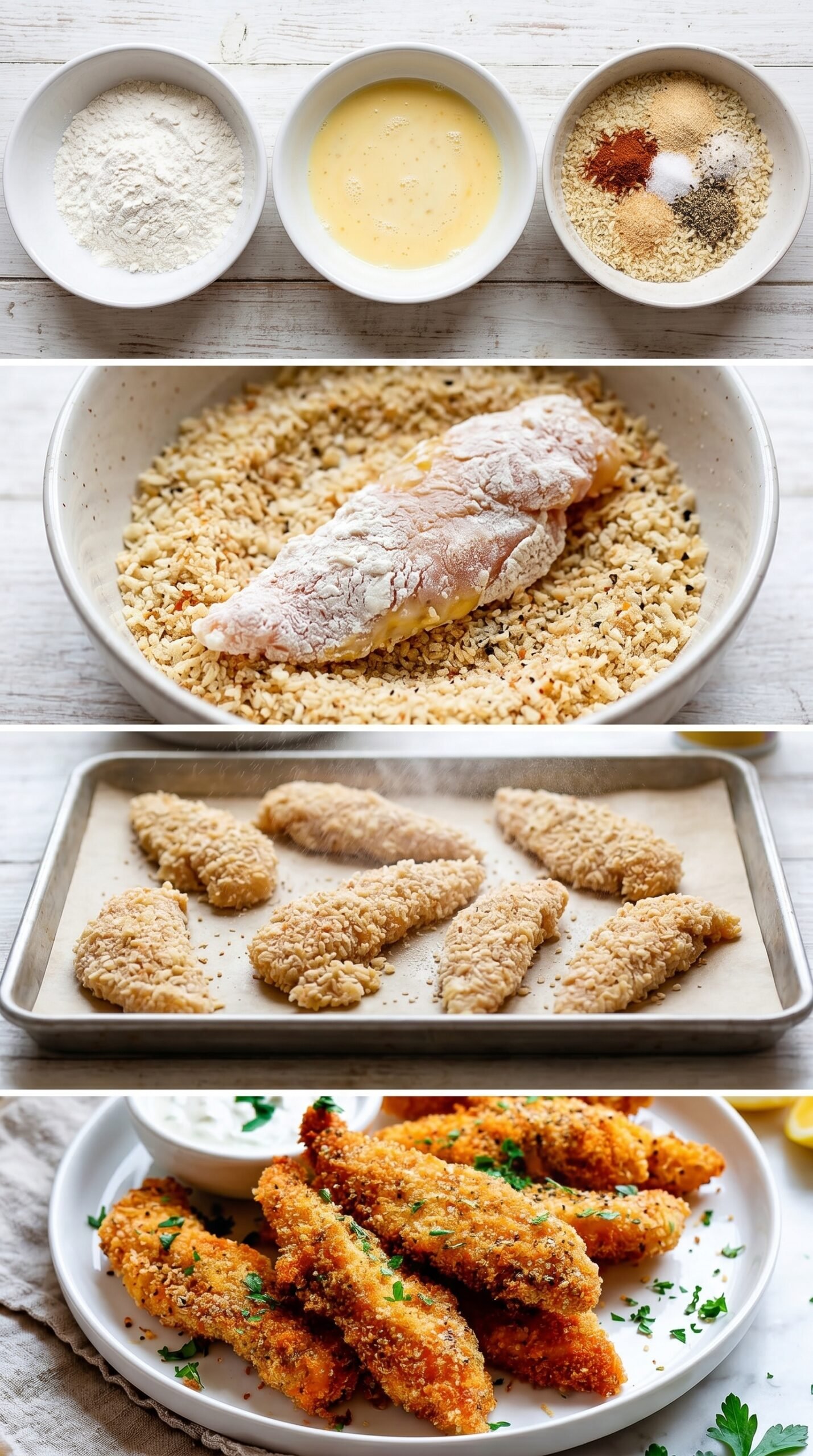
Step 1: Heat the oven to 400°F and prepare the baking sheet with parchment paper or a light coating of grease. Starting with a hot oven helps the coating begin drying and browning quickly instead of sitting in moisture.
Step 2: Set up three bowls in order: flour first, eggs whisked with milk second, and breadcrumbs mixed with garlic powder, paprika, salt, and pepper third. This order keeps the coating clean and prevents clumps from building too quickly.
Step 3: Coat each chicken tender in flour, then shake off the extra. You want a light dusting, not a thick white layer. Too much flour is one of the main reasons homemade breaded chicken tastes dry or dusty.
Step 4: Dip the floured chicken into the egg wash and let the excess drip back into the bowl. The tender should look evenly coated but not dripping.
Step 5: Press the chicken into the seasoned breadcrumbs. Use gentle pressure so the crumbs attach to the egg layer. This step is where the crust is built, so do not rush it.
Step 6: Place the breaded tenders on the prepared baking sheet with room between each piece. Spray the tops lightly with cooking spray to help the crumbs crisp.
Step 7: Bake for 18 to 20 minutes, turning once halfway through. The coating should become golden and crisp, and the chicken should reach 165°F in the thickest part.
Step 8: Serve immediately with dipping sauces such as honey mustard, ranch, or barbecue sauce. The texture is best while the coating is hot and the steam has not softened the crust.
7) Recipe Card: Crispy Oven Baked Chicken Tenders
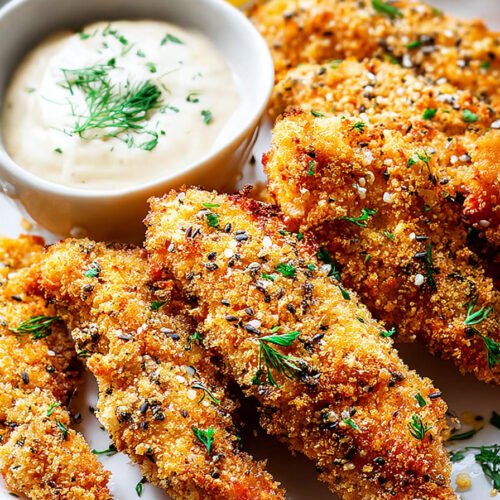
Crispy Oven Baked Chicken Tenders
Ingredients
- 1 lb chicken tenders, patted dry so the coating sticks evenly
- 1 cup all-purpose flour, for the first dry coating layer
- 2 large eggs, to help the crumbs cling to the chicken
- 2 tablespoons milk, whisked with the eggs for a smoother wash
- 1 cup breadcrumbs, panko or regular, for the crisp outer coating
- 1 teaspoon garlic powder, for savory flavor throughout the breading
- 1 teaspoon paprika, for gentle warmth and golden color
- 1 teaspoon salt, divided through the coating for balanced seasoning
- ½ teaspoon black pepper, for mild bite in the crumb mixture
- Cooking spray, for helping the breading crisp in the oven
Instructions
- Preheat the oven to 400°F (200°C). Line a baking sheet with parchment paper or lightly grease it so the breading releases cleanly after baking.
- Prepare three breading stations: place the flour in the first bowl, whisk the eggs and milk together in the second bowl, and mix the breadcrumbs, garlic powder, paprika, salt, and black pepper in the third bowl.
- Dredge each chicken tender in the flour, shaking off the excess so the coating does not turn thick or pasty.
- Dip the floured chicken into the egg wash, turning it until fully coated and letting extra egg drip back into the bowl.
- Press each tender into the breadcrumb mixture, coating it evenly on all sides and gently pressing so the crumbs adhere instead of falling off during baking.
- Arrange the breaded chicken tenders on the prepared baking sheet with a little space between each piece. Spray the tops lightly with cooking spray to encourage a golden, crisp surface.
- Bake for 18–20 minutes, turning once halfway through, until the breading is golden and crisp and the chicken reaches 165°F in the thickest part.
- Serve immediately while the coating is crisp, with honey mustard, ranch, barbecue sauce, or another favorite dipping sauce.
8) Tips for Making Crispy Oven Baked Chicken Tenders
Pat the chicken dry before breading. This small step makes a major difference because moisture on the surface turns the flour into paste. Paste does not crisp well, and it can cause the coating to pull away after baking.
Use one hand for the flour and breadcrumbs and the other hand for the egg wash. This keeps your fingers from becoming coated in thick layers of breading, and it keeps the bowls cleaner so the last pieces coat as neatly as the first.
Do not skip the halfway turn. The underside of the chicken touches the baking sheet, so turning helps both sides brown and keeps one side from becoming softer than the other. Use tongs and turn gently so the coating stays intact.
If you are making baked chicken breast tenderloins from sliced breast meat, cut the pieces into similar widths. Uneven chicken is frustrating because the thin ends can become dry while the thicker centers are still catching up.
Serve the tenders soon after baking. The coating is crispest when hot, and like most breaded chicken, it softens as steam rises from the meat. If they need to sit for a few minutes, place them on a wire rack instead of stacking them on a plate.
9) Common Mistakes & Fixes
Problem: The breading falls off. Cause: The chicken was too wet, the flour layer was too thick, or the crumbs were not pressed firmly enough. Fix: Pat the chicken dry, shake off excess flour, and press the breadcrumb coating onto each piece before baking.
Problem: The tenders are soggy underneath. Cause: The pieces were crowded or not turned halfway through baking. Fix: Leave space between each tender and turn once so trapped steam does not soften the bottom crust.
Problem: The chicken is dry. Cause: The tenders baked too long or were uneven in size. Fix: Use similarly sized pieces and check for 165°F in the thickest part instead of relying only on the timer.
Problem: The coating tastes bland. Cause: The breadcrumb mixture was under-seasoned. Fix: Mix the garlic powder, paprika, salt, and pepper thoroughly into the crumbs so every piece gets flavor.
Problem: The crumbs look pale. Cause: Oven breading needs a little surface fat to brown well. Fix: Mist the tops lightly with cooking spray before baking, and add a small second mist after turning if the coating looks dry.
10) How to Tell Crispy Oven Baked Chicken Tenders Are Done
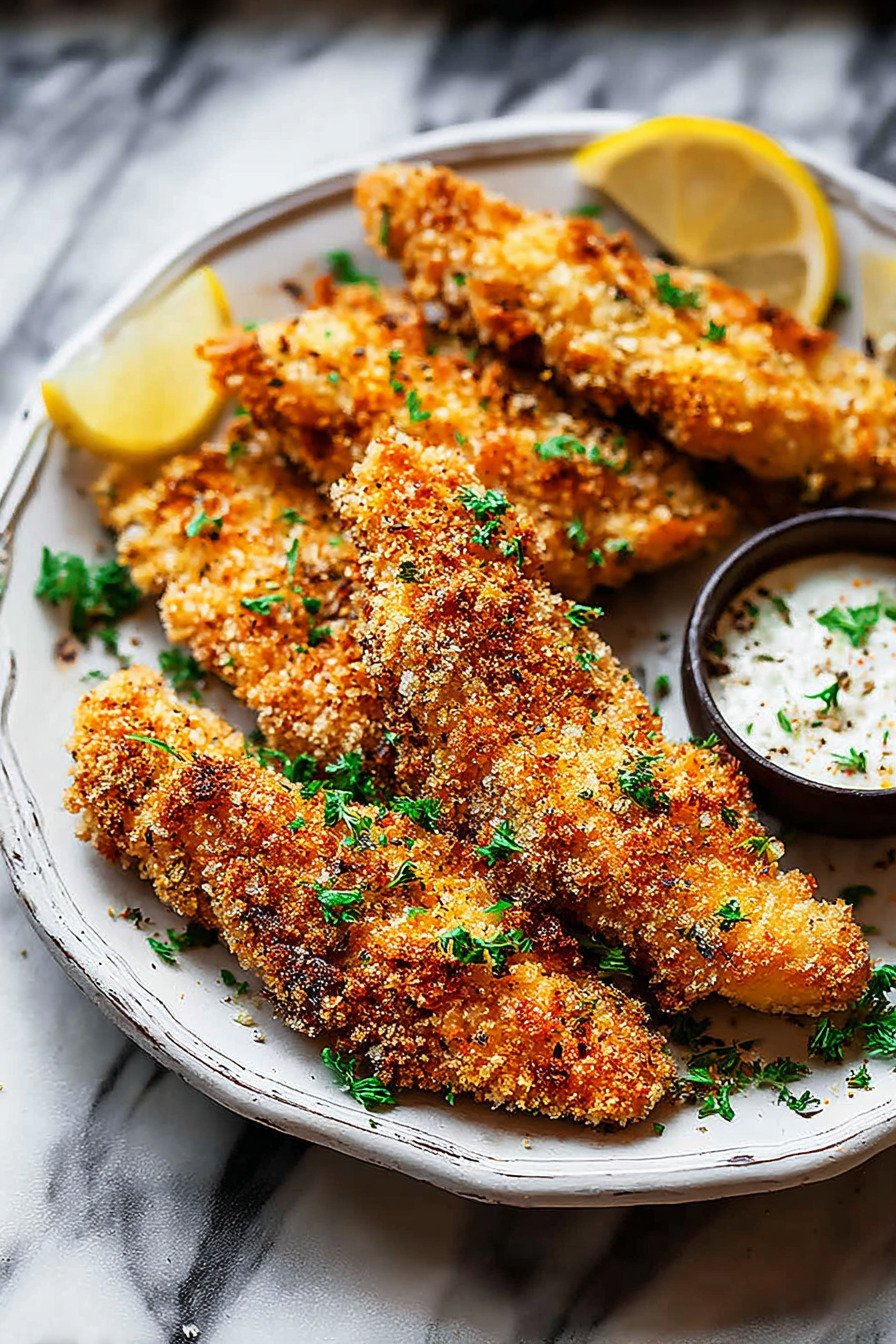
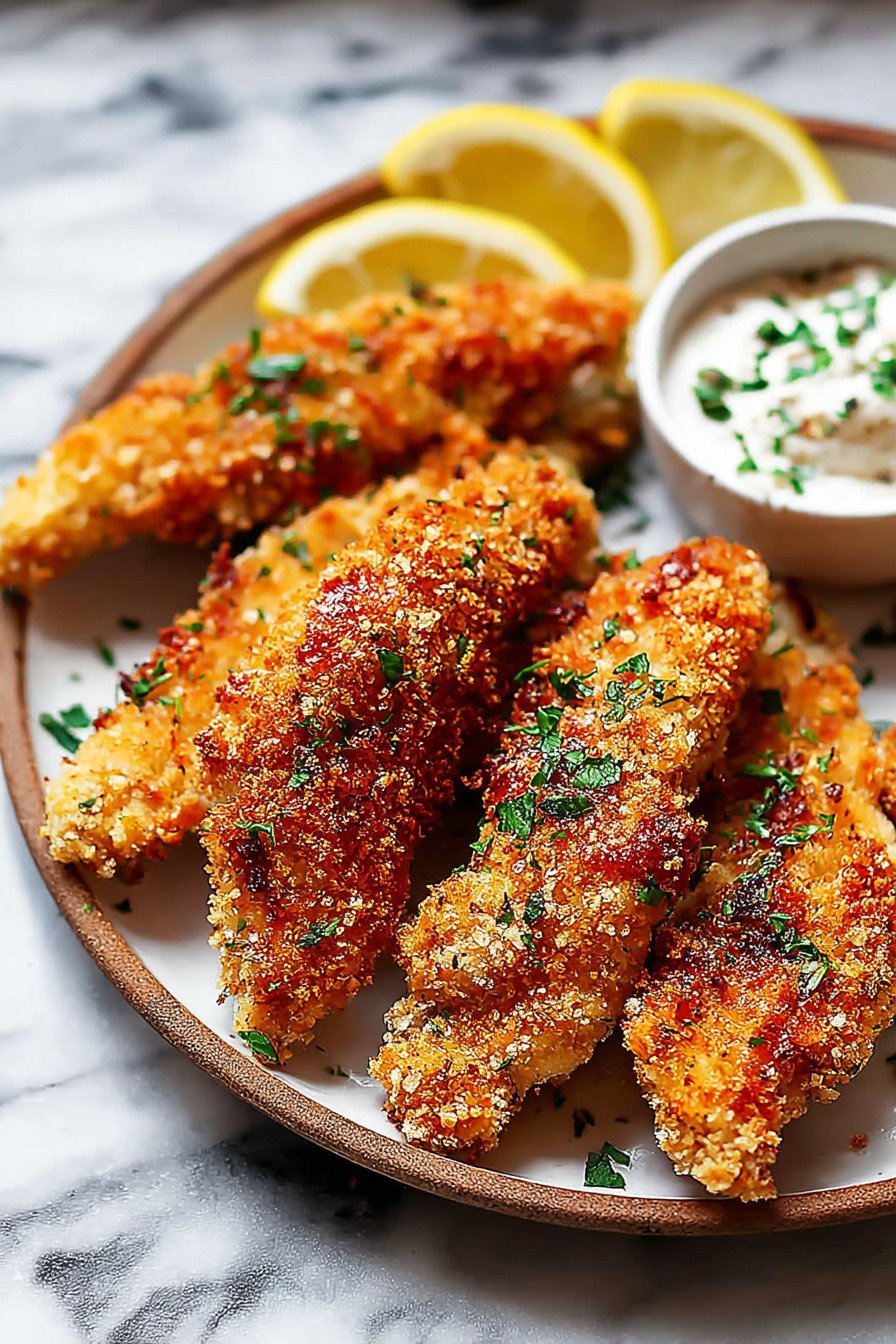
Crispy oven baked chicken tenders are done when the coating looks golden, the edges feel dry and crisp, and the thickest part of the chicken reaches 165°F. The crumbs should not look wet, floury, or patchy. When you press lightly with tongs, the coating should feel set rather than soft.
The inside should be juicy and opaque, not rubbery or stringy. If the chicken looks dry around the edges or releases very little moisture when cut, it may have baked too long. If the coating is golden but the chicken has not reached 165°F, continue baking for a few minutes and check again.
Aroma is another useful cue. The finished tenders should smell savory from the garlic powder and paprika, with a toasted breadcrumb scent. If they smell floury or raw, the coating likely needs more time. If the crumbs smell overly dark, the oven may be running hot or the pan may be too close to the heating element.
11) Professional Secrets Behind Better Crispy Oven Baked Chicken Tenders
The first secret is surface management. In a professional kitchen, breaded foods are not rushed through the coating process. Each layer has to be thin, even, and connected to the next. That is why shaking off extra flour and letting excess egg drip away matters more than it seems.
The second secret is using enough heat and airflow. A 400°F oven gives the coating a chance to dry and brown before the chicken overcooks. Spacing the tenders on the baking sheet helps hot air reach the edges, which is where the crisp texture starts.
The third secret is knowing when to stop. Chicken tenders are small, so carryover heat is limited, but they can still dry out if left in the oven too long. Use the timer as a guide and the internal temperature as the decision-maker. This is especially useful for chicken tenderloin recipes for dinner because the pieces often vary slightly in thickness.
12) Best Dishes or Pairings to Serve With Crispy Oven Baked Chicken Tenders
These tenders pair well with sauces that contrast the crisp coating. Honey mustard brings sweetness and sharpness, ranch adds creamy coolness, and barbecue sauce gives a smoky, tangy finish. Serve sauces on the side instead of pouring them over the chicken so the crust stays crisp.
For a full dinner, serve them with roasted vegetables, a crunchy green salad, baked potato wedges, coleslaw, or buttered corn. If you want a lighter plate, pair the tenders with cucumber salad or a lemony slaw. For a comfort-style meal, add macaroni and cheese or mashed potatoes and keep the dipping sauce bright enough to balance the richness.
Leftover tenders can also be sliced into wraps, tucked into sandwiches, or served over salad. When using them in a wrap, add sauce right before eating so the breading does not soften too quickly.
13) Making Crispy Oven Baked Chicken Tenders Ahead of Time
You can bread the chicken earlier in the day and refrigerate it on a parchment-lined tray until baking. Keep the pieces uncovered or loosely covered for a short time so the coating does not become soggy from trapped condensation. Do not stack the tenders once breaded because the pressure can flatten the crumb coating.
For the best texture, bake them close to serving time. If you need to cook them ahead, reheat them on a baking sheet at 375°F until hot and crisp. Avoid reheating in a covered dish because trapped steam softens the crust.
If you are preparing a larger batch of oven baked chicken tenders, use two baking sheets instead of crowding one pan. Rotate the pans halfway through baking if your oven has hot spots. This keeps the coating more even and helps every piece brown properly.
14) Storing Leftover Crispy Oven Baked Chicken Tenders
Store leftover tenders in an airtight container in the refrigerator for up to 3 days. Let them cool before sealing the container, but do not leave them at room temperature for too long. If they are packed while steaming hot, the coating will soften quickly.
To reheat, place the tenders on a baking sheet and warm at 375°F until heated through. A toaster oven also works well for small portions. The microwave is fast, but it makes the breading soft because it heats moisture inside the chicken and pushes steam into the coating.
Freezing is possible, though the coating is best fresh. Freeze cooked tenders in a single layer first, then transfer them to a freezer-safe bag or container. Reheat from frozen in the oven until hot in the center and crisp on the outside.
15) FAQ (Real Cooking Questions)
Can I use chicken breast instead of chicken tenders? Yes. Slice chicken breast into even strips so they cook like baked chicken breast tenders. Try to keep the pieces close in thickness so they reach 165°F at the same time.
Are panko breadcrumbs better than regular breadcrumbs? Panko gives a lighter, crispier coating because the flakes are larger and airier. Regular breadcrumbs still work, but the crust will be finer and slightly less crunchy.
Why did my breading fall off after baking? The chicken may have been too wet, the flour layer may have been too heavy, or the crumbs may not have been pressed firmly enough. Dry chicken and firm breadcrumb pressure are the two biggest fixes.
Can I make these without cooking spray? You can, but the coating may look drier and paler. Cooking spray adds just enough surface fat to encourage browning without turning the recipe into fried chicken.
How do I make the best baked chicken tenders without drying them out? Use evenly sized pieces, bake at 400°F, flip once halfway through, and check the thickest piece with a thermometer. Remove the chicken when it reaches 165°F.
16) Save This Crispy Oven Baked Chicken Tenders Recipe
If this Crispy Oven Baked Chicken Tenders recipe helped you solve the soggy-coating problem, save it for weeknight dinners, family meals, or anytime you want homemade breaded chicken without frying. The key reminder is: keep the flour thin, press the crumbs firmly, and give the tenders space to crisp.

17) Conclusion
Crispy chicken tenders from the oven are not about luck; they are about controlling moisture, coating, heat, and timing. Once you know why the flour layer should be thin, why the crumbs need pressure, and why the pan should not be crowded, the recipe becomes predictable in the best way. You get golden breading, juicy chicken, and a dinner that feels familiar without the mess of frying. That is the real win: not just following steps, but understanding what makes them work.
18) Nutrition
Serving Size 1 portion Calories 365 Sugar 2 g Sodium 760 mg Fat 8 g Saturated Fat 2 g Carbohydrates 36 g Fiber 2 g Protein 34 g Cholesterol 155 mg
Leave a Comment