
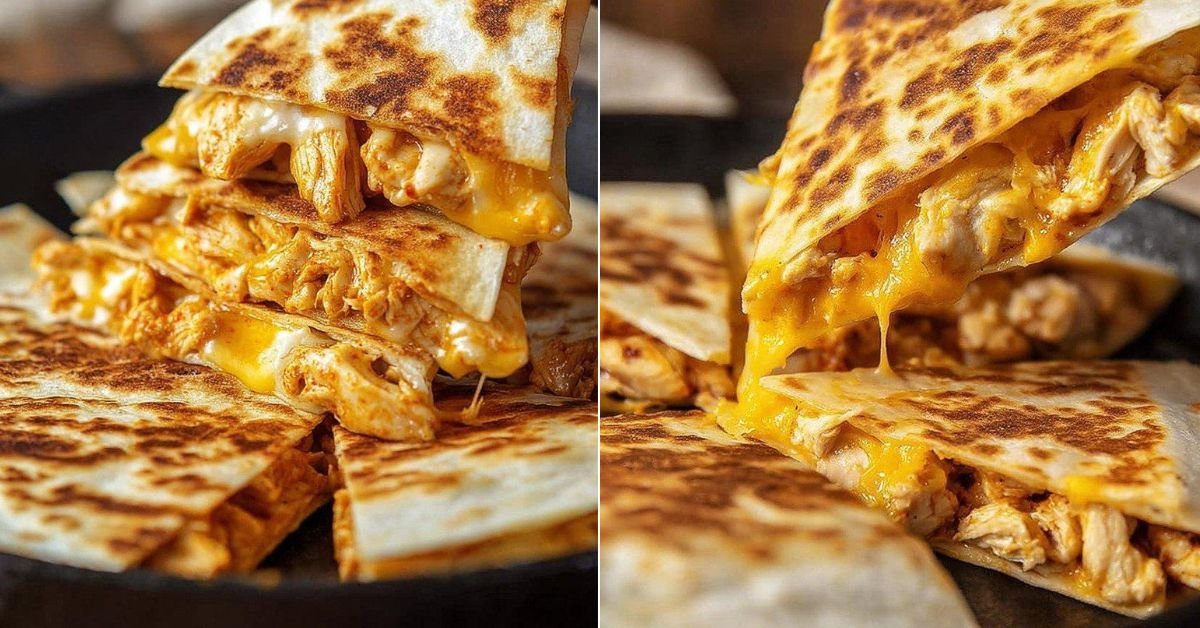
1) The Skillet Trick Behind This Chicken and Cheese Quesadilla
Quesadillas can fall apart fast when the chicken is too bulky, the cheese melts unevenly, or the tortilla browns before the center is hot. I’m Lila, and my first rushed batch had crisp edges but a loose, sliding filling. After testing thinner chopped chicken, cheese above and below the filling, and steady medium heat, I discovered that a chicken and cheese quesadilla works best when the cheese acts like glue. This easy chicken quesadilla recipe now feels like calm dinner relief: crisp outside, seasoned inside, and sliced cleanly without losing half the filling.
Table of Contents
- 1) The Skillet Trick Behind This Chicken and Cheese Quesadilla
- 2) Key Takeaways
- 3) Easy Chicken and Cheese Quesadilla That Never Stays on the Plate Recipe
- 4) Why Most Chicken and Cheese Quesadilla That Never Stays on the Plate Recipes Fail
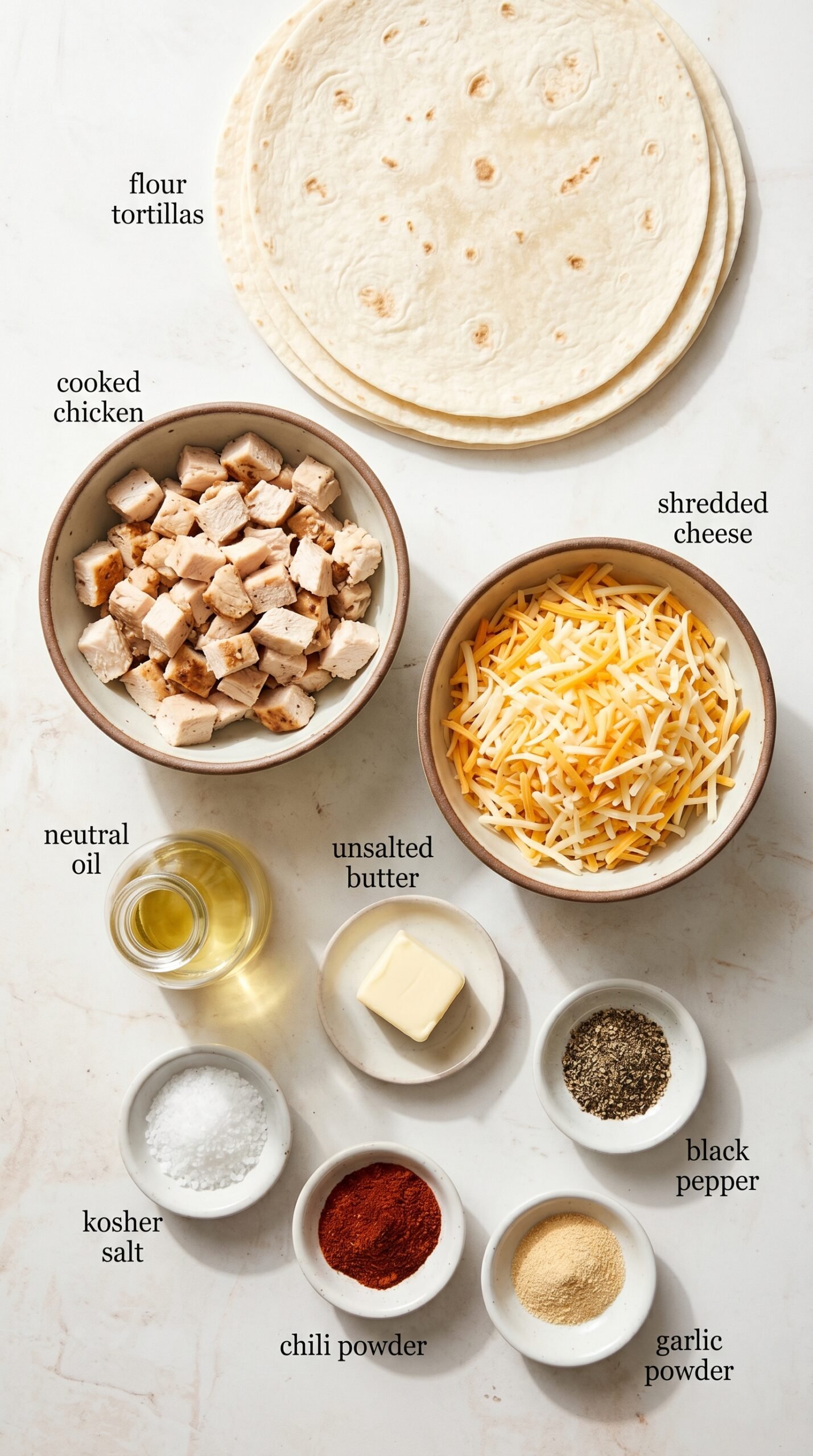
- 5) Ingredients for Chicken and Cheese Quesadilla That Never Stays on the Plate
- 6) How to Make Chicken and Cheese Quesadilla That Never Stays on the Plate
- 7) Recipe Card: Chicken and Cheese Quesadilla That Never Stays on the Plate
- 8) Tips for Making Chicken and Cheese Quesadilla That Never Stays on the Plate
- 9) Common Mistakes & Fixes
- 10) How to Tell Chicken and Cheese Quesadilla Has the Right Texture
- 11) Professional Secrets Behind Better Chicken and Cheese Quesadilla
- 12) Best Dishes or Pairings to Serve With Chicken and Cheese Quesadilla That Never Stays on the Plate
- 13) Making Chicken and Cheese Quesadilla That Never Stays on the Plate Ahead of Time
- 14) Storing Leftover Chicken and Cheese Quesadilla That Never Stays on the Plate
- 15) FAQ (Real Cooking Questions)
- 16) Save This Chicken and Cheese Quesadilla That Never Stays on the Plate Recipe
- 17) Conclusion
- 18) Nutrition
2) Key Takeaways
- Use finely chopped cooked chicken so the filling heats quickly and stays tucked inside the tortilla instead of sliding out with every bite.
- Put cheese under and over the chicken; this creates a melted layer that binds the filling and makes the quesadilla easier to flip and slice.
- Cook over medium heat, not high heat, so the tortilla turns golden while the cheese has enough time to melt completely.
- Rest the quesadilla briefly before cutting; one or two minutes lets the cheese settle so the wedges hold their shape.
3) Easy Chicken and Cheese Quesadilla That Never Stays on the Plate Recipe
A good chicken and cheese quesadilla is not just about filling a tortilla and hoping it holds. The texture depends on balance: enough fat in the skillet to brown the tortilla, enough cheese to seal the chicken, and enough seasoning to make the cooked chicken taste intentional instead of leftover. This method works because the chicken is chopped small, seasoned before it hits the tortilla, and layered between cheese so the filling melts into one clean center.
The goal is a tortilla that is crisp but still flexible, cheese that stretches without leaking, and chicken that tastes warm, savory, and lightly taco-spiced. That is why this chicken quesadilla recipe uses a butter-and-oil skillet base. Butter adds flavor and browning, while neutral oil helps keep the butter from scorching too quickly.
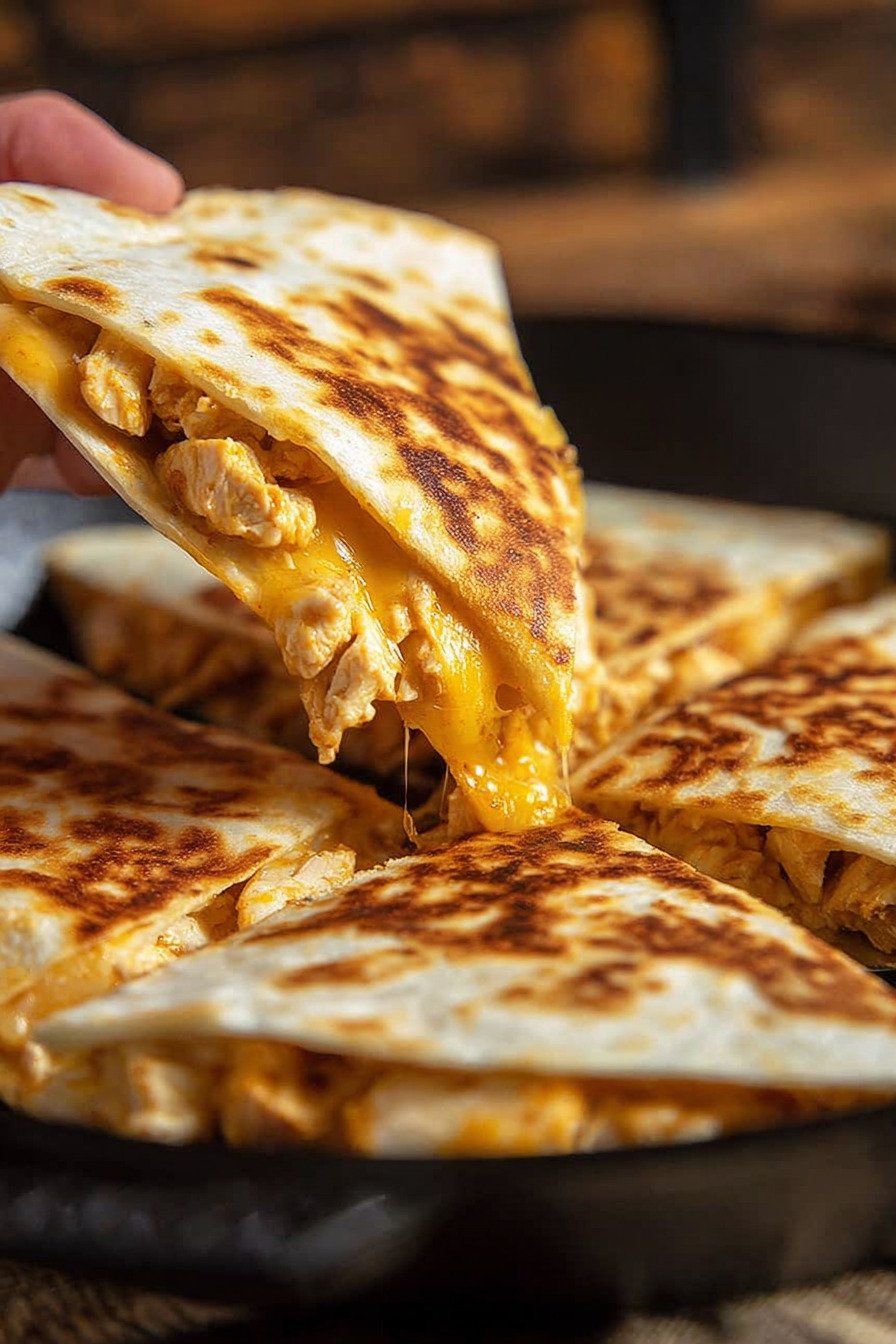
4) Why Most Chicken and Cheese Quesadilla That Never Stays on the Plate Recipes Fail
Most quesadilla problems start with heat control. If the skillet is too hot, the tortilla browns before the cheese melts, leaving a stiff outside and a loose center. Medium heat gives the cheese time to soften and bind the chicken without burning the tortilla.
Another common failure is using chicken pieces that are too large. Big chunks create uneven pockets, which makes the top tortilla lift and causes the filling to spill during flipping. Finely chopped chicken creates a flatter layer, warms faster, and gives every bite a better cheese-to-chicken ratio.
Under-seasoning also makes quesadillas taste dull. Cooked chicken needs salt, pepper, chili powder, and garlic powder before assembly because the tortilla and cheese mellow the filling. Seasoning the chicken first creates flavor all the way through instead of leaving the outside bland.
The last mistake is slicing too soon. Hot melted cheese is fluid; if you cut immediately, the filling can slide. A brief rest lets the cheese tighten just enough to hold the quesadilla together while still staying melty.
5) Ingredients for Chicken and Cheese Quesadilla That Never Stays on the Plate
Cooked chicken: Finely chopped cooked chicken is the base of this chicken and cheese quesadilla. Use it after seasoning so every piece gets flavor. If the chicken is shredded too wet or left in large chunks, the tortilla can soften and the filling can fall out.
Shredded Mexican blend cheese or cheddar jack: Cheese melts around the chicken and holds the quesadilla together. Use part of it under the chicken and part on top. If you use a very dry cheese or too little cheese, the filling will not bind as well.
Large flour tortillas: Flour tortillas bend and brown well in a skillet. Use them when the filling is ready because they crisp quickly. Smaller tortillas can work, but they need less filling to prevent tearing or overflow.
Neutral oil: Oil helps the tortilla crisp evenly and gives the butter a little protection from burning. Add it when the skillet is warming. Strong-flavored oils can distract from the cheese and chicken seasoning.
Unsalted butter: Butter adds browning and a toasted flavor to the tortilla. It works best with oil over medium heat. If the butter darkens too fast, the skillet is too hot and the quesadilla may taste bitter.
Kosher salt: Salt wakes up the cooked chicken before it is layered into the tortilla. Add it during seasoning, not after assembly. Too little salt makes the filling taste flat, while too much can overpower the cheese.
Black pepper: Pepper adds mild warmth and helps balance the richness of the cheese. Use it with the dry seasonings so it coats the chicken evenly. Skipping it makes the filling taste less rounded.
Chili powder: Chili powder gives the filling a taco-style flavor that makes this useful for anyone who enjoys chicken taco recipes. Use it before cooking so the spice blooms slightly in the warm quesadilla.
Garlic powder: Garlic powder brings savory depth without adding moisture. It is better than fresh garlic here because fresh garlic can burn in the skillet or create wet spots inside the tortilla.
- Finely chopped chicken vs large chunks: Small pieces spread evenly and help the quesadilla stay flat; large chunks make flipping harder and can tear the tortilla.
- Cheese under and over vs cheese only on top: Two cheese layers hold the chicken in place, while one cheese layer often leaves the filling loose.
- Medium heat vs high heat: Medium heat melts the center while browning the tortilla; high heat can scorch the outside before the inside is ready.
- Butter with oil vs butter alone: Butter gives flavor, while oil helps control browning and keeps the skillet from tasting burned.
6) How to Make Chicken and Cheese Quesadilla That Never Stays on the Plate
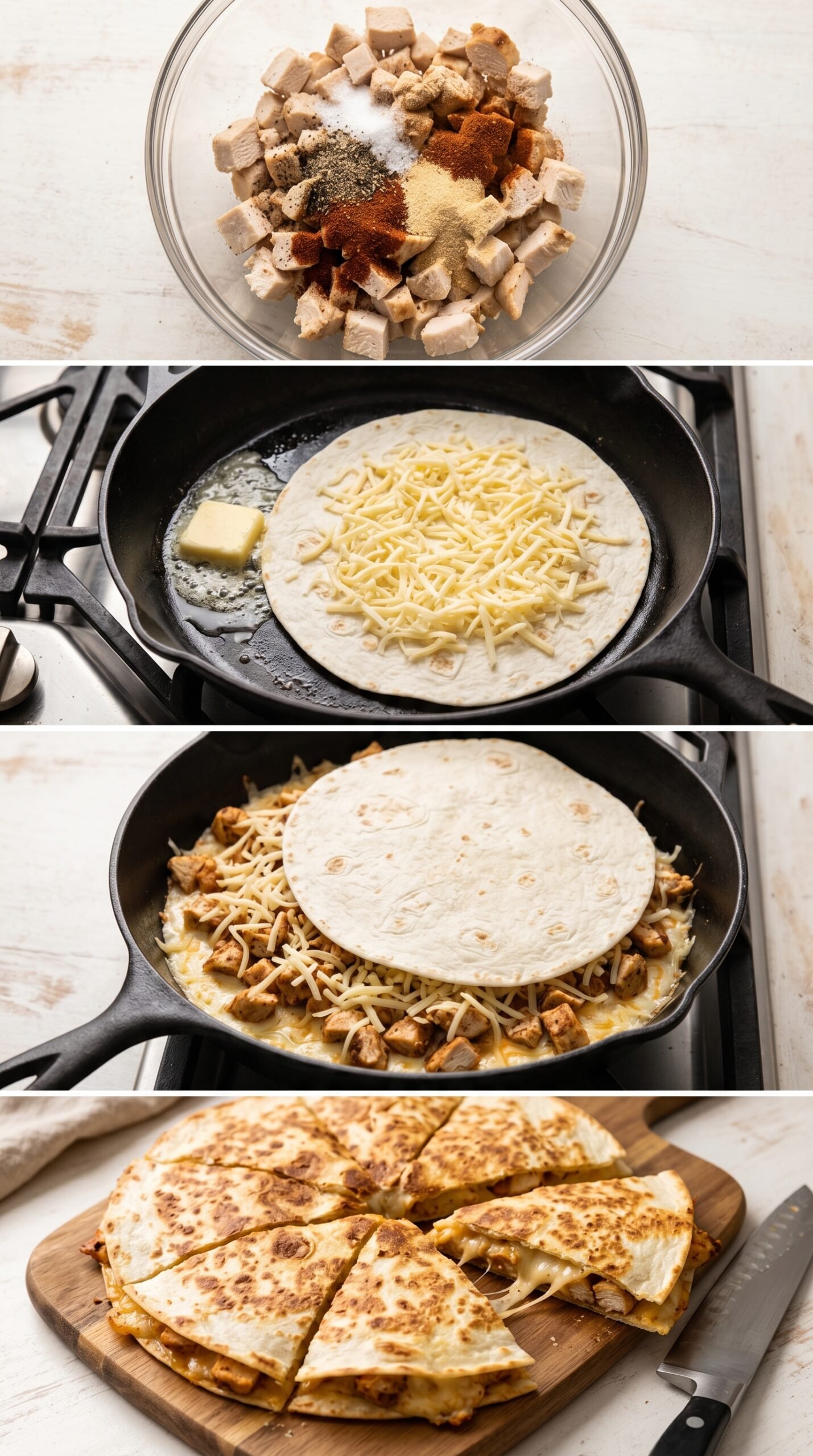
Step 1: Season the finely chopped cooked chicken with salt, black pepper, chili powder, and garlic powder. Toss until the chicken looks evenly coated, with no dry spice clumps in one spot.
Step 2: Warm a skillet over medium heat and melt the butter with the neutral oil. The butter should foam gently and smell toasted, not dark or smoky.
Step 3: Place one flour tortilla in the skillet and scatter cheese across it, leaving a small border around the edge. That border helps prevent melted cheese from leaking into the pan.
Step 4: Add the seasoned chicken in an even layer, then top with more cheese. This is the key structure for quesadilla recipes easy enough to flip without the filling sliding out.
Step 5: Cover with the second tortilla and press gently. Do not smash hard; light pressure helps the layers touch while keeping the filling inside.
Step 6: Cook until the bottom is golden and crisp, then flip with a wide spatula. If the tortilla resists or feels floppy, give it a little more time before turning.
Step 7: Cook the second side until the cheese is fully melted and the tortilla is crisp. The center should feel warm and slightly set when pressed gently.
Step 8: Rest briefly before slicing. This short pause keeps the cheese from running out and gives cleaner wedges when serving hot.
7) Recipe Card: Chicken and Cheese Quesadilla That Never Stays on the Plate
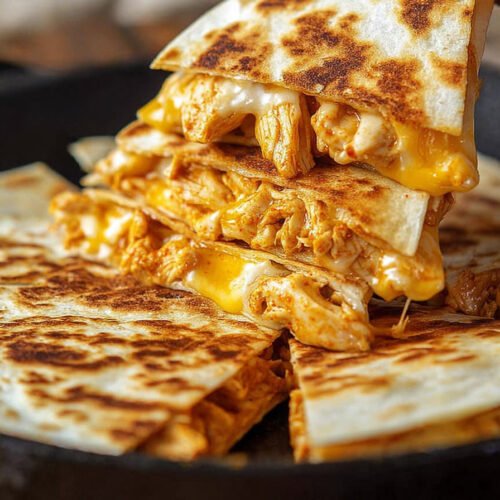
Chicken and Cheese Quesadilla That Never Stays on the Plate
Ingredients
- 2 cups cooked chicken, finely chopped so the filling heats evenly and stays inside the tortilla
- 2 cups shredded Mexican blend cheese or cheddar jack, divided so the cheese melts around the chicken and holds the quesadilla together
- 4 large flour tortillas, soft and flexible enough to fold or stack without cracking
- 1 tbsp neutral oil, used to help the tortilla crisp without adding a strong flavor
- 1 tbsp unsalted butter, added for browning and a richer toasted flavor
- 1/2 tsp kosher salt, used to season the chicken evenly before cooking
- 1/2 tsp black pepper, added for mild warmth and balance
- 1 tsp chili powder, used to give the chicken a deeper taco-style flavor
- 1/2 tsp garlic powder, added for savory flavor without adding moisture
Instructions
- Season the finely chopped cooked chicken evenly with kosher salt, black pepper, chili powder, and garlic powder, tossing until the spices coat the pieces instead of sitting in clumps.
- Heat a large skillet over medium heat, then melt the butter with the neutral oil until the butter foams lightly and smells nutty, but do not let it brown too dark.
- Place one flour tortilla in the skillet and sprinkle an even layer of cheese over the surface, leaving a small border so melted cheese does not spill into the pan.
- Add the seasoned chicken in a thin, even layer, then top with more cheese so the filling melts together and the quesadilla holds its shape when sliced.
- Cover with the second tortilla and press gently with a spatula so the layers make contact without forcing the filling out the sides.
- Cook for 3 to 4 minutes, or until the bottom tortilla is golden, crisp, and releases easily from the skillet, then flip carefully with a wide spatula.
- Cook the second side for another 2 to 4 minutes, pressing lightly, until the tortilla is crisp and the cheese is fully melted around the chicken.
- Transfer the quesadilla to a cutting board, rest for 1 to 2 minutes so the cheese settles, then slice into wedges and serve hot while the edges are crisp.
8) Tips for Making Chicken and Cheese Quesadilla That Never Stays on the Plate
The strongest tip is to treat cheese as structure, not just flavor. A thin layer of cheese under the chicken helps grip the bottom tortilla, and a second layer over the chicken helps attach the top tortilla. That small detail is what keeps a chicken and cheese quesadilla from opening like a sandwich when you flip it.
Keep the filling layer thin. A thick center looks generous, but it traps heat and makes the tortilla bend unevenly. A thinner layer gives better crispness, cleaner cuts, and a more balanced bite.
Use a wide spatula and turn the quesadilla with confidence. Hesitation can make the top tortilla shift. If needed, slide the quesadilla onto a plate, invert it back into the skillet, and continue cooking the second side.
For a stronger flavor, taste the chicken after seasoning and before assembly. Cooked chicken can vary in saltiness, especially if it came from roasted chicken, grilled chicken, or leftovers. Adjusting before the tortilla goes into the skillet is easier than fixing a bland quesadilla later.
9) Common Mistakes & Fixes
Problem: The tortilla burns before the cheese melts. Cause: The skillet is too hot or the cheese layer is too thick. Fix: Lower to medium heat and cook more slowly so the cheese melts while the tortilla turns golden instead of dark.
Problem: The filling falls out when slicing. Cause: The chicken pieces are too large, the cheese is uneven, or the quesadilla was cut immediately. Fix: Chop the chicken finely, layer cheese on both sides of the filling, and rest briefly before slicing.
Problem: The quesadilla tastes flat. Cause: Cooked chicken was added without enough seasoning. Fix: Toss the chicken with salt, pepper, chili powder, and garlic powder before assembly so the flavor is built into the filling.
Problem: The tortilla turns greasy instead of crisp. Cause: Too much fat in the skillet or heat that is too low. Fix: Use just enough butter and oil to coat the pan, and keep the heat steady enough to create a light sizzle.
10) How to Tell Chicken and Cheese Quesadilla Has the Right Texture
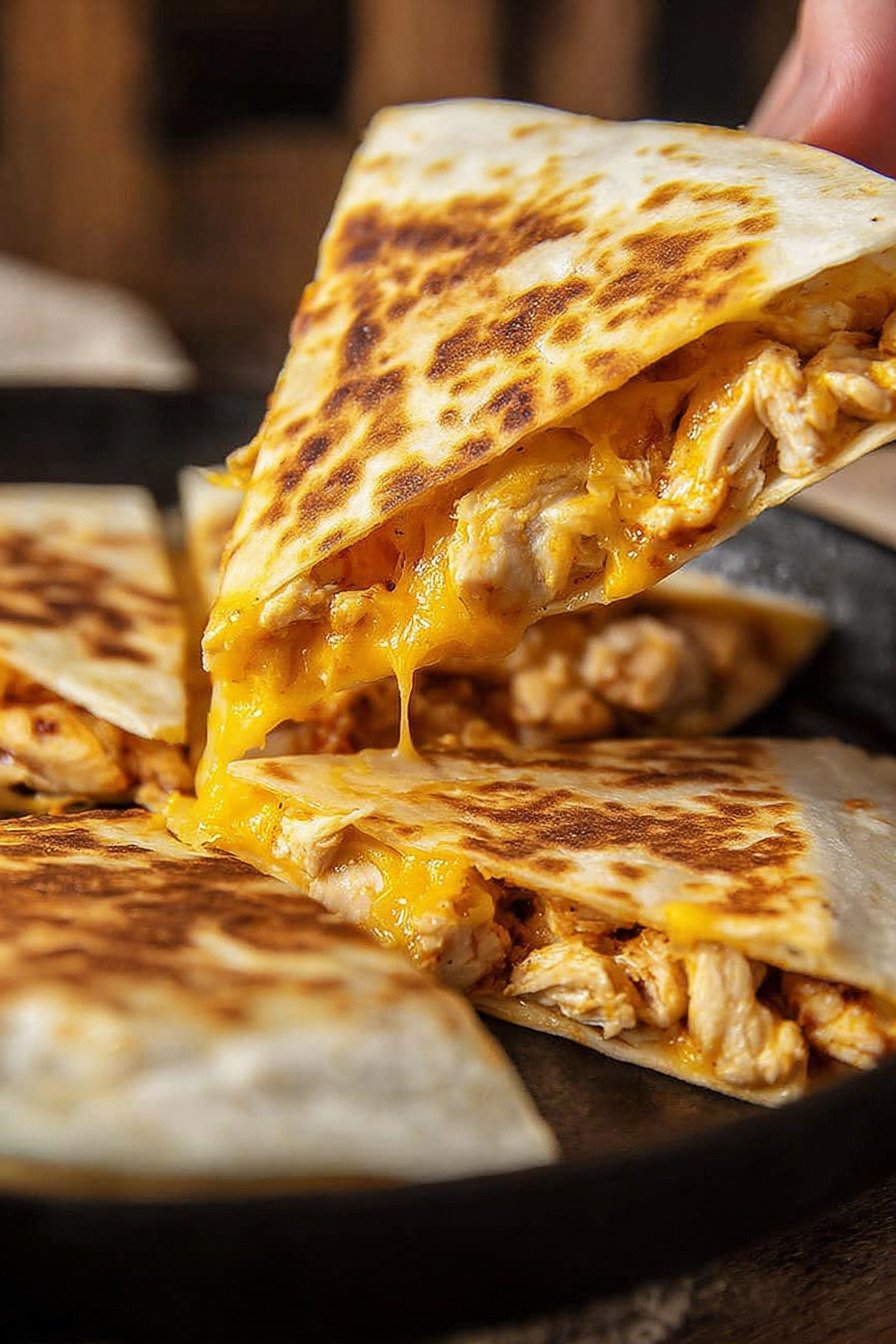
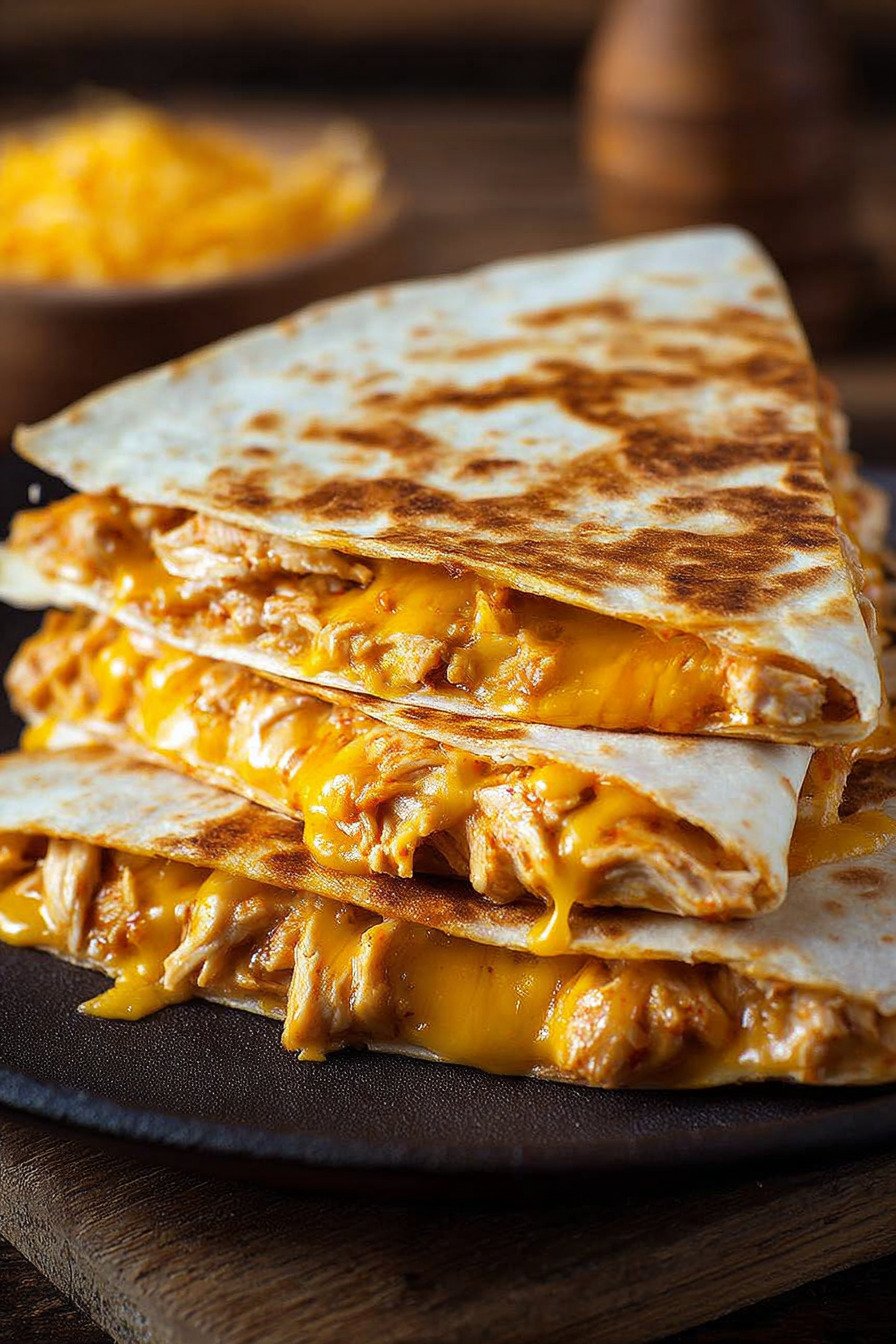
A finished chicken and cheese quesadilla should have a golden tortilla with crisp spots, not a pale, soft surface. When pressed lightly, it should feel set in the center rather than hollow or slippery. The cheese should be fully melted and visible at the edge without flooding the skillet.
The texture should be crisp outside and soft-melty inside. If the tortilla cracks hard when cut, the heat may have been too high or the cooking time too long. If the tortilla bends without any crispness, the skillet likely needed more time or slightly more heat.
The aroma should be buttery, toasted, and lightly spiced. A bitter smell means the butter or tortilla browned too aggressively. The flavor should taste savory and balanced, with chicken, cheese, chili powder, garlic powder, salt, and pepper all working together instead of one ingredient taking over.
11) Professional Secrets Behind Better Chicken and Cheese Quesadilla
One restaurant-style habit that helps at home is building a flat, even filling layer. Quesadillas cook by contact with the pan, so uneven filling creates cold pockets and weak spots. Finely chopped chicken and evenly scattered cheese create more surface contact, which improves melting and browning.
Another useful technique is managing carryover heat. The cheese continues to soften for a moment after the quesadilla leaves the skillet, which is why resting matters. That short pause turns a messy cut into neat wedges without sacrificing the melted center.
For deeper flavor, do not skip the dry seasoning. Chili powder and garlic powder are especially practical because they add flavor without extra moisture. Wet fillings can steam the tortilla, but dry seasoning keeps the quesadilla crisp while still giving the chicken taco-style taste.
12) Best Dishes or Pairings to Serve With Chicken and Cheese Quesadilla That Never Stays on the Plate
This quesadilla works well with cool, bright sides that balance the buttery skillet flavor. Serve it with salsa, pico de gallo, guacamole, sour cream, lime wedges, or a crunchy cabbage slaw. The acidity from salsa or lime cuts through the cheese and makes each bite taste fresher.
For a fuller meal, pair it with black beans, Mexican-style rice, corn salad, or a simple green salad with a lime dressing. If you are using this as a quick dinner, the best pairings are ones that do not soften the tortilla on the plate.

13) Making Chicken and Cheese Quesadilla That Never Stays on the Plate Ahead of Time
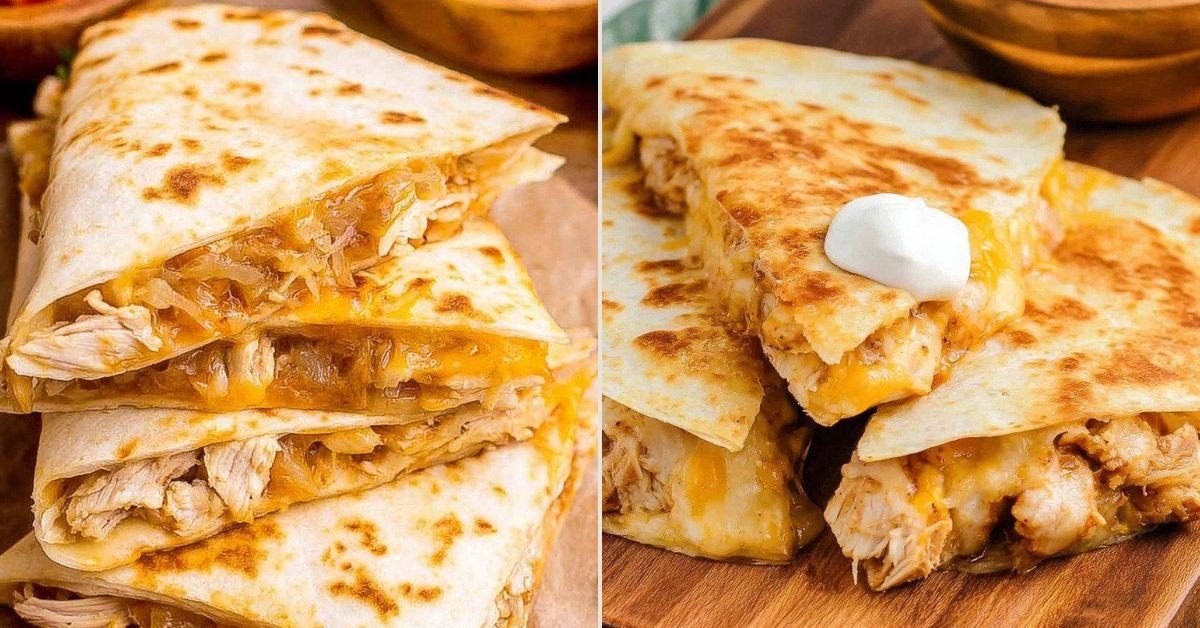
The best make-ahead move is preparing the filling, not cooking the whole quesadilla too early. Chop and season the cooked chicken ahead of time, then refrigerate it in a covered container. When ready to eat, assemble with cheese and cook fresh so the tortilla stays crisp.
You can also shred the cheese and stack the tortillas nearby for faster assembly. Avoid building the quesadilla too far ahead because the tortilla can absorb moisture from the chicken and cheese. If you need to assemble in advance, keep the filling cool and cook within a short window for the best texture.
14) Storing Leftover Chicken and Cheese Quesadilla That Never Stays on the Plate
Store leftover quesadilla wedges in an airtight container in the refrigerator for up to 3 days. Let them cool before closing the container so steam does not soften the tortilla too much.
Reheat leftovers in a dry skillet over medium-low heat until the tortilla crisps again and the cheese softens. Avoid microwaving if you want crisp edges, because the tortilla usually turns soft. For a faster option, a toaster oven or air fryer can help bring back the crunch, but watch closely so the tortilla does not overbrown.
Leftover wedges can be served with salsa, chopped lettuce, or a squeeze of lime. If the quesadilla has softened in the refrigerator, cut it into smaller pieces and crisp both sides in a skillet for a snack-style plate.
15) FAQ (Real Cooking Questions)
Can I use rotisserie chicken for this chicken and cheese quesadilla? Yes. Rotisserie chicken works well as long as it is finely chopped and not too wet. Taste it before adding salt because some rotisserie chicken is already heavily seasoned.
What cheese melts best for this recipe? Mexican blend cheese or cheddar jack works well because it melts smoothly and has enough flavor for the chicken. Avoid very dry cheeses if you want a clean, melty center.
How do I keep the quesadilla from falling apart? Use cheese on both sides of the chicken, keep the filling layer thin, press gently, and rest the quesadilla before slicing. This is one of the most important points in how to make quesadillas that hold together.
Can I make this as a cheese quesadilla recipe without chicken? Yes. Use the same skillet method, but reduce the cooking time slightly because there is no chicken filling to heat through. Keep the heat at medium so the tortilla browns while the cheese melts.
Can I add extra fillings? You can add small amounts of cooked peppers, onions, or beans, but keep them dry and finely chopped. Too much filling makes the quesadilla harder to flip and can soften the tortilla.
16) Save This Chicken and Cheese Quesadilla That Never Stays on the Plate Recipe
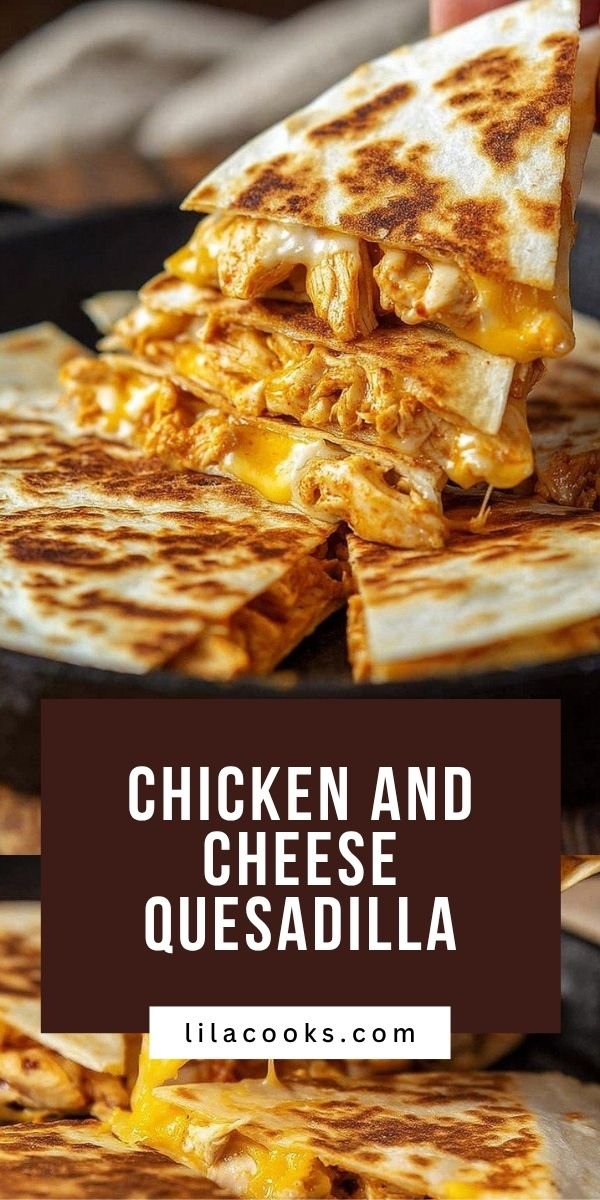
If this Chicken and Cheese Quesadilla That Never Stays on the Plate helped you solve the problem of loose filling and uneven melting, save it for quick skillet dinners or simple lunches. The key reminder is: cheese below and above the chicken keeps the center melty, crisp, and sliceable.
17) Conclusion
A chicken and cheese quesadilla becomes much more reliable when the method is controlled instead of rushed. Finely chopped chicken, steady medium heat, a butter-and-oil skillet base, and cheese on both sides of the filling solve the usual problems before they happen. Once you understand how the cheese binds the center and how the tortilla browns, the recipe feels simple for the right reasons. You get crisp edges, warm seasoned chicken, and wedges that stay together from skillet to plate.
18) Nutrition
Serving Size 1 portion Calories 515 Sugar 2 g Sodium 780 mg Fat 31 g Saturated Fat 14 g Carbohydrates 30 g Fiber 2 g Protein 30 g Cholesterol 95 mg





Leave a Comment