
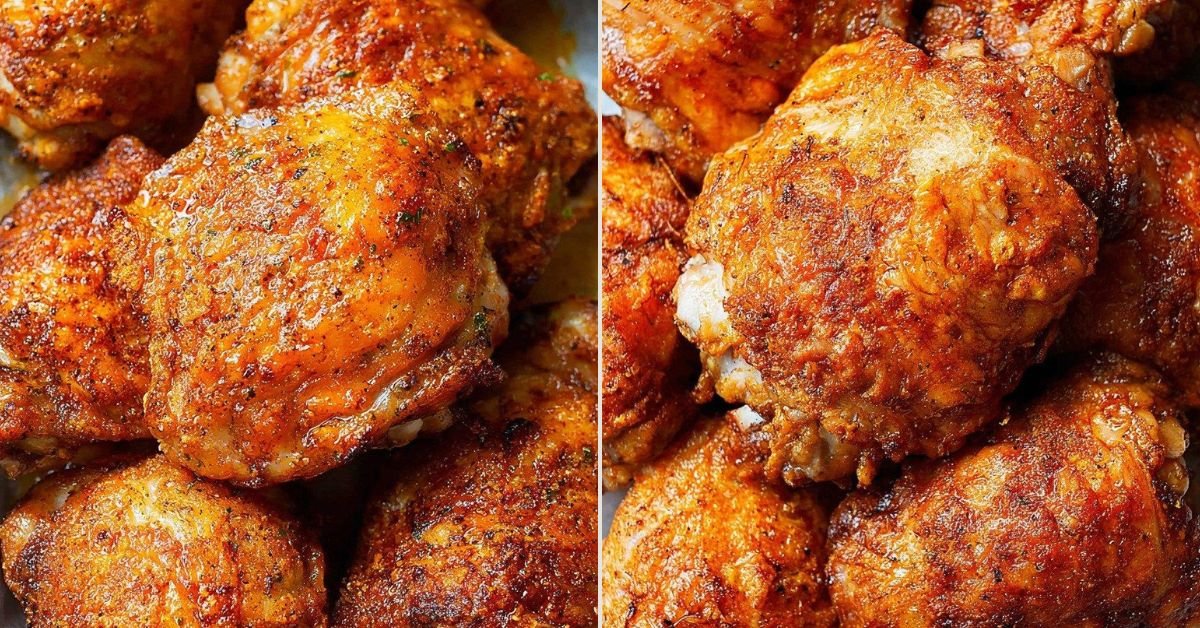
1) The Crisp-Skin Trick Behind Extra Crispy Oven-Fried Chicken Thighs
Soggy chicken skin can ruin dinner fast, especially when the meat underneath is juicy but the outside never gets that fried-style crunch. I’m Lila, and after a few batches of oven fried chicken thighs that came out pale, greasy, or just plain disappointing, I started testing the small details: drying the skin, using baking powder, spacing the thighs, and switching to convection. That discovery changed everything. These crispy oven fried chicken thighs give me the comfort of Sunday fried chicken without standing over hot oil, and the golden, crackly skin still feels like a tiny kitchen victory every time.
Table of Contents
- 1) The Crisp-Skin Trick Behind Extra Crispy Oven-Fried Chicken Thighs
- 2) Key Takeaways
- 3) Easy Extra Crispy Oven-Fried Chicken Thighs Recipe
- 4) Why Most Extra Crispy Oven-Fried Chicken Thighs Recipes Fail
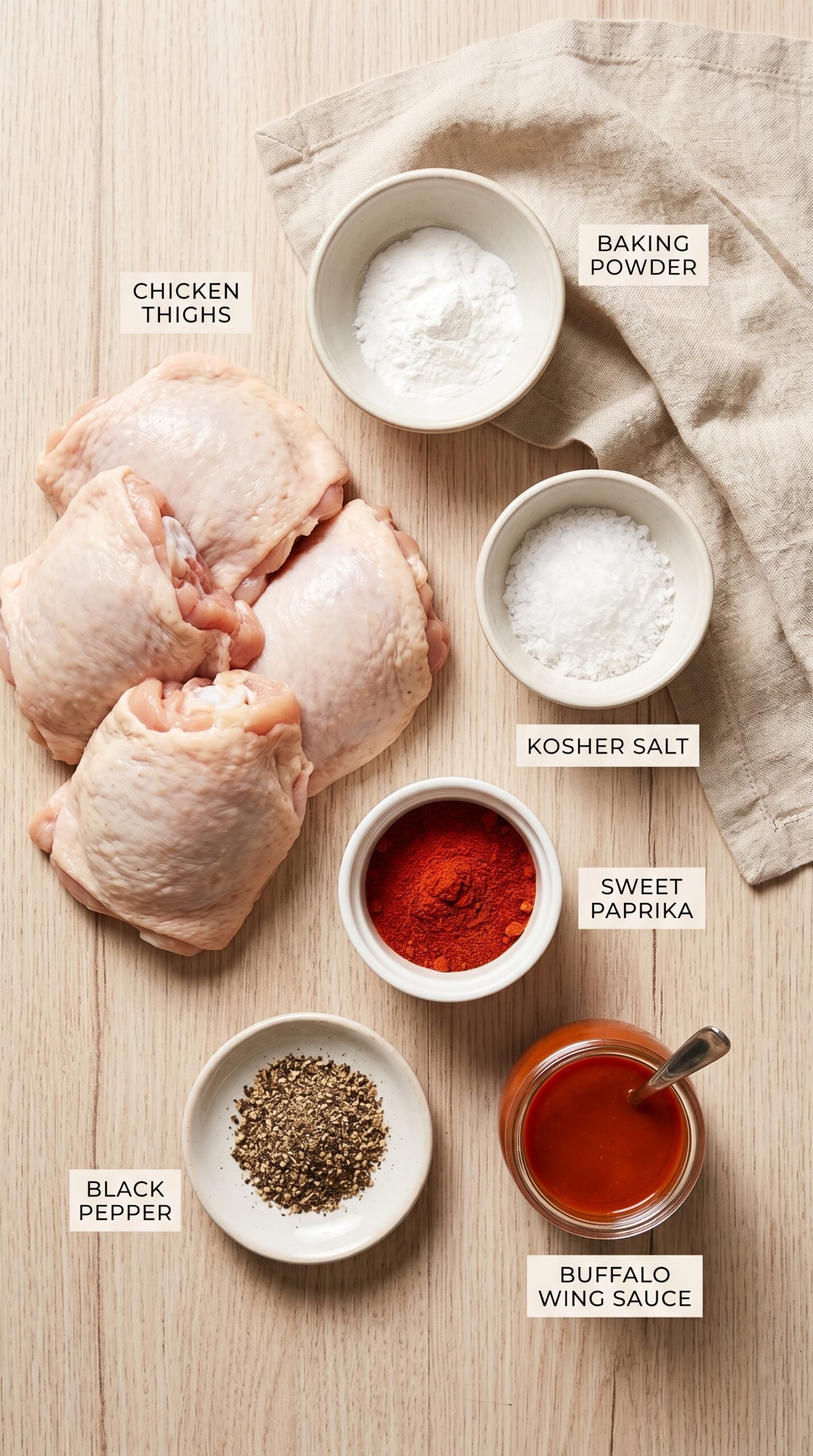
- 5) Ingredients for Extra Crispy Oven-Fried Chicken Thighs
- 6) How to Make Extra Crispy Oven-Fried Chicken Thighs
- 7) Recipe Card: Extra Crispy Oven-Fried Chicken Thighs
- 8) Tips for Making Extra Crispy Oven-Fried Chicken Thighs
- 9) Common Mistakes & Fixes
- 10) How to Tell Extra Crispy Oven-Fried Chicken Thighs Are Perfect
- 11) Professional Secrets Behind Better Extra Crispy Oven-Fried Chicken Thighs
- 12) Best Dishes or Pairings to Serve With Extra Crispy Oven-Fried Chicken Thighs
- 13) Making Extra Crispy Oven-Fried Chicken Thighs Ahead of Time
- 14) Storing Leftover Extra Crispy Oven-Fried Chicken Thighs
- 15) FAQ (Real Cooking Questions)
- 16) Save This Extra Crispy Oven-Fried Chicken Thighs Recipe
- 17) Conclusion
- 18) Nutrition
2) Key Takeaways
- Dry skin is the first crisping step: Paper towels are not a small detail here. The drier the chicken skin is before seasoning, the faster it can blister instead of steam.
- Baking powder is the texture helper: A small amount changes the surface of the skin so it browns and crisps more efficiently. Baking soda is not a swap because it can leave a harsh taste.
- Convection makes the oven act more like a fryer: Moving hot air surrounds the thighs, helps render fat, and gives these crispy oven fried chicken thighs their crackly finish.
- Sauce after resting, not before: Tossing with Buffalo sauce after the chicken rests keeps the skin from turning limp too quickly and protects the juicy interior.
3) Easy Extra Crispy Oven-Fried Chicken Thighs Recipe
Extra crispy oven-fried chicken thighs work because the method respects how chicken skin behaves. Skin contains moisture and fat, and those two things need heat, airflow, and time to transform into crispness. If the skin starts wet, the oven spends the first part of cooking drying it instead of browning it. If the thighs sit flat against a pan, the bottoms trap steam and rendered fat. If the sauce goes on too soon, all that careful crisping softens before the chicken reaches the plate.
This version keeps the ingredient list focused: bone-in, skin-on chicken thighs, baking powder, salt, paprika, black pepper, and Buffalo wing sauce. The flavor is savory, mildly smoky from the paprika, peppery around the edges, and tangy once the hot sauce coats the rested chicken. Bone-in thighs are forgiving because they stay juicy under high heat, which makes them ideal for oven baked crispy chicken thighs. The real goal is contrast: crackly skin outside, tender meat inside, and enough sauce to wake up the flavor without drowning the texture.
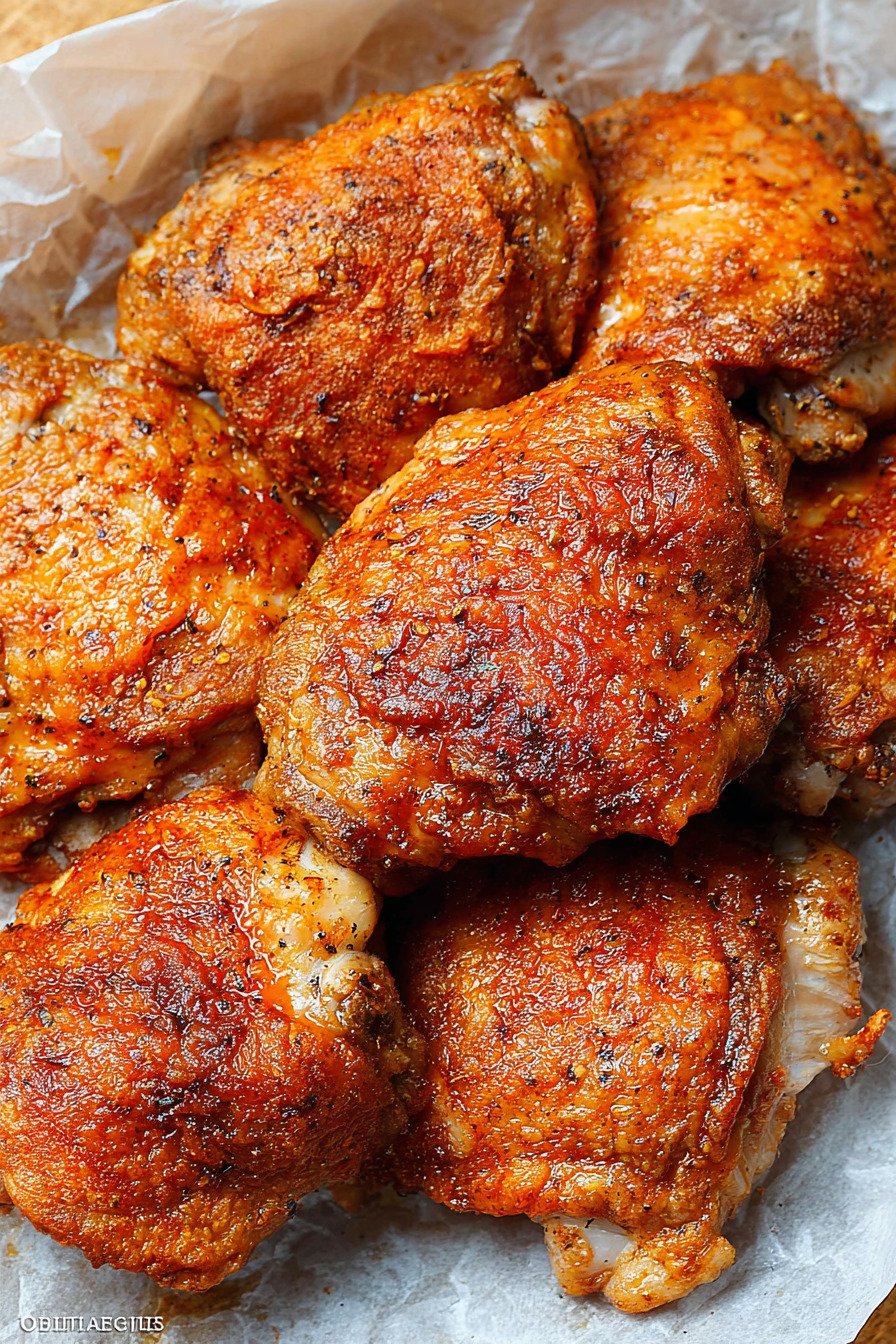
4) Why Most Extra Crispy Oven-Fried Chicken Thighs Recipes Fail
Most crispy oven-fried chicken thighs fail for one simple reason: the oven is fighting moisture. Chicken skin that is only lightly blotted still carries enough surface dampness to steam. That steam delays browning and makes the skin rubbery before it ever has a chance to blister. Patting the thighs very dry is not busywork; it is the foundation of the texture.
Another common failure is skipping airflow. When thighs sit directly on a flat pan, the bottoms cook in rendered chicken fat. That can taste rich, but it also turns the underside greasy. A cooling rack lifts the chicken so hot air can move around each piece, and the fat can drip away instead of pooling under the skin.
The third issue is using the wrong leavener. Baking powder helps the skin crisp; baking soda is much stronger and can taste metallic or soapy if used the same way. A tablespoon of baking powder over this amount of chicken is enough to help the surface dry and brown without changing the flavor of the meat.
Heat control also matters. Starting hot, then baking with convection, gives the thighs a crisping push while still letting the meat cook through. Without convection, the chicken can still be good, but it usually will not have the same evenly blistered, fried-style skin. Finally, saucing too early is a texture mistake. Buffalo sauce should hit the chicken after a short rest, when the skin has firmed and the juices have settled.
5) Ingredients for Extra Crispy Oven-Fried Chicken Thighs
Bone-in, skin-on chicken thighs: Thighs are the right cut when you want golden crispy chicken thighs because dark meat stays juicy through high-heat baking. Use them after trimming excess loose skin or large fatty pieces, but keep the main skin layer intact. Boneless or skinless thighs would cook faster, but they would not deliver the same crackly oven-fried result.
Baking powder: Baking powder is used before baking because it helps dry the skin’s surface and encourages browning. It should be sprinkled evenly with the seasonings, not clumped in one spot. Do not replace it with baking soda; baking soda is more alkaline and can leave an unpleasant flavor.
Kosher salt: Salt seasons the chicken and helps pull surface moisture from the skin. Use it before baking so it has time to work with the baking powder and spices. If you switch to fine table salt, use less because it packs more densely and can make the chicken taste oversalted.
Sweet paprika: Paprika gives the skin a warmer color and a gentle sweet-smoky flavor without overpowering the Buffalo sauce. Add it with the dry seasoning mix so it coats the skin evenly. Hot paprika can be used in a variation, but it will make the finished chicken sharper and spicier.
Black pepper: Black pepper adds a savory bite that balances the fatty richness of the chicken skin. Use it before baking so its flavor blooms in the rendered fat. Freshly ground pepper gives a cleaner aroma, while pre-ground pepper is milder.
Buffalo wing sauce: Buffalo sauce is added after baking and resting. That timing matters because sauce contains moisture, and moisture softens crisp skin. Toss lightly for a tangy coating, or serve extra on the side if you want the crunch to last longer.
- Bone-in thighs vs boneless thighs: Bone-in thighs take longer, but they stay juicier and give the skin enough time to crisp deeply.
- Cooling rack vs flat pan: A rack improves airflow and keeps the bottoms from sitting in grease; a flat pan is workable but softer underneath.
- Baking powder vs baking soda: Baking powder supports crispness without harsh flavor; baking soda is not a safe one-for-one substitute here.
- Sauce tossed vs sauce on the side: Tossing gives full Buffalo flavor, while dipping keeps the skin crispier for longer.
6) How to Make Extra Crispy Oven-Fried Chicken Thighs
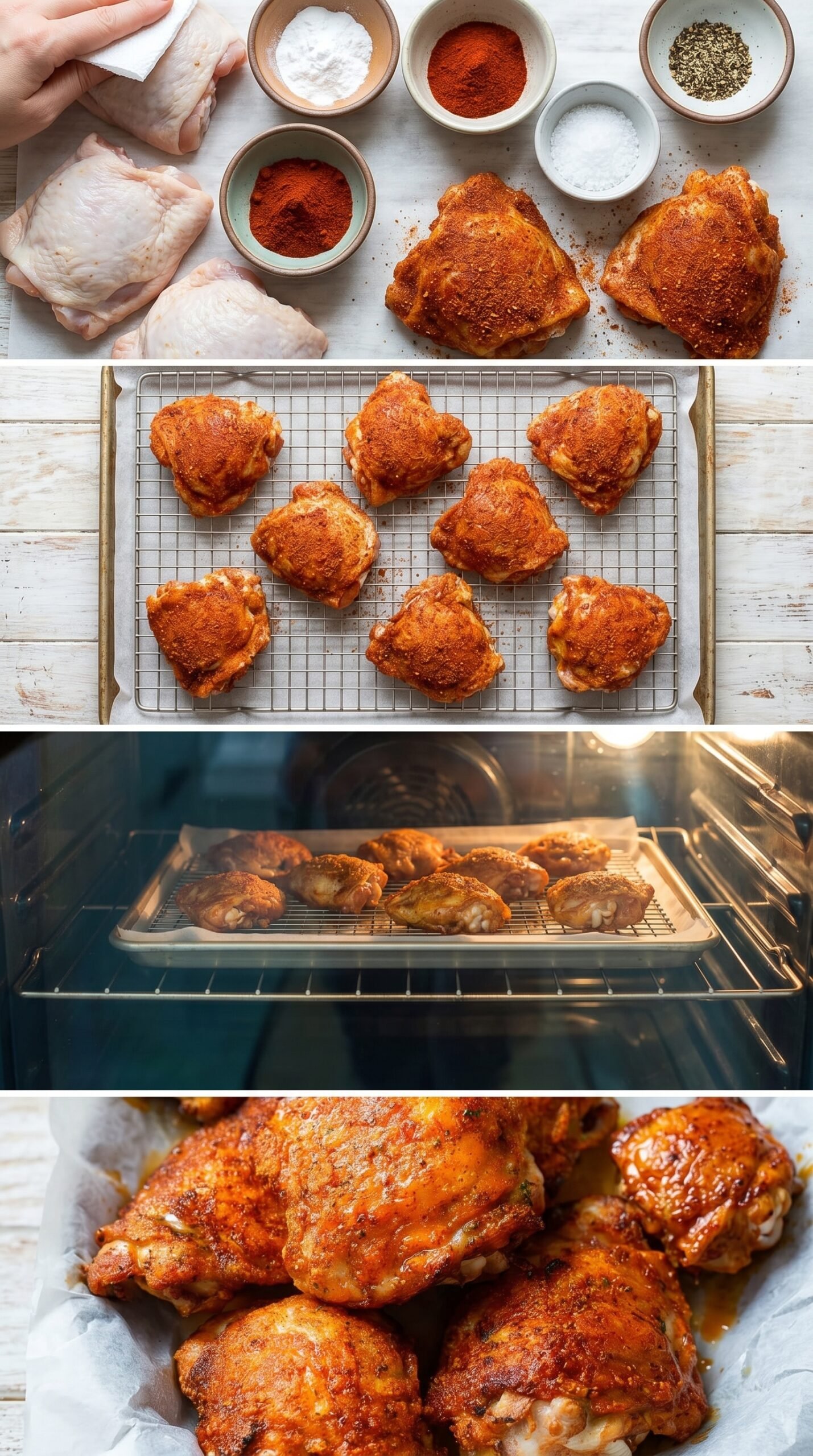
Step 1: Preheat the oven to 450°F. That initial hot oven helps the chicken skin tighten quickly instead of slowly steaming. While the oven heats, set up a large baking sheet and a cooling rack so the seasoned thighs can go straight into the oven without sitting too long.
Step 2: Dry the chicken thighs extremely well with paper towels. Press around the edges of the skin, the bone side, and any folds where moisture hides. Sprinkle the thighs with kosher salt, paprika, black pepper, and baking powder, then rub gently so the coating is thin and even. Heavy patches of seasoning can taste dusty after baking.
Step 3: Arrange the thighs skin-side up on the cooling rack with space between them. If pieces touch, they trap steam and brown unevenly. A little oil or cooking spray on the rack helps prevent sticking, especially where the skin meets the metal.
Step 4: Place the rack over the lined baking sheet and transfer it to the oven. Switch the oven to 425°F convection. The moving air helps render fat from the skin and creates the dry heat needed for crispy oven-fried chicken thighs. Bake about 30 minutes for juicy meat with moderate crispness, or 35 to 40 minutes for deeper crispness and more tenderness around the bone.
Step 5: Rest the chicken for 5 minutes before saucing. This pause keeps the juices from running out and helps the skin hold its crunch. Toss with Buffalo wing sauce just before serving, or serve the sauce on the side for the crispest bite.
7) Recipe Card: Extra Crispy Oven-Fried Chicken Thighs
Extra Crispy Oven-Fried Chicken Thighs
Ingredients
- 10 bone-in, skin-on chicken thighs, about 3 lbs, trimmed; keep the skin attached and pat every piece very dry for better crisping
- 1 Tbsp baking powder, not baking soda; it helps the skin dry and blister in the oven
- 2 tsp kosher salt, plus more to taste; seasons the meat and helps draw surface moisture from the skin
- 2 tsp sweet paprika; adds warm color and mild smoky-sweet flavor
- 1 tsp black pepper; use freshly ground pepper for a cleaner finish
- 3 Tbsp Buffalo wing sauce, plus more to taste; toss after resting so the skin keeps more crunch
Instructions
- Preheat the oven to 450°F so the chicken starts in a hot environment that helps dry and tighten the skin quickly.
- Pat the chicken thighs very dry with paper towels, especially around the skin folds. Sprinkle evenly with kosher salt, sweet paprika, black pepper, and baking powder, then rub gently over all sides so every thigh is lightly and evenly coated.
- Arrange the chicken thighs skin-side up on a cooling rack, leaving a little space between pieces so hot air can circulate. Spray the rack lightly with cooking spray or rub it with a thin film of oil to reduce sticking.
- If you skip the cooling rack, place the thighs directly on the prepared pan, knowing the bottoms may be slightly greasier. After baking, rest them briefly on paper towels if needed to remove excess rendered fat.
- Line a large baking sheet with aluminum foil and/or parchment paper for easier cleanup, then place the rack with the seasoned thighs on top of the baking sheet.
- Transfer the baking sheet to the oven, then switch the oven to 425°F convection. Convection is important here because the moving air helps produce the crispest skin.
- Bake for 30 minutes if you want moderate crispiness with maximum juiciness. The skin should be golden, the edges should look blistered, and the thickest part of the meat should reach 165°F.
- Bake for 35 to 40 minutes if you want ultimate crispiness and more fall-off-the-bone tenderness. Watch the skin near the end so it turns deep golden instead of overly dark.
- Remove the chicken thighs from the oven and let them rest for 5 minutes. This helps the juices settle and allows the skin to hold more crispness before saucing.
- Toss the rested thighs with Buffalo wing sauce, another favorite sauce, or a mix of hot wing sauce and barbecue sauce. For the crispiest bite, serve extra sauce on the side for dipping.
8) Tips for Making Extra Crispy Oven-Fried Chicken Thighs
The most important tip is to treat drying as part of the cooking method, not as prep you can rush. If the chicken feels slick, keep blotting. Skin that looks matte before seasoning is much more likely to crisp. For even better texture, you can season the thighs and refrigerate them uncovered on a rack for a few hours before baking. That extra air-drying step helps when you want chicken thigh recipes baked crispy without deep frying.
Spacing is another quiet texture trick. Each thigh needs enough room for hot air to move around it. If your pan is crowded, use two pans and rotate them if needed. Crowding saves space, but it costs crispness. The chicken should roast, not steam in its own humidity.
Use convection if your oven has it. Convection heat is more aggressive on the surface of the chicken because the fan keeps hot air moving. If your oven runs hot, check the thighs near the 30-minute mark. The skin should be deeply golden, the edges should look lightly blistered, and the meat near the bone should be fully cooked.
For the Buffalo sauce, think light coating rather than heavy bath. Too much sauce hides the crisp skin you worked to create. A smart serving move is to toss the chicken with just enough sauce to glaze the surface, then put extra sauce at the table for dipping.
9) Common Mistakes & Fixes
Problem: The skin turns rubbery instead of crisp. Cause: The chicken was too wet, the pan was crowded, or the oven did not use enough circulating heat. Fix: Pat the thighs until very dry, leave space between pieces, and use convection at 425°F after the initial preheat.
Problem: The bottoms are greasy. Cause: The thighs baked directly on the pan and sat in rendered fat. Fix: Use a cooling rack over the baking sheet. If you must bake directly on the pan, rest the chicken briefly on paper towels after baking.
Problem: The chicken tastes bitter or soapy. Cause: Baking soda was used instead of baking powder, or the baking powder was applied unevenly in thick patches. Fix: Use baking powder only, sprinkle it with the seasonings, and rub it evenly over the skin.
Problem: The meat tastes bland near the bone. Cause: The seasoning stayed only on one visible spot or the thighs were too large for the amount of salt. Fix: Rub the seasoning over all surfaces and taste after saucing to decide whether a tiny extra pinch of salt is needed.
Problem: The skin gets crisp, then turns soft after serving. Cause: Sauce was added too early or too heavily. Fix: Rest for 5 minutes, toss lightly right before serving, and keep extra sauce on the side.
10) How to Tell Extra Crispy Oven-Fried Chicken Thighs Are Perfect
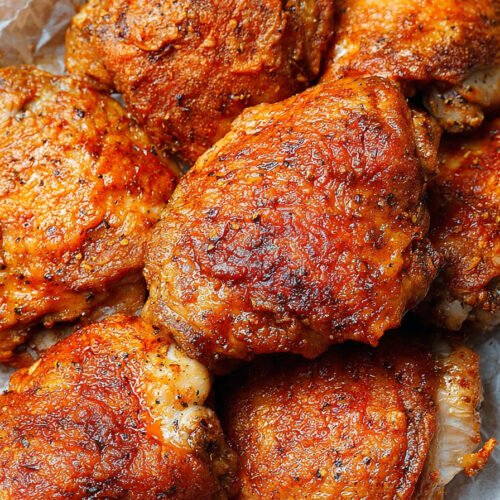
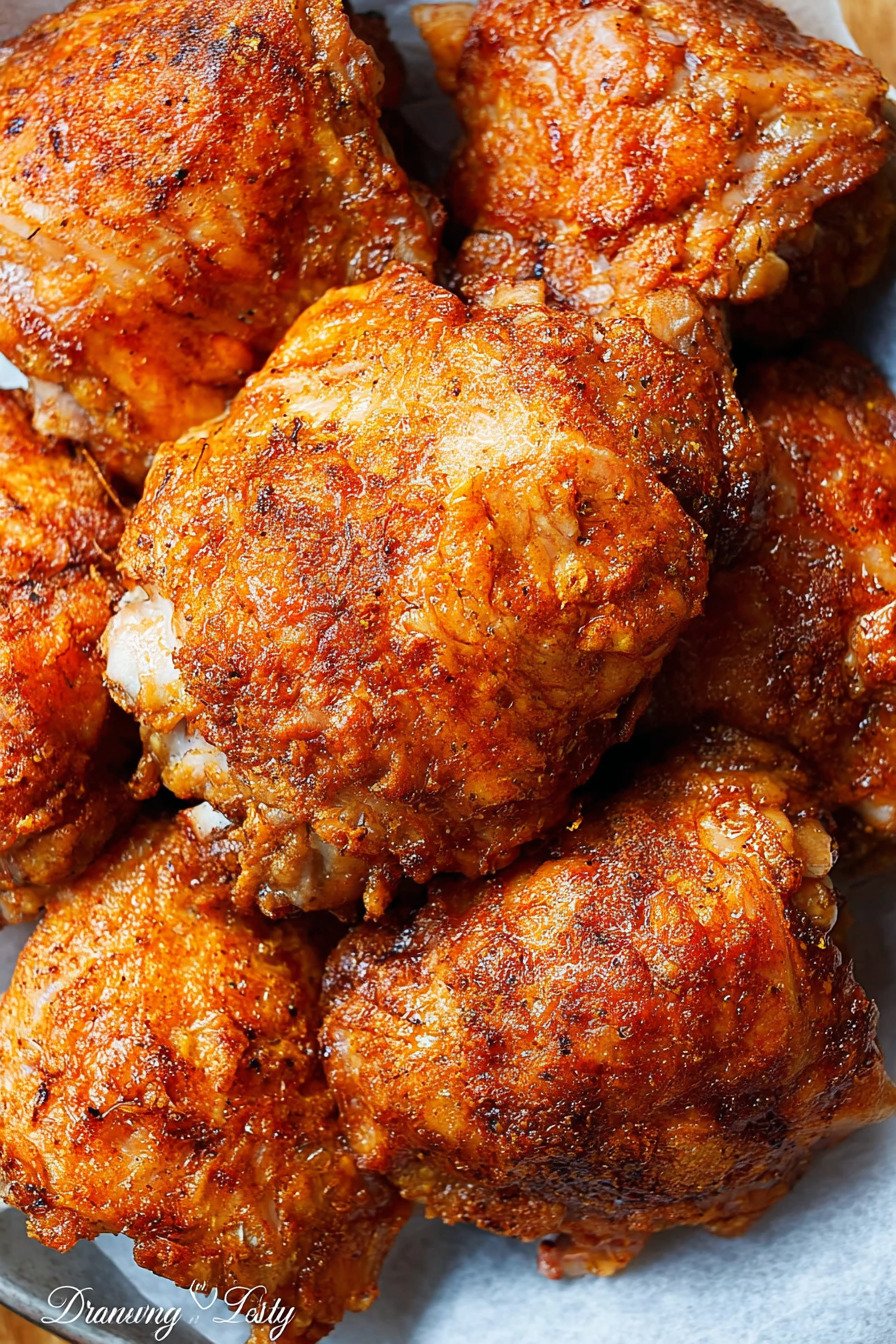
Perfect extra crispy oven-fried chicken thighs should look deeply golden on top, with darker amber edges where the skin has rendered and blistered. The skin should feel firm when tapped with tongs, not loose or rubbery. You may see tiny bubbles or crackled patches across the surface; that is a good sign that the baking powder, heat, and airflow did their job.
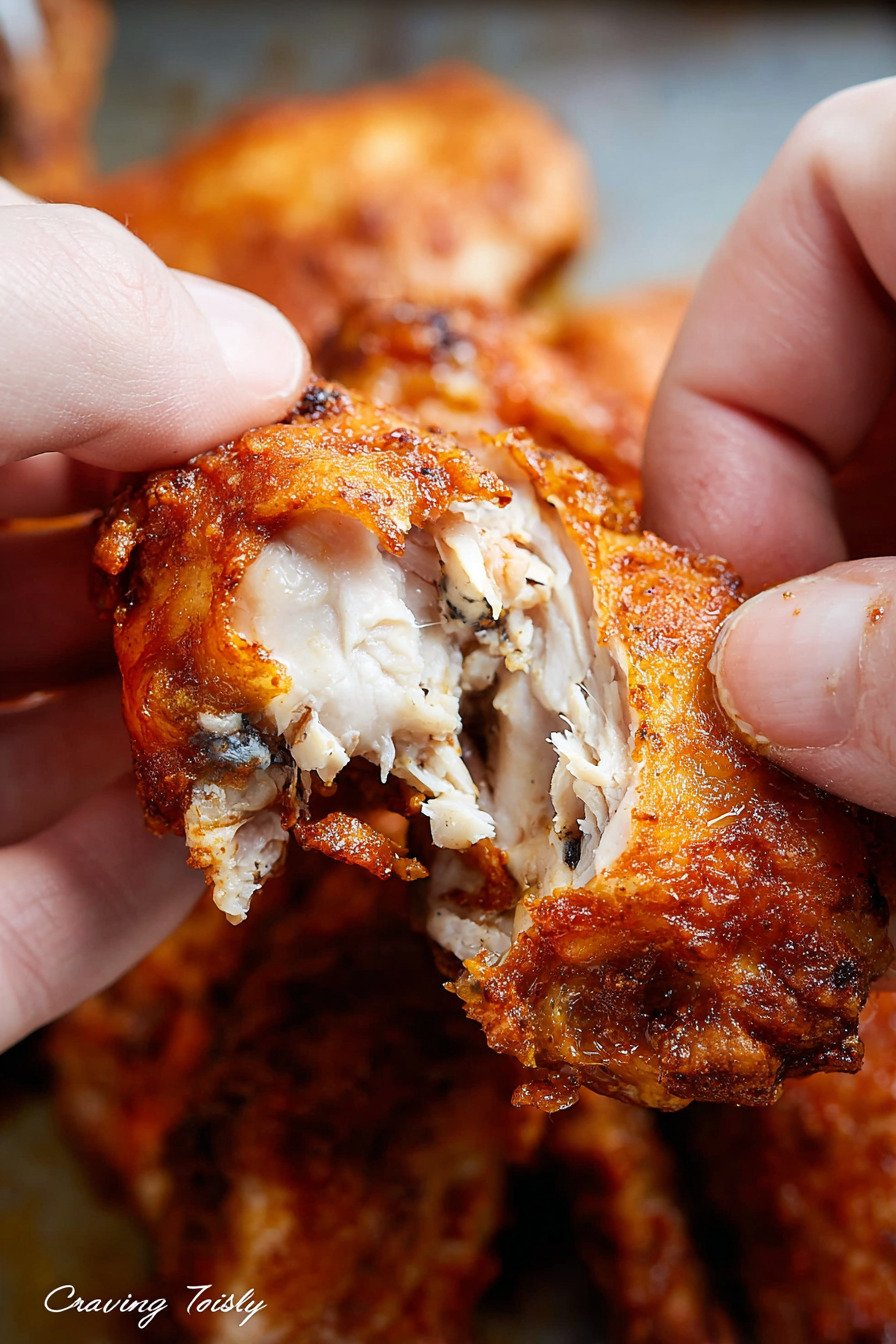
The meat should be juicy and tender, especially around the bone. For safety and consistency, the thickest part should reach at least 165°F without touching the bone with the thermometer. Thighs can handle a little higher temperature than lean chicken breast because dark meat has more connective tissue and fat, so the texture often becomes more tender as it cooks longer.
The aroma should be roasted and savory, with paprika warmth and rendered chicken fat, not sharp or chemical. After tossing with Buffalo sauce, the chicken should smell tangy and buttery-spicy, but the skin should still have some structure. Failure signs include pale skin, wet patches, a stretchy bite, greasy pooling underneath, or sauce that slides off because the surface never crisped.
11) Professional Secrets Behind Better Extra Crispy Oven-Fried Chicken Thighs
The professional move is controlling surface moisture before chasing flavor. Many home cooks add more seasoning, more sauce, or more oil when chicken does not taste exciting. For this recipe, the better fix is texture first. Crispy skin carries flavor because it creates contrast. Once the skin crackles, even simple salt, paprika, pepper, and Buffalo sauce taste more intentional.
Another secret is understanding that rendered fat is useful only when it can move away from the skin. A rack lets the fat drip down while the fan keeps heat circulating. That combination mimics part of what hot oil does in frying: it keeps the surface hot and dry enough to brown. The oven will never be identical to a fryer, but this method gets surprisingly close without a pot of oil.
The final secret is restraint with sauce. Restaurant-style wings and crispy chicken often get tossed quickly, not soaked. Use a large bowl, add the rested thighs, spoon in enough Buffalo sauce to coat, and turn them gently. If the sauce puddles at the bottom, you used more than the skin can hold.
12) Best Dishes or Pairings to Serve With Extra Crispy Oven-Fried Chicken Thighs
Extra crispy oven-fried chicken thighs pair well with sides that balance heat, salt, and richness. A crisp cabbage slaw is one of my favorite choices because the cool crunch cuts through the Buffalo sauce. Roasted broccoli, green beans, or carrots also work because their caramelized edges echo the chicken’s roasted flavor without making the plate feel heavy.
For comfort-food dinners, serve the thighs with mashed potatoes, cornbread, macaroni and cheese, or baked beans. If you want something lighter, try a cucumber salad, chopped romaine salad, or a simple tomato salad with vinegar. The tangier the sauce, the better it plays with creamy or fresh sides.
For a game-day style meal, offer celery sticks, carrot sticks, ranch, blue cheese dressing, and extra Buffalo sauce on the side. Keeping the dips separate lets everyone control how saucy each bite gets, which is especially helpful when you want the chicken skin to stay crisp as long as possible.



13) Making Extra Crispy Oven-Fried Chicken Thighs Ahead of Time
The best make-ahead strategy is to season the chicken ahead, not fully cook it too early. Pat the thighs dry, coat them with the seasoning and baking powder mixture, then place them uncovered on a rack in the refrigerator for several hours. This dry rest helps the skin lose surface moisture, which can make the final texture even better.
If you need to cook the chicken before serving, leave it unsauced until the last moment. Reheat the thighs on a rack in a hot oven until the skin firms again and the meat is warmed through. Then rest briefly and toss with Buffalo sauce. Sauced chicken can still taste good later, but the skin will soften faster because sauce adds moisture.
14) Storing Leftover Extra Crispy Oven-Fried Chicken Thighs
Store leftover chicken thighs in an airtight container in the refrigerator for up to 3 days. If possible, keep extra sauce separate from the chicken. The skin will soften in the refrigerator, but it can regain some texture with the right reheating method.
For reheating, use a 375°F oven or an air fryer and place the thighs on a rack or perforated basket so air can circulate. Heat until warmed through and the skin feels firmer. Avoid microwaving if crispness matters; the microwave heats quickly, but the trapped steam makes the skin soft and chewy.
Leftover meat can also be pulled from the bone and used in wraps, rice bowls, salads, or sandwiches. If the skin is no longer crisp, chop it and warm it separately in a skillet or oven until it firms up, then sprinkle it over the chicken for texture.
15) FAQ (Real Cooking Questions)
Can I make crispy oven fried chicken thighs without convection? Yes, but the skin may not be as evenly crisp. Use the rack, keep the chicken spaced apart, and bake a little longer if needed. Watch the color and internal temperature rather than relying only on the clock.
Why do I need baking powder? Baking powder helps dry and crisp the skin’s surface. It is one of the main reasons these oven fried chicken thighs get a blistered texture without deep frying. Do not use baking soda as a substitute.
Can I use boneless chicken thighs? You can, but the timing will change and the result will not be the same. Bone-in, skin-on thighs give the skin enough time to crisp while the meat stays juicy. Boneless thighs cook faster and can dry out if baked for the same length of time.
When should I add the Buffalo sauce? Add it after baking and after a 5-minute rest. If you add sauce before baking, the moisture can prevent crisping. If you add too much after baking, the skin can soften quickly.
How do I know the chicken is fully cooked? Use a thermometer in the thickest part of the thigh without touching the bone. The chicken should reach at least 165°F. The juices should look clear, the meat should pull easily near the bone, and the skin should be golden and crisp.
16) Save This Extra Crispy Oven-Fried Chicken Thighs Recipe
If this Extra Crispy Oven-Fried Chicken Thighs recipe helped you solve the soggy-skin problem, save it for Sunday dinner, game day, or the next time you want fried-style chicken without a pot of oil. The key reminder is: dry the skin well, use baking powder, bake on a rack with convection, and sauce after resting.

17) Conclusion
Once you understand why chicken skin fails, crispy oven fried chicken thighs become much easier to master. The recipe is not about complicated seasoning or extra steps for the sake of it. It is about removing moisture, creating airflow, using the right crisping helper, and adding sauce at the right moment. That is the difference between thighs that taste baked and thighs that give you the crunchy, golden, oven-fried bite you were hoping for.
With this method, you can look at the chicken and know what is happening: matte dry skin before baking, blistered edges in the oven, a short rest to protect the juices, and a final toss of Buffalo sauce for heat and tang. That kind of confidence makes dinner calmer, and honestly, a little more fun.
18) Nutrition
Serving Size 1 portion Calories 520 Sugar 0 g Sodium 1030 mg Fat 37 g Saturated Fat 10 g Carbohydrates 2 g Fiber 0 g Protein 43 g Cholesterol 205 mg






Leave a Comment