
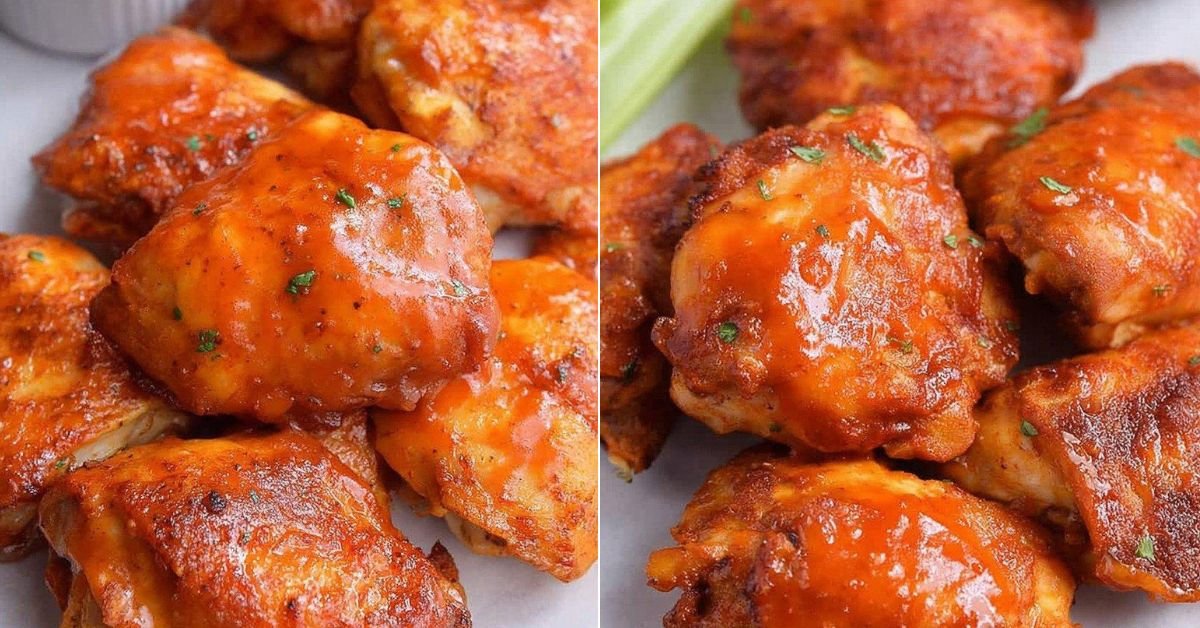
1) What I Learned Testing Buffalo Chicken Thighs
Chicken thighs can still turn dry when the sauce is bold but the cooking time runs too long. I’m Lila, and my first batch tasted sharp on the outside but flat in the center because I rushed the marinade. After testing the hot sauce ratio, oven heat, air fryer spacing, and final toss, I discovered that buffalo chicken thighs need flavor before and after cooking. The marinade seasons the meat, while the last coating keeps the finish bright and saucy. This is the kind of spicy chicken dinner that brings relief on a busy night because it feels simple, confident, and full of heat.
Table of Contents
- 1) What I Learned Testing Buffalo Chicken Thighs
- 2) Key Takeaways
- 3) Easy Buffalo Chicken Thighs Recipe
- 4) Why Most Buffalo Chicken Thighs Recipes Fail
- 5) Ingredients for Buffalo Chicken Thighs
- 6) How to Make Buffalo Chicken Thighs
- 7) Recipe Card: Buffalo Chicken Thighs
- 8) Tips for Making Buffalo Chicken Thighs
- 9) Common Mistakes & Fixes
- 10) How to Tell Buffalo Chicken Thighs Are Done
- 11) Professional Secrets Behind Better Buffalo Chicken Thighs
- 12) Best Dishes or Pairings to Serve With Buffalo Chicken Thighs
- 13) Making Buffalo Chicken Thighs Ahead of Time
- 14) Storing Leftover Buffalo Chicken Thighs
- 15) FAQ (Real Cooking Questions)
- 16) Save This Buffalo Chicken Thighs Recipe
- 17) Conclusion
- 18) Nutrition
2) Key Takeaways
- Marinating the chicken for at least 1 hour helps the hot sauce, olive oil, garlic powder, and onion powder season the meat instead of sitting only on the surface.
- The safest doneness checkpoint is 165 degrees Fahrenheit in the thickest part of the thigh; guessing by color alone can lead to dry chicken or undercooked centers.
- For baked buffalo chicken thighs, a hot oven gives the sauce time to cling while the chicken stays juicy, and a short broil can add better edges if watched closely.
- The final toss in reserved hot sauce matters because it refreshes the tangy buffalo flavor after cooking and gives the chicken a glossy, saucy finish.
3) Easy Buffalo Chicken Thighs Recipe
This buffalo chicken thighs recipe works because it treats the sauce in two stages. The first portion of hot sauce goes into the marinade with olive oil and seasonings, which helps the chicken absorb flavor before heat tightens the proteins. The second portion goes on after cooking, when the hot chicken can grab the sauce and carry that bright buffalo taste into every bite. Boneless skinless thighs are forgiving, but they still need attention: even juicy cuts can turn tough if they are crowded, overcooked, or left without enough seasoning time.
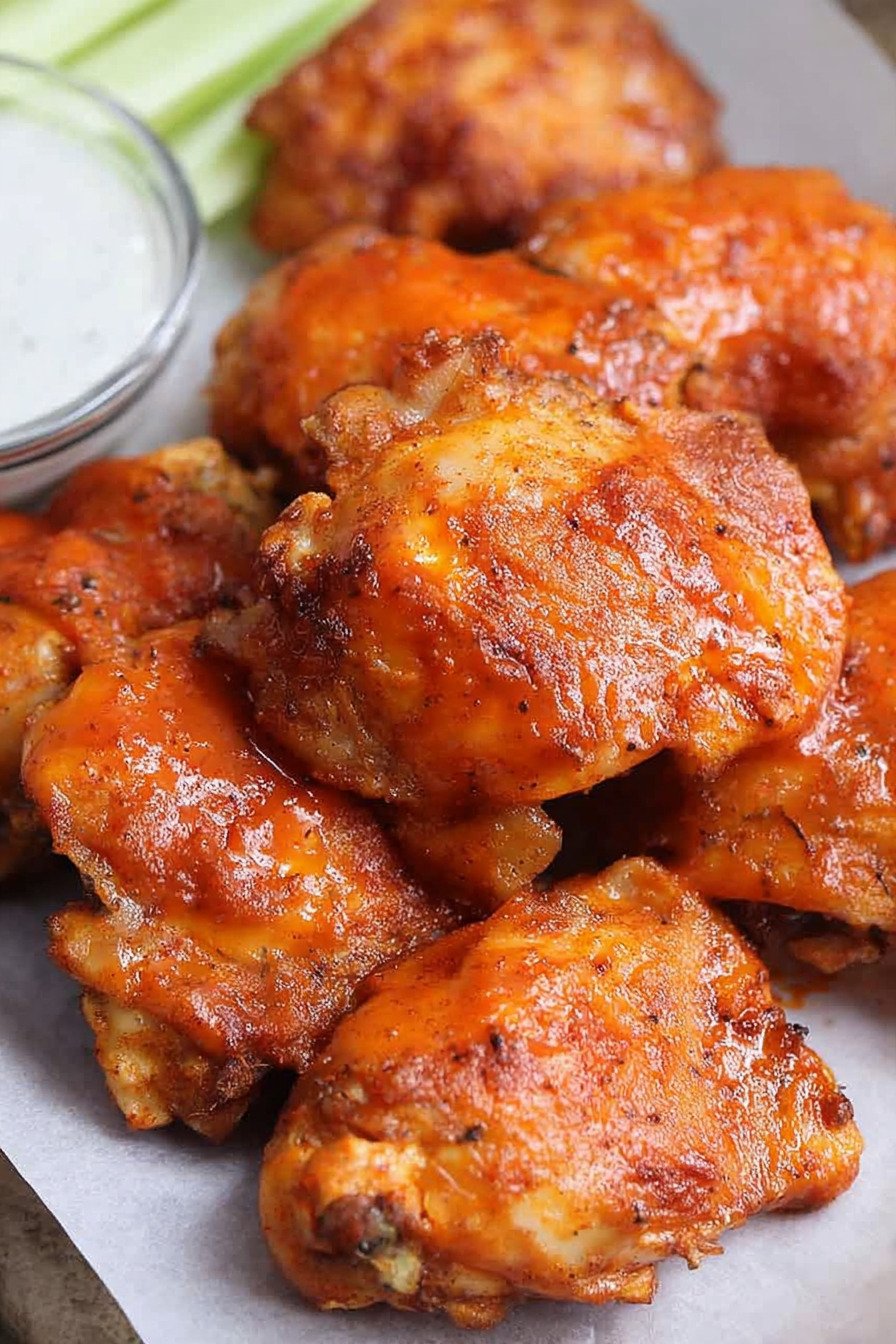
4) Why Most Buffalo Chicken Thighs Recipes Fail
Most buffalo chicken thigh recipes fail for a few practical reasons. First, the chicken is often cooked straight from a quick coating, so the flavor stays thin and surface-level. A short marinade gives the salt and acidity in the hot sauce time to work into the meat. Second, the pan or air fryer basket gets crowded, which traps steam and prevents the edges from browning. Third, cooks often keep baking after the chicken has already reached 165 degrees Fahrenheit, and that extra time squeezes out moisture. Finally, using all the hot sauce before cooking can dull the buffalo flavor, which is why the final toss is so important.
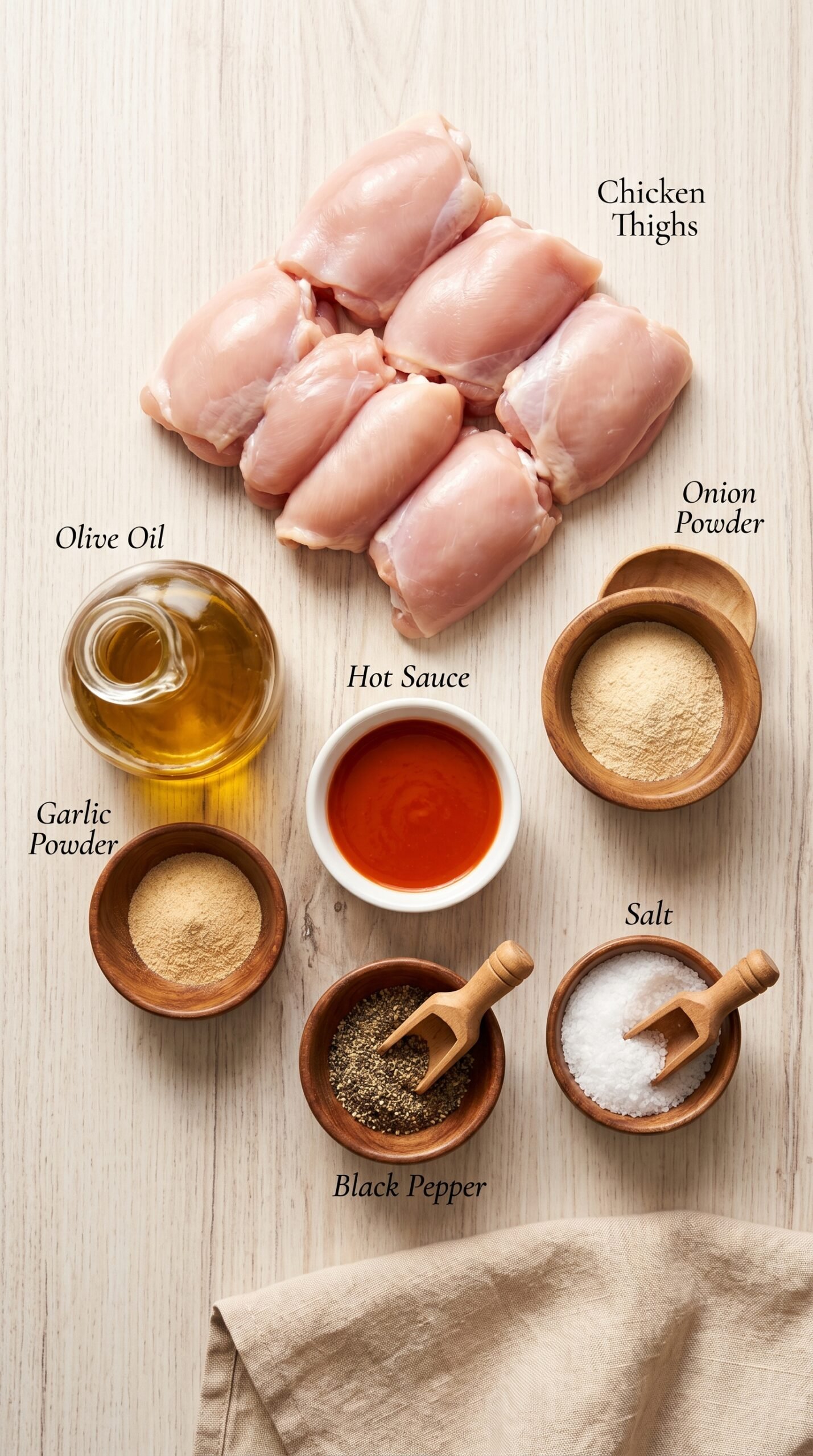
5) Ingredients for Buffalo Chicken Thighs
Boneless skinless chicken thighs: This cut stays juicier than chicken breast because it has more natural fat and a looser texture. Trim visible fat before marinating so the sauce clings to the meat instead of sliding off greasy edges.
Olive oil: Olive oil helps the hot sauce coat the chicken more evenly and supports browning in the oven or air fryer. If you skip it, the marinade can taste sharper and the surface may cook a little drier.
Hot sauce: Hot sauce is the main flavor driver for buffalo chicken thighs. Dividing it matters: part seasons the chicken during marinating, and the rest gives the cooked chicken a fresh, tangy finish.
Garlic powder: Garlic powder spreads evenly through the marinade and adds savory depth without burning the way minced garlic can at high heat.
Onion powder: Onion powder softens the sharpness of the hot sauce and makes the flavor taste rounder. It is especially useful in hot sauce chicken recipes because it adds body without adding moisture.
Freshly ground black pepper: Black pepper adds a warm bite behind the vinegar heat. Add it before cooking so the flavor has time to settle into the marinade.
Extra salt if needed: Hot sauce can already be salty, so taste before adding more. Extra salt is best used as a final adjustment, not an automatic addition.
- Boneless thighs vs bone-in thighs: Boneless thighs cook faster and absorb marinade more evenly, while bone-in thighs need more time and a different timing plan.
- Oven vs air fryer: Buffalo chicken thighs in oven cook evenly on a tray, while the air fryer gives quicker browning when the basket is not crowded.
- Marinade sauce vs finishing sauce: The marinade builds flavor inside the chicken; the finishing sauce restores the bold buffalo taste after heat softens the sharpness.
- Chicken thighs vs chicken breast: Thighs stay juicier under high heat, making them better for a spicy sauce that can taste harsh if the meat dries out.
6) How to Make Buffalo Chicken Thighs
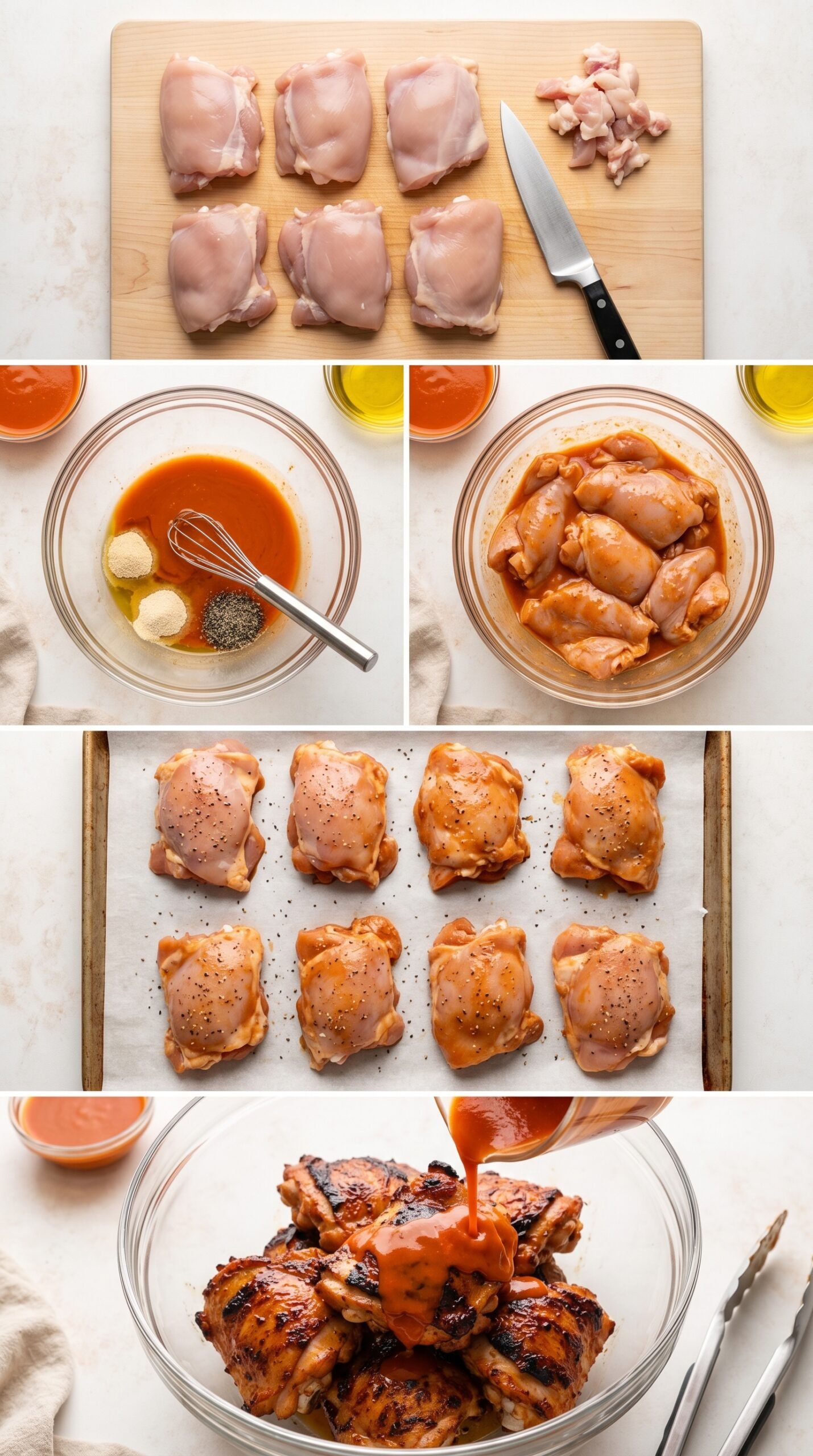
Step 1: Trim the chicken thighs so most visible fat is removed. Keep the pieces close in size and thickness so they finish at the same time.
Step 2: Mix part of the hot sauce with olive oil, garlic powder, onion powder, and black pepper until the marinade looks smooth. Add the chicken and turn each piece until coated on all sides.
Step 3: Cover and refrigerate the chicken for at least 1 hour. This resting time is what keeps buffalo chicken thighs boneless from tasting seasoned only on the outside.
Step 4: For the oven method, bake the marinated chicken at 425 degrees Fahrenheit in a single layer until the thickest part reaches 165 degrees Fahrenheit. If you want more browned edges, broil briefly at the end and watch carefully because hot sauce can darken quickly.
Step 5: For the air fryer method, preheat the basket, spray it lightly, arrange the chicken in one layer, cook, flip, and finish until the center reaches 165 degrees Fahrenheit. Transfer the hot chicken to a bowl and toss with the remaining hot sauce just before serving.
7) Recipe Card: Buffalo Chicken Thighs
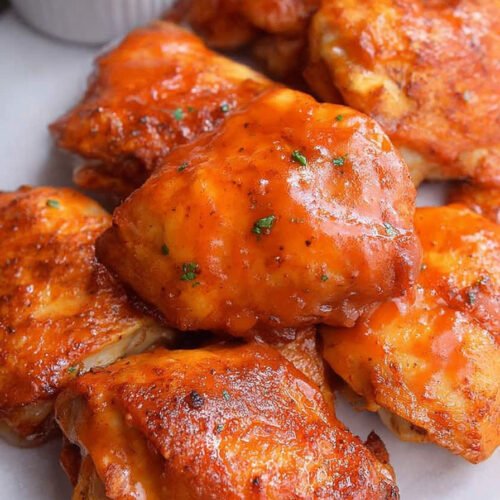
Buffalo Chicken Thighs – Oven or Air Fryer
Ingredients
- 6 boneless skinless chicken thighs, about 1 to 1 1/2 lbs, trimmed so the pieces cook evenly and stay tender.
- 2 tablespoons olive oil, to help the marinade coat the chicken and support browning.
- 2/3 cup hot sauce such as Frank’s, divided, using part for the marinade and the rest for the final glossy coating.
- 1 teaspoon garlic powder, for savory depth that blends smoothly into the hot sauce.
- 1 teaspoon onion powder, to round out the sharp heat with mild sweetness.
- 1/2 teaspoon black pepper, freshly ground, for a warm finish.
- Extra salt if needed, added only after tasting because hot sauce can already be salty.
Instructions
- Trim the chicken thighs so most visible fat is removed, keeping the pieces similar in thickness so they cook at the same pace.
- In a medium bowl, mix 1/3 cup hot sauce, olive oil, garlic powder, and onion powder until smooth. Add the chicken thighs and turn until fully coated. Cover and marinate in the refrigerator for at least 1 hour so the flavor can season the meat instead of only the surface.
- For the oven method, preheat the oven to 425 degrees Fahrenheit. Arrange the marinated chicken thighs in one layer on a baking tray and bake for about 25 minutes, or until the thickest piece reaches 165 degrees Fahrenheit. For a slightly crispier edge, broil for 1 to 3 minutes at the end while watching closely so the sauce does not burn.
- For the air fryer method, preheat the air fryer to 380 degrees Fahrenheit for a couple of minutes. Spray the basket with non-stick spray, arrange the chicken thighs in one layer, air fry for 10 minutes, flip, then air fry for 8 to 10 more minutes until the chicken reaches 165 degrees Fahrenheit and the surface looks lightly browned.
- Transfer the hot cooked chicken to a bowl, pour the remaining 1/3 cup hot sauce over the top, and toss until glossy and evenly coated. Serve immediately while the outside is saucy and the inside is still juicy.
8) Tips for Making Buffalo Chicken Thighs
Use the marinade time as a flavor tool, not just a waiting period. One hour is enough to make a noticeable difference, but longer marinating can deepen the taste if the chicken is covered well and kept cold. Keep the chicken in one layer whether you bake or air fry it because stacking pieces traps steam and weakens browning. For baked buffalo chicken thighs, use the broiler only at the end and only for a minute or two, because sugary or vinegar-heavy sauces can scorch fast. For the air fryer, leave space around each thigh so hot air can move across the surface. Always finish with the reserved hot sauce while the chicken is still hot so the sauce clings instead of pooling.
9) Common Mistakes & Fixes
Problem: The chicken tastes spicy but not deeply seasoned. Cause: The thighs were coated and cooked right away. Fix: Marinate for at least 1 hour so the hot sauce mixture has time to season the meat.
Problem: The chicken turns dry. Cause: It was cooked past 165 degrees Fahrenheit or left under the broiler too long. Fix: Check the thickest piece with a thermometer and remove the chicken as soon as it reaches the safe temperature.
Problem: The outside looks wet instead of lightly browned. Cause: The tray or air fryer basket was crowded. Fix: Arrange the chicken in one layer with space between pieces, cooking in batches if needed.
Problem: The buffalo flavor tastes dull after cooking. Cause: All the hot sauce was used before heating. Fix: Save part of the hot sauce for the final toss so the cooked chicken gets a fresh, tangy coating.
10) How to Tell Buffalo Chicken Thighs Are Done
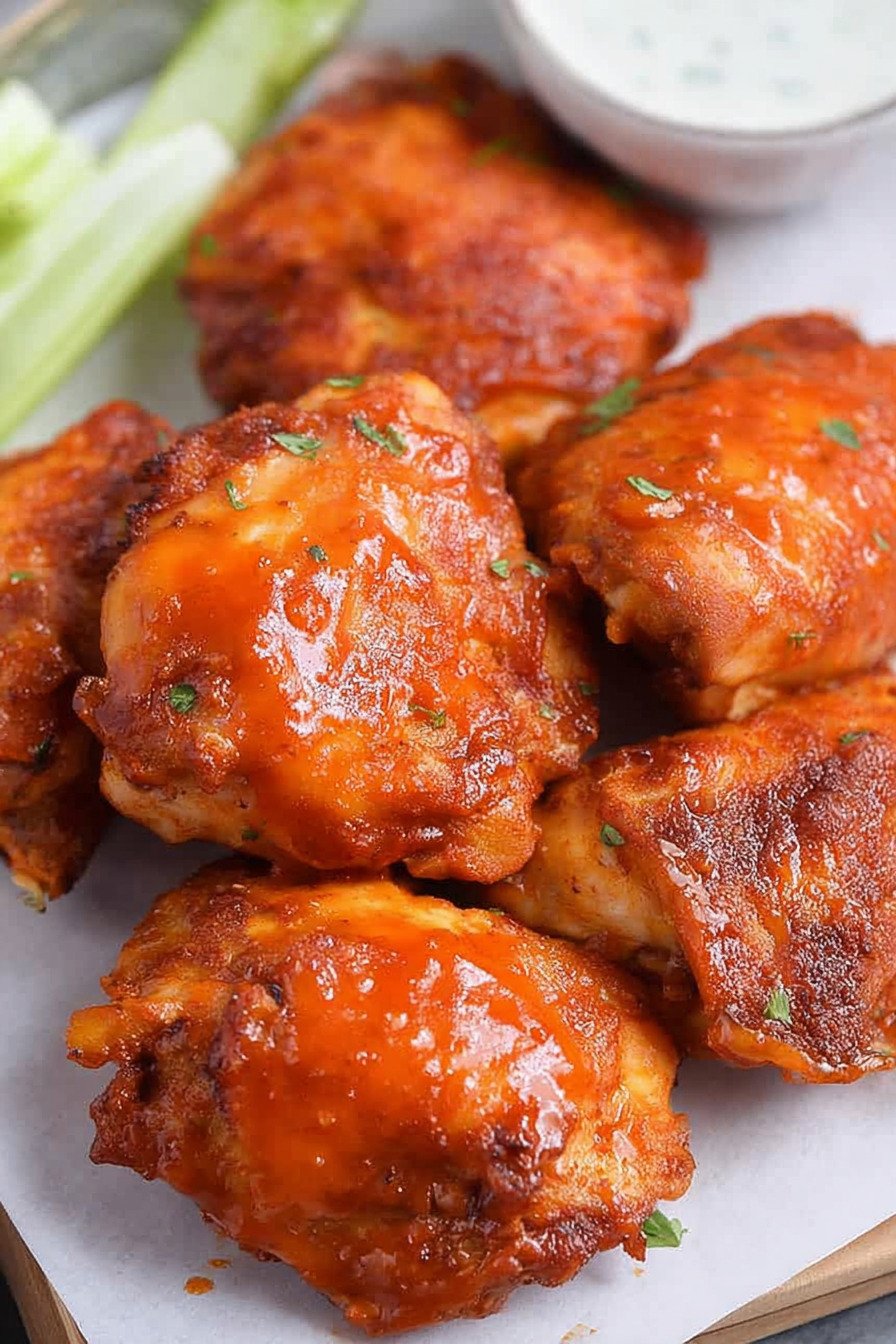
Buffalo chicken thighs are done when the thickest part reaches 165 degrees Fahrenheit and the juices look clear. Visually, the surface should look set, lightly browned in spots, and glossy once tossed with the final hot sauce. The texture should feel firm but not hard when pressed with tongs. The aroma should be savory, tangy, and warm from the garlic and onion powders, not burnt or harsh. If the chicken looks pale and wet, it may need more spacing or a little more cooking time. If it feels tight, dry, or stringy, it likely cooked too long.
11) Professional Secrets Behind Better Buffalo Chicken Thighs
The most useful professional habit is separating seasoning from finishing. A marinade is meant to build flavor inside the meat, while a finishing sauce is meant to refresh the surface right before serving. That small difference makes buffalo chicken thighs taste brighter and juicier. Another important detail is heat management. High heat works well for thighs because it cooks them quickly, but the chicken still needs space so moisture can evaporate. In the oven, a sheet pan gives steady heat. In the air fryer, circulating air can create better edges, but only if the basket is not packed tightly.
12) Best Dishes or Pairings to Serve With Buffalo Chicken Thighs
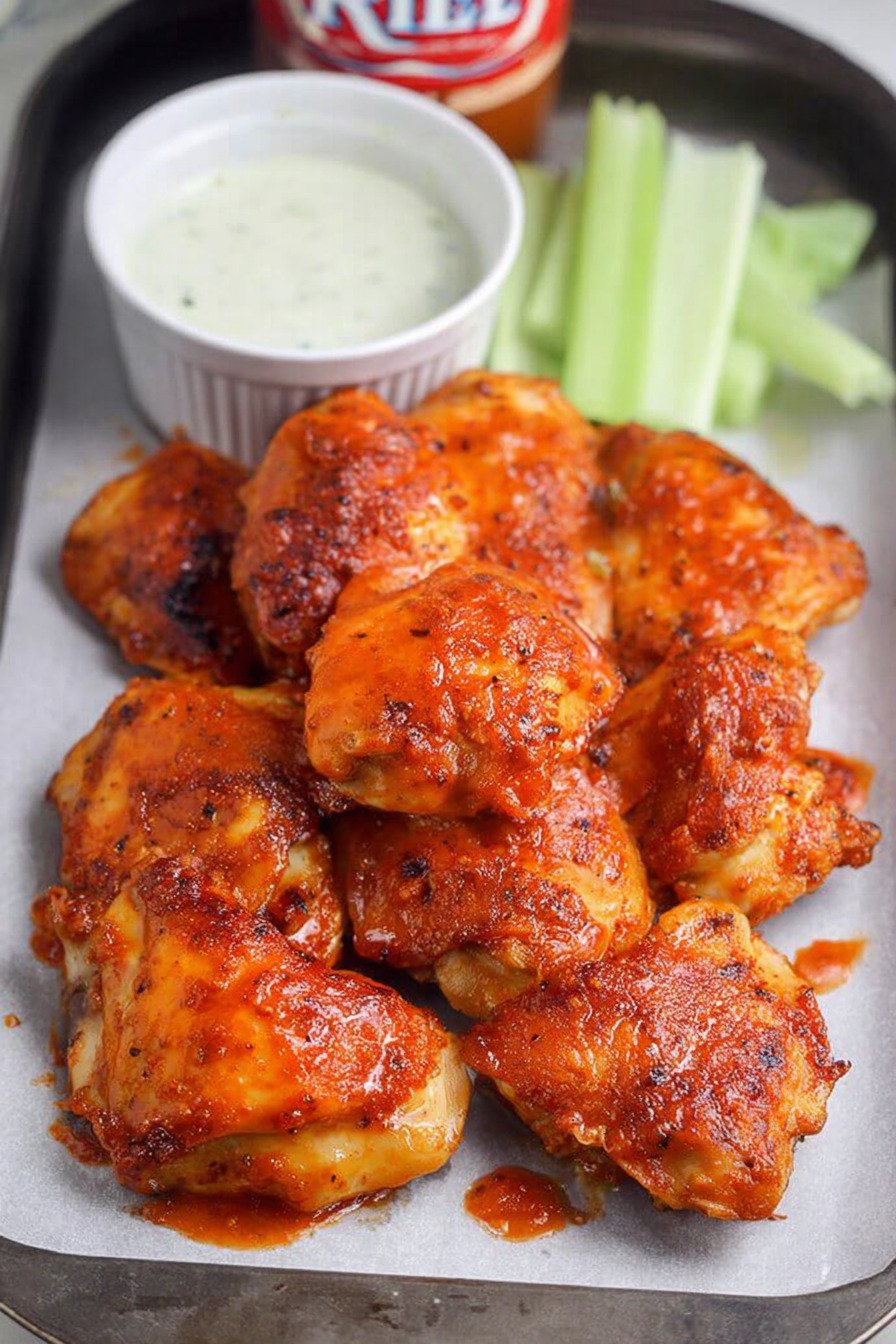
Buffalo chicken thighs pair well with crisp, cooling sides because the sauce is tangy and spicy. Serve them with celery sticks, carrot sticks, ranch, blue cheese dressing, coleslaw, cucumber salad, roasted potatoes, rice, or warm tortillas. For a lighter plate, slice the chicken over a chopped salad with a creamy dressing. For a comfort-style dinner, serve it with mac and cheese, baked potatoes, or corn on the cob. Leftover pieces also work well in wraps, rice bowls, sliders, or chopped into a quick lunch salad.




13) Making Buffalo Chicken Thighs Ahead of Time
You can trim and marinate the chicken up to 24 hours ahead. Keep it covered in the refrigerator and turn the pieces once if you remember, so the marinade stays evenly distributed. For the best texture, cook the chicken close to serving time and save the final hot sauce toss until the end. If you need to cook it ahead, reheat gently and add a small extra splash of hot sauce after warming. This protects the saucy finish and keeps the chicken from tasting flat.
14) Storing Leftover Buffalo Chicken Thighs
Store leftover buffalo chicken thighs in an airtight container in the refrigerator for up to 3 days. The sauce will thicken as it chills, so reheat gently in the microwave, oven, or air fryer with a small spoonful of hot sauce to refresh the coating. The air fryer is useful when you want the edges to firm back up, while the microwave is better for quick lunches. Freezing is possible, but the texture may soften after thawing. For best use, slice leftovers into wraps, bowls, salads, or sandwiches where the sauce can mix with other ingredients.
15) FAQ (Real Cooking Questions)
Can I make buffalo chicken thighs in oven only? Yes. Bake them at 425 degrees Fahrenheit in one layer until the thickest part reaches 165 degrees Fahrenheit. A short broil at the end can add browning, but watch closely.
Can I use bone-in chicken thighs? Bone-in thighs need more cooking time and should still reach 165 degrees Fahrenheit in the thickest part. This article is written for boneless skinless thighs, so adjust timing carefully.
Can I make this less spicy? Use a milder hot sauce and serve the chicken with a creamy dip. Do not remove the hot sauce completely because it is the main flavor of this recipe.
Can I use this method for other hot sauce chicken recipes? Yes, the two-stage method works well for many hot sauce chicken recipes: season before cooking, then add a fresh coating after cooking.
Are buffalo chicken thighs crockpot style the same as this recipe? No. A crockpot version gives softer, saucier chicken with less browning. This oven or air fryer method gives firmer pieces, hotter edges, and a fresher final coating.
16) Save This Buffalo Chicken Thighs Recipe
If this buffalo chicken thighs recipe helped you solve dry, flat-tasting spicy chicken, save it for weeknight dinners, game-day plates, or quick meal prep. The key reminder is: marinate first, cook to 165 degrees Fahrenheit, then toss with fresh hot sauce while the chicken is still hot.

17) Conclusion
Buffalo chicken thighs become much more reliable when you stop treating the sauce as a one-step coating. The real improvement comes from layering flavor: marinade first, controlled heat second, and a fresh final toss at the end. That method helps prevent dry chicken, weak seasoning, and dull sauce. Once you know the signs of properly cooked thighs, the recipe feels less like guessing and more like a simple routine. The result is juicy chicken with bold heat, clean seasoning, and enough sauce to make every bite taste intentional.
18) Nutrition
Serving Size 1 portion Calories 298 Sugar 1 g Sodium 1180 mg Fat 17 g Saturated Fat 3 g Carbohydrates 2 g Fiber 0 g Protein 31 g Cholesterol 142 mg






Leave a Comment